Randhurst Mall was the first enclosed mall in the Chicago Area. Today, developers are replacing the mall with an open-air, mixed-use project with a traditional Main Street-style design.


Blair Kamin explains that this is in some ways an ironic turn of events, because the original architect of the Randhurst Mall was Victor Gruen, whose intention was to create a gathering place not unlike a traditional Main Street:
"Amid the burgeoning postwar sprawl of modest ranch houses and Cape Cods, Gruen reasoned that indoor malls could offer all the features of a traditional downtown, but in a way that better accommodated automobiles and let visitors shop in 72-degree comfort no matter what the weather."
The new design is an "urban-suburban hybrid that combines elements of so-called lifestyle centers, which cluster upscale stores in pedestrian-friendly settings, and so-called power centers, which feature big-box stores fronted by acres of parking lots."
Read the full story: Suburbia revised: Confronting shuttered shopping centers and empty big-boxes, developers try turning malls into Main Streets

Mall Makeovers, For Better or Worse
Chicago Tribune architecture critic Blair Kamin reviews a few mall retrofits and finds that breathing life back into a dead mall can be a challenge.
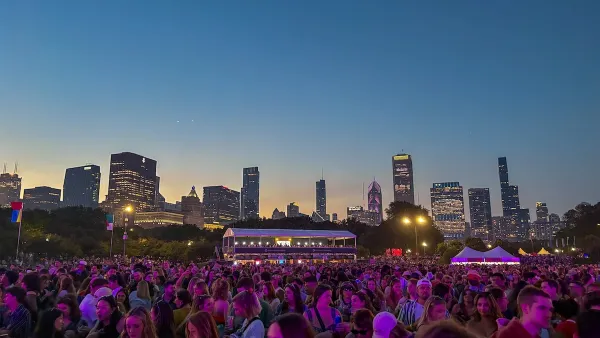
Non-stop party: Chicago voters weigh permanent festival grounds
A stable place for bleachers, stages and drainage may streamline the setup and teardown of large events.
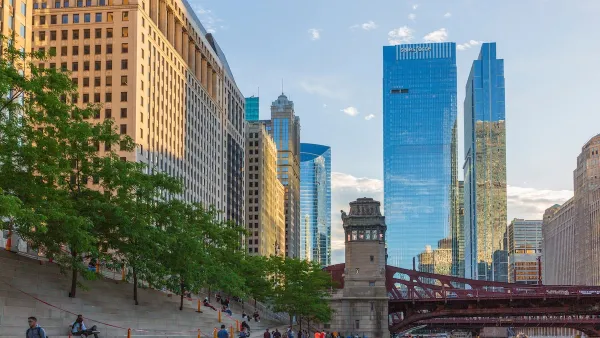
Chicago Avenue bridge construction delays enrages city leaders
The bridge has been closed since 2025. The city originally aimed to re-open it in December, and now expects to finish construction in 2027.

Planetizen Federal Action Tracker
A weekly monitor of how Trump’s orders and actions are impacting planners and planning in America.

California plans to bury El Niño’s downpour
If the state plays its cards right, it may be able to store a billion acre-feet of El Niño’s water in aquifers.

Desperate measures: Advocates weigh draining Lake Powell to fill Colorado River
Draining the reservoir could reduce evaporation losses by a couple hundred thousand acre-feet.

In Texas, data centers are swallowing promised parkland
Residents who moved to Taylor, Texas for a rural community now have to contend with three data centers in their backyard.

How a Chicago-sized wind farm beat the odds and powered on
The project spanned five presidential administrations and a standoff with a U.S. military base.

MTA gives itself 30 days to transform pit into basketball court
The site has been under construction since 2022; the city originally estimated it would finish the court in 2024.

FREE Course: Walkable City 1: Why Walkability?
After describing his path towards focusing on walkability as the essence of good planning, Jeff Speck marches through his five principal reasons for making more walkable places.
Reinventing Malls: Planning Alchemy—Turning Gray Fields Into Gold
The course focuses on the opportunities and imperatives that shape reinvention of mall sites.

City of Rosemead
Rutgers University, Edward J. Bloustein School of Planning and Public Policy
One Hundred Miles
Hunter College, City University of New York (CUNY)
The Architects Foundation
University of Cincinnati Online
City of Cambridge
Montrose County
The Pocatello Development Authority