This piece from Fast Company Design looks at plans for an eco-conscious-yet-inappropriately lush desert development being planned in Oman, and wonders whether a project so out of place will actually work.


"Klingmann describes Khawr Awqad as 'surrounded by residential communities and luscious green agricultural fields to the north and east and the expanse of the Arabian Sea to the south and east...a unique destination with a focus on eco-literacy and education, eco-tourism, and sustainable green living.'
It's a gorgeous vision. But where, exactly, is all this luscious green land coming from? Klingmann is a vague on the details and water is a scarce resource in Oman. And in fact, Khawr Awqad also features other questionable elements, such as 'peaceful waterscapes,' and a three-dimensional poolscape with warm and cold water pools. Which will all evaporate in the dry desert air, unless they're constantly refilled."
The green, walkable community could be built in this desert on the backs of other successful sea water desalination projects and other techniques to avoid desertification, but the manmade oasis may be too unrealistic to come about.
Read the full story: A Manmade Oasis: Scam or Sustainable Dream?

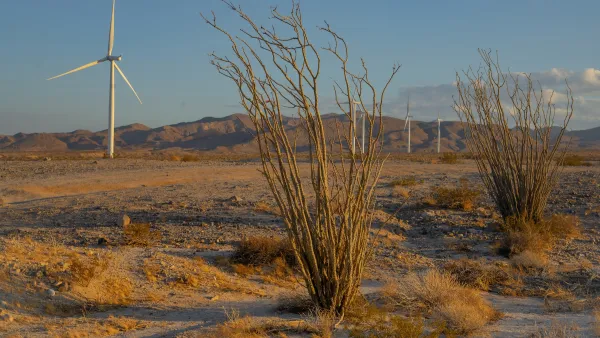
NASA tests lunar rover in California desert
The Plaster City Open Area offers a fitting simulacrum of the Mars landscape.
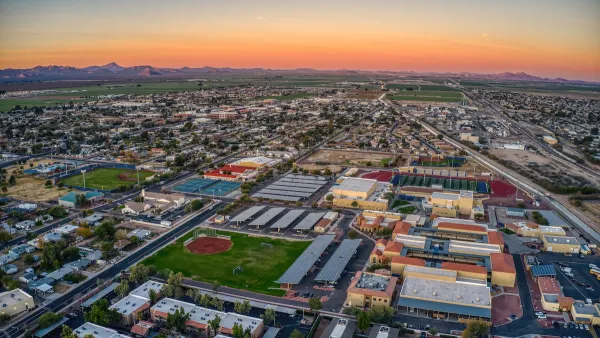
Arizona Town Looks for New Water Sources, Insists Development ‘Full Steam Ahead’
While many Southwest cities are looking for ways to conserve water and limit growth as water supplies become strained, one town is pressing ahead with rapid development.
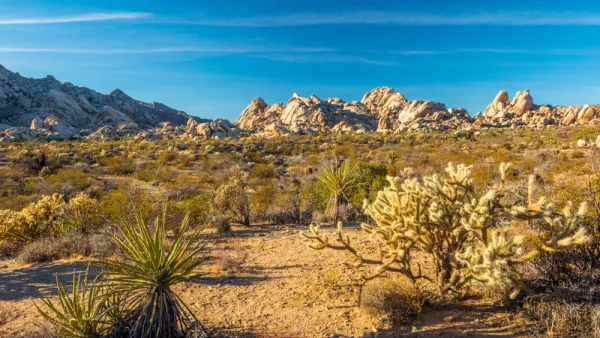
New National Monument Proposed South of Joshua Tree
The 700,000 acre monument would protect threatened species and important historic and cultural sites.

Planetizen Federal Action Tracker
A weekly monitor of how Trump’s orders and actions are impacting planners and planning in America.

Chicago breaks ground on $3 billion megadevelopment
The new neighborhood, titled Foundry Park, will one day host 3,700 residences.

This MA town is drowning in its own sewage — and residents like it that way
Susan Murcott, a waste water expert, said if Carlisle didn't address their leaking sewage, the problem could turn “deadly.”

Amtrak cuts ribbon on Seattle Airo maintenance facility
The $250 million, nearly 100,000-square-foot building can house an entire Cascades Airo trainset.

To power data centers, Google seeks autonomous control of thousands of homes’ electricity
The tech company has signed a deal to indirectly pay Mid-Atlantic residents to reduce their power demand when the grid is strained.

From robotaxis to robotrains: LA, DC weigh driverless transit
If approved, the projects will take years to implement and face financial and technical hurdles.

FREE Course: Walkable City 1: Why Walkability?
After describing his path towards focusing on walkability as the essence of good planning, Jeff Speck marches through his five principal reasons for making more walkable places.
Reinventing Malls: Planning Alchemy—Turning Gray Fields Into Gold
The course focuses on the opportunities and imperatives that shape reinvention of mall sites.

City of Rosemead
Rutgers University, Edward J. Bloustein School of Planning and Public Policy
One Hundred Miles
The Architects Foundation
University of Cincinnati Online
Montrose County
The Pocatello Development Authority
The Urban Renewal Agency of the City of Pocatello