The Wall Street Journal reports on an extensive street redesign plan in New York City to be completed by 2030. The plan is aimed at an especially dangerous area.


"Sixty miles of streets will be redesigned annually, 1,500 intersections will get countdown clocks and the number of slow-traffic zones around schools will triple as part of a new city push to reduce pedestrian injuries and deaths caused by automobiles."
The plan is a result of a 2007 study that revealed 7,000 accidents involving pedestrians from 2002-2006. The study also found a much higher incidence of death or serious injury in the borough of Manhattan as compared to the other four boroughs and offers a profile on those likely to be victims as well as those likely to be behind the wheel.
The journal notes that the plan is just part of a broader overhaul championed by current Transportation Commissioner Janette Sadik-Khan.
Thanks to Ryan Sloan
Read the full story: Pedestrian Safety Will Guide Massive Street Makeover

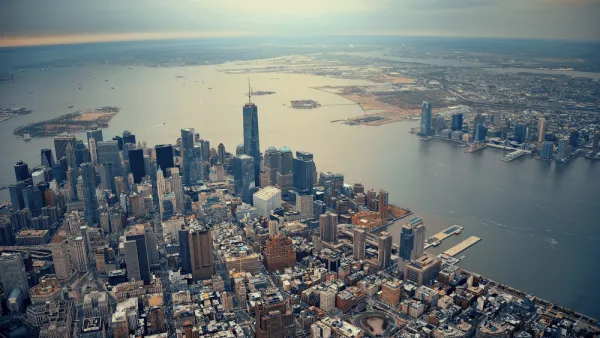
NYC Planning Director Marissa Lago Touts Regional Planning
Marisa Lago pens in an opinion piece supporting a regional approach to planning, timed for the release of a new "Geography of Jobs" report.
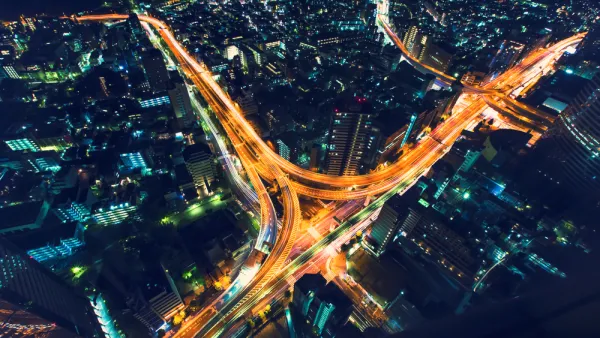
New Report: Rethinking Streets in an Era of Driverless Cars
"Rethinking Streets in an Era of Driverless Cars" presents ideas about how city planners, policy makers and community residents can begin thinking about street transformation in an AV era.
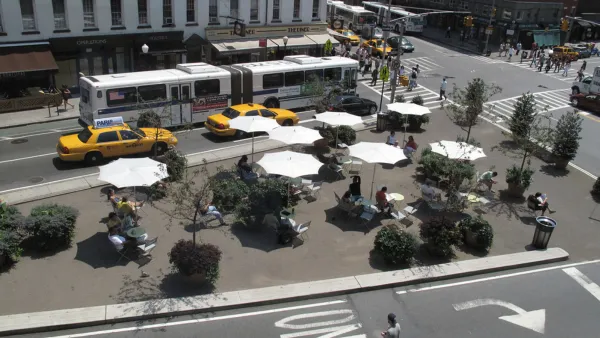
Embracing the Future of City Streets
Streets will have to evolve, again.

Planetizen Federal Action Tracker
A weekly monitor of how Trump’s orders and actions are impacting planners and planning in America.

California plans to bury El Niño’s downpour
If the state plays its cards right, it may be able to store a billion acre-feet of El Niño’s water in aquifers.

Chicago breaks ground on $3 billion megadevelopment
The new neighborhood, titled Foundry Park, will one day host 3,700 residences.

This road in NYC is infamously dangerous — and Mamdani can't fix it
New York City's Ocean Parkway is known for reckless driving, but the power to implement safety measures lies with the state rather than the city.

One of Denver’s busiest corridors to gain BRT
The project will span 18 miles and contain 74 bus rapid transit stations.

275,000 bus trips are at stake on Seattle's ballot
If passed, the Seattle Transit Measure would trigger a 0.3% sales tax and raise an average of $138 million per year to maintain and expand Seattle’s bus services.

FREE Course: Walkable City 1: Why Walkability?
After describing his path towards focusing on walkability as the essence of good planning, Jeff Speck marches through his five principal reasons for making more walkable places.
Reinventing Malls: Planning Alchemy—Turning Gray Fields Into Gold
The course focuses on the opportunities and imperatives that shape reinvention of mall sites.

City of Rosemead
Rutgers University, Edward J. Bloustein School of Planning and Public Policy
One Hundred Miles
Hunter College, City University of New York (CUNY)
The Architects Foundation
University of Cincinnati Online
City of Cambridge
Montrose County
The Pocatello Development Authority