Joel Kotkin has said there is a war on suburbia. But as Michael Scott writes on New Geography (Kotkin's home base), where does suburbia start and the city end? Where do inner-ring suburbs fit in this model?


Scott is moving from suburban Sacramento to Denver, and is choosing where to live based partly on his own desire for a more urban life and partly on the needs of perceived safety and good schools for his daughter.
He writes, "Our choice of location within the Denver area seems to support a national trend that was much discussed at the recent Urban Land Institute Summit/ Spring Council Forum in Boston; namely, that the vast majority of population growth in U.S. urban regions will occur not in downtown cores, but in suburbs, and of those, most notably the close-in suburbs exuding an urban feel."
One commenter writes, "I'm not sure why there has to be a "debate" between metro or suburban living. The type of environment people choose to live in is a personal choice."
Read the full story: Can The Suburban Fringe Be Downtown Adjacent?
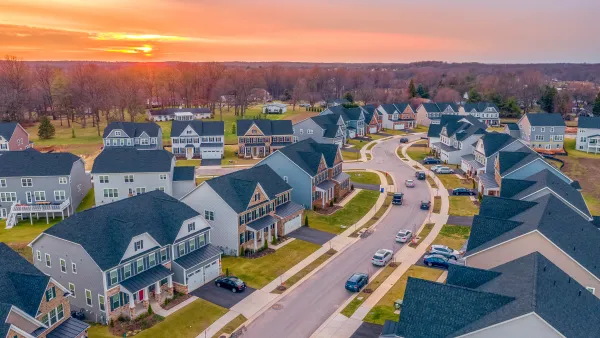
Remote Work and the Shift to Suburbia
Is the growth of working from home turning America into a ‘suburban nation?’
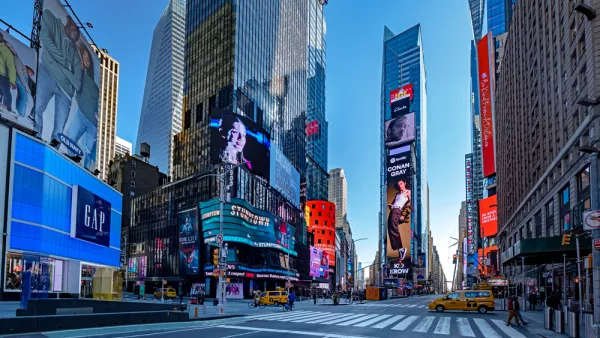
Poll: One-Third of Americans Thinking of Moving to Less Densely Populated Areas
In the midst of the pandemic, Americans are expressing a new preference for less crowded spaces, according to the results of a Harris Poll conducted last week.
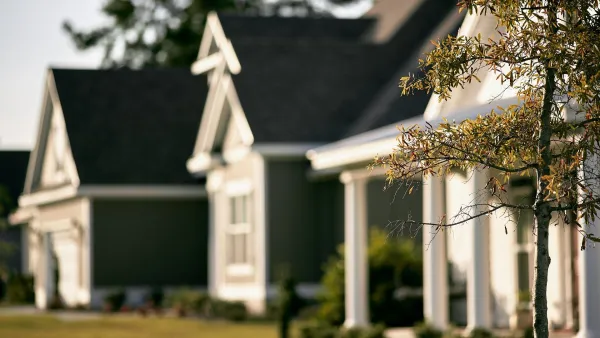
Homeownership—American Dream or Nightmare?
Owning a home has long been considered the ultimate aspiration. But social and economic realities mean the stories about and the path to homeownership are not simple and straightforward.

Planetizen Federal Action Tracker
A weekly monitor of how Trump’s orders and actions are impacting planners and planning in America.

California plans to bury El Niño’s downpour
If the state plays its cards right, it may be able to store a billion acre-feet of El Niño’s water in aquifers.

Desperate measures: Advocates weigh draining Lake Powell to fill Colorado River
Draining the reservoir could reduce evaporation losses by a couple hundred thousand acre-feet.

US buildings threatened, destroyed by fires set to triple by 2060
Researchers found a high fire risk for socioeconomically vulnerable neighborhoods in the American West.

LA residents may be allowed to paint their own crosswalks
Councilwoman Katy Yaroslavsky put out a motion instructing the Los Angeles Department of Public Transportation to study the feasibility of allowing volunteers to paint crosswalks.

Dallas moves to overhaul its zoning code
The city's zoning reform will allow more multi-family and mixed-use developments.

FREE Course: Walkable City 1: Why Walkability?
After describing his path towards focusing on walkability as the essence of good planning, Jeff Speck marches through his five principal reasons for making more walkable places.
Reinventing Malls: Planning Alchemy—Turning Gray Fields Into Gold
The course focuses on the opportunities and imperatives that shape reinvention of mall sites.

City of Rosemead
Rutgers University, Edward J. Bloustein School of Planning and Public Policy
One Hundred Miles
Hunter College, City University of New York (CUNY)
The Architects Foundation
University of Cincinnati Online
City of Cambridge
Montrose County
The Pocatello Development Authority