The Los Angeles River has long been forgotten by many of the city's residents and officials. GOOD's Alissa Walker takes a look at some plans to reintegrate the river into the city.


From the roof of a downtown building, nearly the entire stretch of the river can be seen, including its many miles of concrete riverbed the Army Corps of Engineers built to prevent flooding. But now designers are looking at natural ways to prevent flooding and to remove the concrete.
"We stood here because it had the very best view of Piggyback Yard, a 125-acre site where shipping containers move from trains to trucks. It's not used nearly as much as it used to be, and in a few years, it will be up for sale. The Friends of the LA River are planning on transforming it into the tongue-in-cheek Piggy Backyard, a park and mixed-use development which will offer the first truly revitalized and redeveloped portion of the river.
The most exciting part of the plans, which were revealed on that helipad, is that Piggy Backyard would actually be the age-old solution to managing those outrageous floods the 1930s engineers couldn't envision. The plan would essentially turn Piggy Backyard into a mini-floodplain by either widening the river channel, or diverting a significant amount of water into wetlands. When large amounts of water came surging downstream, it would flow freely into the greenspace, perhaps rendering some of the park unusable, but actually allowing the water to sink down into the aquifer, instead of being pushed out to sea."
FULL STORY: As Los Angeles's River Runs Again, Designers Determine Its Course

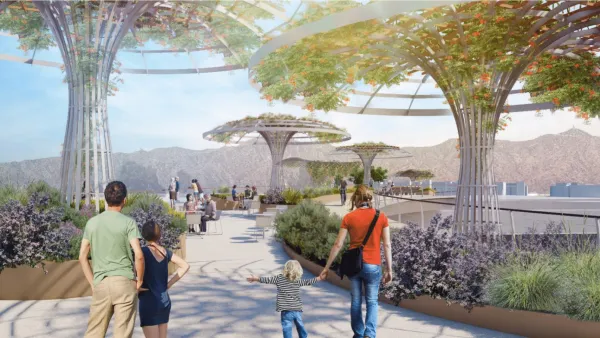
'Transformative' pedestrian bridge planned for LA River in Glendale Narrows
A new bridge will link Griffith Park and the Glendale Narrows Riverwalk.

Annual LA River CleanUp Invites Residents to Protect Local Ecosystems
The Friends of the Los Angeles River will host its 34th Annual LA River CleanUp on October 5, inviting residents to help beautify the river, prevent litter from reaching the ocean, and promote equitable access to green spaces.
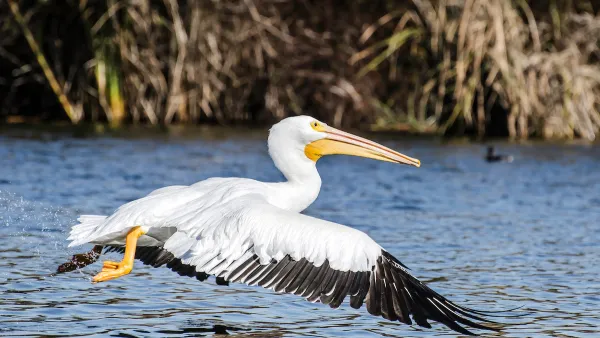
Revitalizing Sepulveda Basin: A Green Vision for An Urban Oasis
Developed through the input of thousands of community members, this is the first comprehensive plan by the City of Los Angeles for the 2,000-acre basin.

Planetizen Federal Action Tracker
A weekly monitor of how Trump’s orders and actions are impacting planners and planning in America.

The state-sanctioned urbicide of Austin
People don’t kill cities. Freeways do.

US to reduce Colorado River water deliveries to Mexico
A new Colorado Treaty amendment reduces Mexico’s Colorado River water allocation by 250,000 acre feet.

5 New England states march closer to 800 megawatt wind energy project
Securing federal approval for the project may be complicated under the Trump administration, which has historically been hostile towards domestic wind power.

Baltimore to break ground on $50 million Transit Priority Project
The project will bring faster bus trips, safer streets and better bike connections to Baltimore.

Airbnb launches $250 million 'last-dollar financing' housing accelerator, makes first investment in Austin
The company will put $6.4 million towards affordable housing development in Texas’ capital.

FREE Course: Walkable City 1: Why Walkability?
After describing his path towards focusing on walkability as the essence of good planning, Jeff Speck marches through his five principal reasons for making more walkable places.
Reinventing Malls: Planning Alchemy—Turning Gray Fields Into Gold
The course focuses on the opportunities and imperatives that shape reinvention of mall sites.

Eagle County Government
Harvard University Graduate School of Design
Nashville Planning Department
The Architects Foundation
University of Cincinnati Online
The Pocatello Development Authority
The Urban Renewal Agency of the City of Pocatello
Journal of the American Planning Association