In this WSJ Opinion, MIT professor and former under secretary of Energy John Deutch explains how the BP gusher and discovery of vast supplies of unconventional natural gas will combine to increase natural gas energy usage by replacing coal, then oil.


"If the past is any guide, accidents in the energy sector profoundly affect this country's energy outlook." John Deutch points to Three Mile Island, Chernobyl, and oil shocks in spurring development of non-OPEC oil sources.
Add to that the recent discovery of "vast natural gas resources in unconventional reservoirs like coal seams, tight sand and shales in the United States and elsewhere" and the lower price that follows means natural gas will initially begin replacing coal in electricity generation, and in time, oil in transportation. But the U.S is lagging.
"As of 2009, Pakistan led the world with 2.4 million vehicles fueled by compressed natural gas and over 3,000 fueling stations. By comparison, the U.S. had about 100,000 such vehicles and 1,300 stations, consuming 0.1% of the 12 million barrels of oil per day devoted to transportation."
Thanks to Mark Boshnack
Read the full story: Opinion: The Natural Gas Revolution
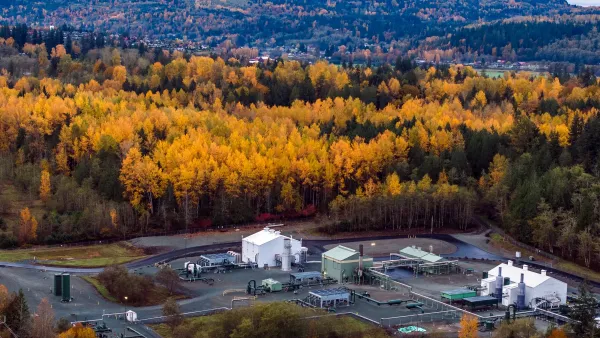
Developers may expand largest gas pipeline network in Northwest
Pipeline giant Williams has proposed new expansions for its Northwest Pipeline from the Colorado Rockies through Idaho, Oregon and Washington.
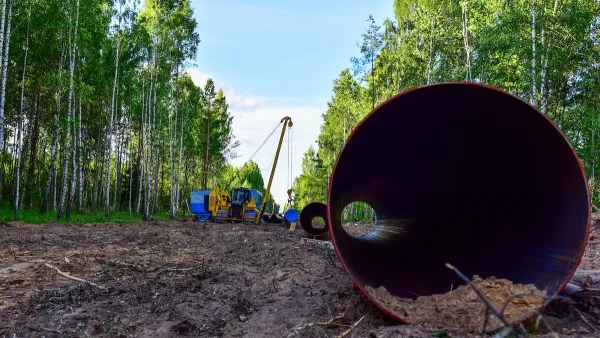
Developers sue Mississippi landowners who object to pipeline through their land
Because the Federal Energy Regulatory Commission approved the pipeline project, the developer can use private land without the consent of the owner.
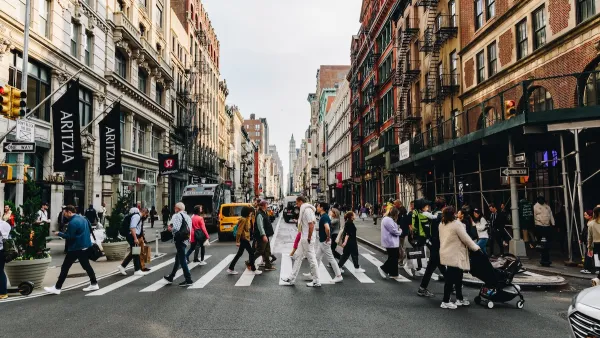
A gas leak in NYC is costing residents $300 million
More than 90% of NYC’s electricity is from natural gas. About 2% of that gas is leaking and escaping into the air.

Planetizen Federal Action Tracker
A weekly monitor of how Trump’s orders and actions are impacting planners and planning in America.

California plans to bury El Niño’s downpour
If the state plays its cards right, it may be able to store a billion acre-feet of El Niño’s water in aquifers.

Desperate measures: Advocates weigh draining Lake Powell to fill Colorado River
Draining the reservoir could reduce evaporation losses by a couple hundred thousand acre-feet.

US buildings threatened, destroyed by fires set to triple by 2060
Researchers found a high fire risk for socioeconomically vulnerable neighborhoods in the American West.

LA residents may be allowed to paint their own crosswalks
Councilwoman Katy Yaroslavsky put out a motion instructing the Los Angeles Department of Public Transportation to study the feasibility of allowing volunteers to paint crosswalks.

Dallas moves to overhaul its zoning code
The city's zoning reform will allow more multi-family and mixed-use developments.

FREE Course: Walkable City 1: Why Walkability?
After describing his path towards focusing on walkability as the essence of good planning, Jeff Speck marches through his five principal reasons for making more walkable places.
Reinventing Malls: Planning Alchemy—Turning Gray Fields Into Gold
The course focuses on the opportunities and imperatives that shape reinvention of mall sites.

City of Rosemead
Rutgers University, Edward J. Bloustein School of Planning and Public Policy
One Hundred Miles
Hunter College, City University of New York (CUNY)
The Architects Foundation
University of Cincinnati Online
City of Cambridge
Montrose County
The Pocatello Development Authority