When thinking about the right way to invest in renewable energy, it's important to realize the different land use impacts of solar, wind, biofuels, along with coal and nuclear, says Clinton Andrews of Rutgers University.


In a recent paper, Andrews and his colleagues divided all available energy sources into three categories:
"In the small footprint category is nuclear, geothermal, coal, solar thermal technology, and natural gas. Although only suitable for certain places, geothermal is a good candidate for expansion because geothermal plants have about the same footprint as oil and gas drilling, since they all use much of the same technology, Andrews said."
Large footprint energy forms include rooftop solar thermal systems, wind, petroleum and hydropower.
Read the full story: Figuring land use into renewable-energy equation
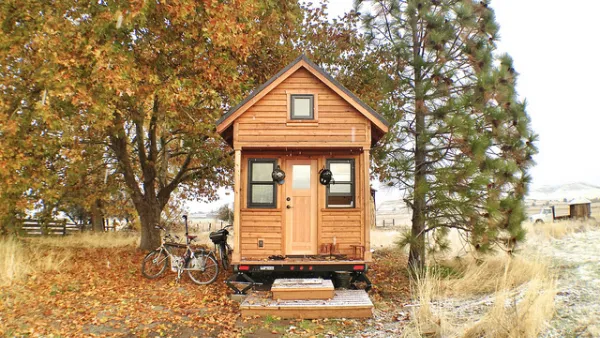
The Effects of Tiny Home Downsizing
People living in tiny homes drastically reduce their ecological footprints and make more sustainable lifestyle choices, research shows.

A Land-Management Plan for Catholic Properties Around the World
One of the largest landowners in the world—historically known for creating maps of the Earth—the Church doesn't yet have a cohesive understanding of its global footprint.
Friday Funny: Map Madness
BuzzFeed has gathered 38 prime examples of "maps you never knew you needed." And while some are fascinating (such as how much space the world's population would take up if everyone lived in one city) others are just Ludacris.

Washington state to charge fee to drivers with fuel-efficient cars
Revenue from the fee will go towards supporting the state’s highways.

Illinois considers spending $1 billion in taxpayer money on data center
A quantum computing campus and data center are currently under construction in Chicago.

Trump to blast ‘hydrocarbon highway’ through ‘world’s longest art gallery’
Environmental and historic preservation groups are suing to stop the project.

NYC, state sue feds over mixed-immigration-status housing assistance rule
The state’s lawsuit argues that the rule change violates the Administrative Procedure Act.

Michigan to turn neighborhood into virtual power plant
Residents will soon be able to divert their excess energy to the grid in exchange for compensation.

Data center, mining project swarm to long-awaited Alaska railroad line
The state-owned railroad approved final plans for the spur line this week; the project is expected to cost $311 million, mostly funded by the federal government

FREE Course: Walkable City 1: Why Walkability?
After describing his path towards focusing on walkability as the essence of good planning, Jeff Speck marches through his five principal reasons for making more walkable places.
Reinventing Malls: Planning Alchemy—Turning Gray Fields Into Gold
The course focuses on the opportunities and imperatives that shape reinvention of mall sites.

City of Charlotte
City of Rosemead
Rutgers University, Edward J. Bloustein School of Planning and Public Policy
University of Michigan School for Environment and Sustainability (SEAS)
Hunter College, City University of New York (CUNY)
The Architects Foundation
University District Partnership