The city of Los Angeles is considering a plan to stop paying for repairs to broken sidewalks and driveways, shifting the economic burden to property owners.


"With cash in short supply, Los Angeles may soon end its policy of repairing sidewalks and driveways at city expense. This month, the City Council will consider repealing a 1974 ordinance that made the city responsible for sidewalk repairs, a policy that was initiated with a grant of federal funds. That pot of money, however, dried up long ago.
'We have no ability to perform these repairs,' said Councilman Bernard C. Parks, chairman of the council's budget and finance committee. 'The money ran out in the mid-1970s, yet the city has continued to hold itself responsible.'"
The real estate industry is expected to put up a fight against the proposed move.
Read the full story: L.A. may stop footing bills for sidewalk and driveway repairs

'Beautification Assessment Districts' Proposed to Fix Los Angeles Streets
In an attempt to fix Los Angeles' buckling streets and roads, the Los Angeles City Council has unveiled a proposal allowing residents to tax themselves for adjacent road and sidewalk repair.
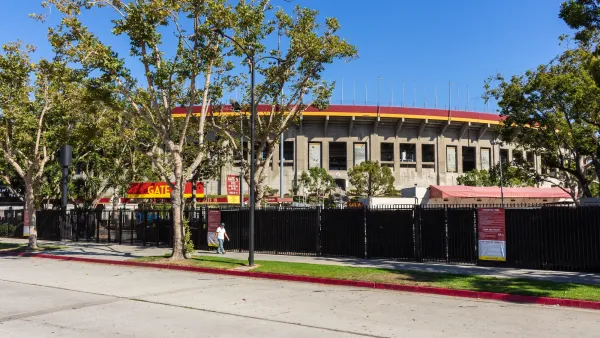
LA authorizes $9.5M for sidewalk repairs around Olympic venues
The city is hosting the Olympic and Paralympic Games in 2028.
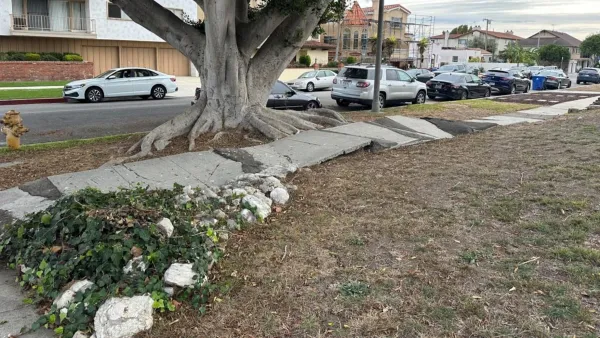
The City of Broken Sidewalks
Can Los Angeles fix 4,000 miles of broken sidewalks before the city hosts the 2028 Olympic Games?

Planetizen Federal Action Tracker
A weekly monitor of how Trump’s orders and actions are impacting planners and planning in America.

Data reveals that NYC’s bet on congestion pricing has paid off
After almost two years of the program, reports show positive impacts on traffic and air quality and no disruptions to parking.

HUD modernizes 50-year-old manufactured housing framework
The Next Generation Manufactured Housing Action Plan establishes new energy-efficiency standards for manufactured homes, and new guidelines for anchoring them.

Developers sue Mississippi landowners who object to pipeline through their land
Because the Federal Energy Regulatory Commission approved the pipeline project, the developer can use private land without the consent of the owner.

A gas leak in NYC is costing residents $300 million
More than 90% of NYC’s electricity is from natural gas. About 2% of that gas is leaking and escaping into the air.

CA officials have the power to fix the state’s riskiest dams. They’ve never used it
California’s 40 most hazardous dams would endanger up to 1.5 million people if they failed.

FREE Course: Walkable City 1: Why Walkability?
After describing his path towards focusing on walkability as the essence of good planning, Jeff Speck marches through his five principal reasons for making more walkable places.
Reinventing Malls: Planning Alchemy—Turning Gray Fields Into Gold
The course focuses on the opportunities and imperatives that shape reinvention of mall sites.

One Hundred Miles
County of Mendocino
planning NEXT
The Architects Foundation
University of Cincinnati Online
Montrose County
Northern Illinois Transit Authority (NITA)
The Pocatello Development Authority