New research shows that recent immigrants are twice as likely to ride bicycles as other Americans. Though the health impact is beneficial, the ridership is less likely to continue in the second generation.


UCLA Doctoral candidate Michael Smart conducted the study, and he says it may help to identify ways to encourage cycling among other Americans.
"Using the U.S.-based 2001 National Household Travel Survey, Smart analyzed the ridership rates for the small portion of trips Americans make by bike.
Although in the National Household Travel Survey more foreign-born immigrants over the age of 26 had graduate or professional degrees than native-born Americans, there were also many more immigrants without a high school degree or equivalent than native-born respondents. (It is important to note that the survey did not distinguish between legal and illegal immigrants.) Smart recognizes the need to be careful when studying "immigrants," as they are clearly a diverse group."
Read the full story: Bicycles and the ‘Immigrant Effect’
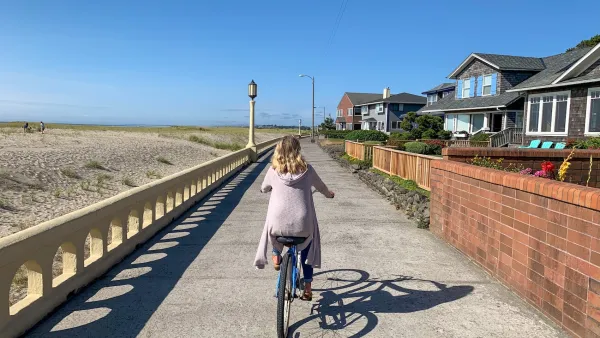
Oregon updates coastal bike map for the first time in a decade
The printed guide helps cyclists navigate the coastal region where cellular service can be unpredictable.
DOT withholds $73M from New York over immigrant trucking licenses
The Trump administration is requiring states to revoke the CDLs of non-domiciled drivers without proof of citizenship or risk losing federal funds.
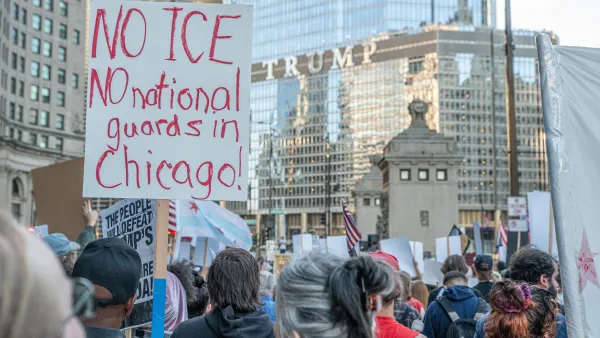
Chicago Mayor ‘Willing to Consider’ Eviction Freeze as ICE Raids Mount
Tenant advocates say many workers are staying home due to fears of immigration raids, putting some households behind on rent.

Desperate measures: Advocates weigh draining Lake Powell to fill Colorado River
Draining the reservoir could reduce evaporation losses by a couple hundred thousand acre-feet.

Eastern Nebraska is running out of electricity
Data centers and electrification are straining eastern Nebraska’s grid, throttling economic development.

Malls are becoming the midtowns of the future
Mall and office park redevelopments are a generational opportunity to create new nodes of urbanity.

NYC breaks ground on anti-flooding infrastructure project
New York City's new system will reduce stormwater flows to local sewers by 90%.

One Kentucky town’s secret to affordable housing
The Smoketown Community Land Trust has already built seven affordable homes for community members.

Houston gains petal-shaped cooling infrastructure to make streets more ‘delightful’
The city has installed the pavilions along 15 blocks in Houston.

FREE Course: Walkable City 1: Why Walkability?
After describing his path towards focusing on walkability as the essence of good planning, Jeff Speck marches through his five principal reasons for making more walkable places.
Reinventing Malls: Planning Alchemy—Turning Gray Fields Into Gold
The course focuses on the opportunities and imperatives that shape reinvention of mall sites.

City of Rosemead
Rutgers University, Edward J. Bloustein School of Planning and Public Policy
One Hundred Miles
University of Michigan School for Environment and Sustainability (SEAS)
Hunter College, City University of New York (CUNY)
The Architects Foundation
City of Cambridge
Montrose County
The Pocatello Development Authority