North Dakota is undergoing a jobs boom right now, but it doesn't have the housing stock to match the new increase in workers.


"The same forces that have resulted in more homelessness elsewhere - unemployment, foreclosure, economic misery - have pushed laid off workers from California, Florida, Minnesota, Michigan and Wyoming to abundant jobs here, especially in the booming oil fields.
But in this city rising from the long empty stretches of North Dakota, hundreds are sleeping in their cars or living in motel rooms, pup tents and tiny campers meant for weekend getaways in warmer climes. They are staying on cots in offices and in sleeping bags in the concrete basements of people they barely know."
The booming industry in North Dakota has crammed hotels to capacity and caused some workers to simply sleep in their cars in Wal-Mart parking lots. Homelessness is not really a big issue in the state, but it has seen a 19% increase from 2008 to 2009.
Read the full story: A State With Plenty of Jobs but Few Places to Live

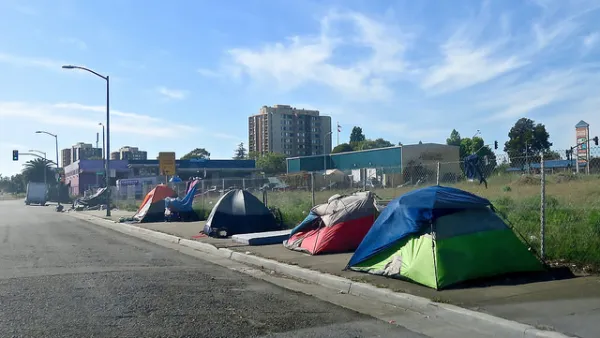
Homelessness a Growing Issue in San Francisco Suburbs
Across the nation, suburban homeless populations are growing. Many of these communities are unprepared to shelter or serve these growing populations.
Portland's New Complex Aims At Curing Homelessness
The city of Portland is moving ahead with a $47 million shelter and services project known as the Resource Access Center. It's the largest efforts underway to solve the city's notorious homelessness problem.
Tiny Town Tries to Recover From Immigration Bust
When an immigration raid brought down the dominant employer in tiny Postville, Iowa, last year, nearly half of the town's population were either deported or lost their jobs. As the town struggles to regain its feet, its learned some tough lessons.

Amtrak, CN end decades-long dispute with eight-year agreement
The new operating agreement establishes an updated framework for the companies to work together, including processes to resolve disputes.

Judges permit Denver to divert 77,000 acre feet from the Colorado River for reservoir expansion
Overuse and climate change have caused the Colorado River’s water levels to plummet.
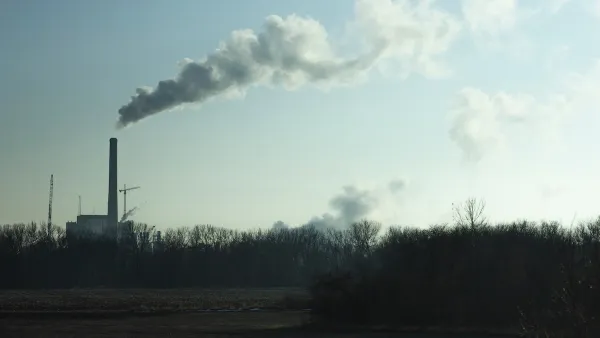
Nation's most wind-powered state turns to coal as data centers increase energy demand
For the first time in decades, Iowa has increased its generation of coal power.

Boston has spent millions making the Green Line more accessible — and there’s no end in sight
While the city has invested millions into expanding and adding platforms to the Green Line to make it more accessible, new train cars set to arrive next year will be too tall for disabled passengers to board without raising the current platforms.

Idaho may see an 18% drop in federal surface transit funding — the largest estimated cut in the US
Transit systems in rural communities are much more reliant on federal funding to provide their services.

How ‘post-disaster gentrification’ alters neighborhoods after natural calamities
After hurricanes, fires or other calamities, the original residents of a community are often replaced by younger, wealthier residents.

FREE Course: Walkable City 1: Why Walkability?
After describing his path towards focusing on walkability as the essence of good planning, Jeff Speck marches through his five principal reasons for making more walkable places.
Reinventing Malls: Planning Alchemy—Turning Gray Fields Into Gold
The course focuses on the opportunities and imperatives that shape reinvention of mall sites.

City of Wisconsin Rapids
Harvard University Graduate School of Design
KFH Group Inc.
The Architects Foundation
University of Cincinnati Online
The Pocatello Development Authority
The Urban Renewal Agency of the City of Pocatello