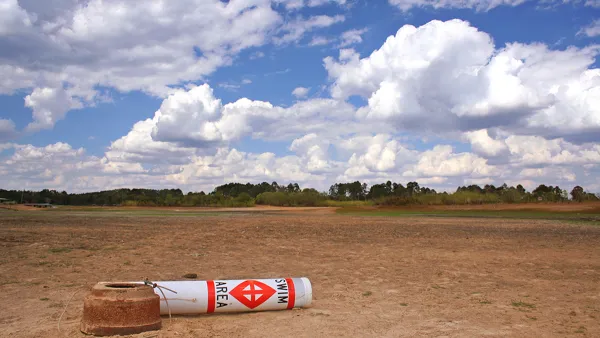
Under Alberta's present water allocation system, new and rapidly growing communities are unable to purchase new water licenses, as priority goes to historical users, not those with the greatest need. A persistent drought may force a change.


As the Globe and Mail reports,
"Alberta currently has a first-in-time, first-in-right (FITFIR) system that puts the longest-tenured water users at the front of the line, regardless of whether they're a municipality or a factory, whether they need their full allotment, and what conservation efforts a user is making...In a drought, the system leaves new economic development and younger, growing municipalities in a bind. They are now scrambling to buy extra water rights.
The province needs to switch to a so-called share system that allocates water use based on need, says Joe Obad of the Water Matters advocacy group, which wants to see the province identify and protect minimum levels in each body of water, then split any surface water."
Read the full story: Once-in-a-generation drought creates water crisis in Alberta

New Center Integrates Land Use and Water Policy
A new branch of the Lincoln Institute will focus on water planning, especially in the western United States.

Waco, Texas Region Needs a New Water Plan
Communities in McClennan County, Texas, are working together to plan for a new water supply infrastructure that relies less on groundwater from the depleted Trinity Aquifer.
How to Plan for an Uncertain Climate Future
Creating adaptive, sustainable communities may require rethinking some planning basics.

Planetizen Federal Action Tracker
A weekly monitor of how Trump’s orders and actions are impacting planners and planning in America.

Amtrak, CN end decades-long dispute with eight-year agreement
The new operating agreement establishes an updated framework for the companies to work together, including processes to resolve disputes.

Northwest rail fans eager for Sept. 30 debut of Amtrak’s Airo fleet
Get ready for that new train smell and more seats. But they won’t go faster or run more frequently on the Cascades route in Washington and Oregon.

Trump administration unlawfully slashed $7 billion in clean energy grants, judge rules
The Environmental Protection Agency ended the Solar For All program, which provided the grants, after President Donald Trump’s inauguration.

Record-breaking wildlife overpass in Colorado brings 91% reduction in animal collisions
Prior to the overpass, vehicles were hitting one deer per day on Colorado’s Interstate 25.

California lawmakers approve just 5% of much-needed LA28 transportation funding
State legislators appear just as unwilling as Trump to pay for Olympics-related transportation projects.

FREE Course: Walkable City 1: Why Walkability?
After describing his path towards focusing on walkability as the essence of good planning, Jeff Speck marches through his five principal reasons for making more walkable places.
Reinventing Malls: Planning Alchemy—Turning Gray Fields Into Gold
The course focuses on the opportunities and imperatives that shape reinvention of mall sites.

City of Thousand Oaks
City of Wisconsin Rapids
Harvard University Graduate School of Design
The Architects Foundation
University of Cincinnati Online
The Pocatello Development Authority
The Urban Renewal Agency of the City of Pocatello