As residents across the county fill out and return the Census, Richard Florida and colleagues try to nail down what type of people are most likely to participate.


"[W]hat factors might drive census participation? With the help of my colleague Charlotta Mellander, I decided to take a quick look. We examined the correlations between census participation and economic factors, demographic characteristics, and state personality traits. This analysis is based on simple correlations which identify associations between variables but do not specify causality. I also spoke to my colleague and collaborator, the Cambridge University personality psychologist Jason Rentfrow about these results.
The short answer is that in terms of who fills out census forms, personality is the only thing that seems to matter."
They looked at the predominant personality traits in states to see what impacts higher return rates. For example, states with high populations of extroverts were likely to have high rates of Census participation.
Read the full story: Personality and the Census
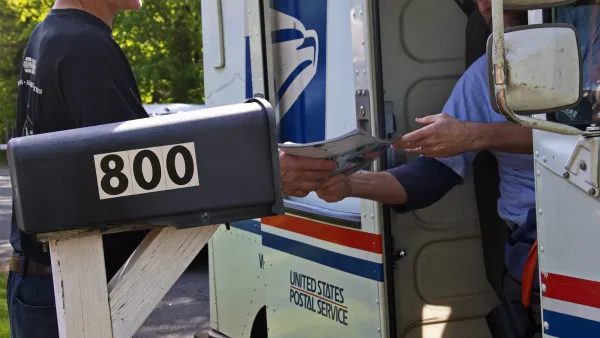
US Census Starts Using Postal Workers as Census Takers
A test program is using postal carriers to administer Census questionnaires.
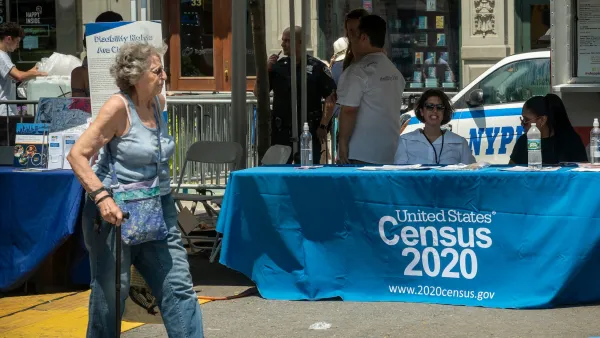
Two Lawsuits Aim to Strip Immigrants, Privacy Protections From US Census
The two cases could have major impacts on how Americans are counted in the next census.
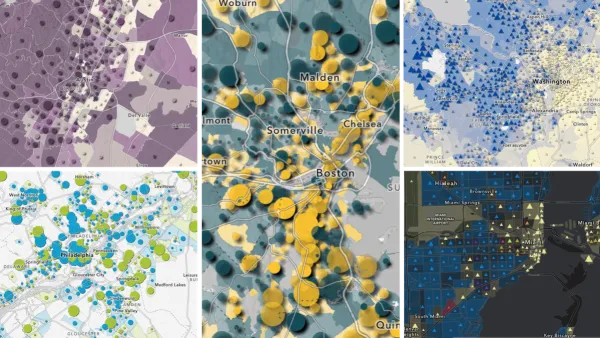
Explore US Demographics With the New ACS Atlas Collection
Esri's new ACS Atlas Collection offers interactive applications that visualize the latest U.S. demographic and socio-economic data, enabling users to explore over 175 curated web maps across various thematic areas.

Planetizen Federal Action Tracker
A weekly monitor of how Trump’s orders and actions are impacting planners and planning in America.

California plans to bury El Niño’s downpour
If the state plays its cards right, it may be able to store a billion acre-feet of El Niño’s water in aquifers.

Desperate measures: Advocates weigh draining Lake Powell to fill Colorado River
Draining the reservoir could reduce evaporation losses by a couple hundred thousand acre-feet.

US buildings threatened, destroyed by fires set to triple by 2060
Researchers found a high fire risk for socioeconomically vulnerable neighborhoods in the American West.

LA residents may be allowed to paint their own crosswalks
Councilwoman Katy Yaroslavsky put out a motion instructing the Los Angeles Department of Public Transportation to study the feasibility of allowing volunteers to paint crosswalks.

Dallas moves to overhaul its zoning code
The city's zoning reform will allow more multi-family and mixed-use developments.

FREE Course: Walkable City 1: Why Walkability?
After describing his path towards focusing on walkability as the essence of good planning, Jeff Speck marches through his five principal reasons for making more walkable places.
Reinventing Malls: Planning Alchemy—Turning Gray Fields Into Gold
The course focuses on the opportunities and imperatives that shape reinvention of mall sites.

City of Rosemead
Rutgers University, Edward J. Bloustein School of Planning and Public Policy
One Hundred Miles
Hunter College, City University of New York (CUNY)
The Architects Foundation
University of Cincinnati Online
City of Cambridge
Montrose County
The Pocatello Development Authority