The Federal government has scrapped plans to make Nevada's Yucca Mountain the nation's main storage facility for nuclear waste, which raises the question: where will the waste go?


"Earlier this month, Steven Chu, secretary of the US Department of Energy (DOE), filed papers to finally end the agency's nearly 30-year quest to make Nevada's Yucca Mountain the main US repository for spent nuclear fuel and other radioactive waste. That leaves the United States without a permanent storage site.
The commission is charged with recommending safe, long-term options for storage, processing, and disposal of civilian and military spent nuclear fuel from power plants and high-level radioactive waste. The focus is on finding an alternative to Yucca Mountain, which would have stored 70,000 metric tons of nuclear waste."
And as the federal government emphasizes he expansion of nuclear power, the importance of finding a permanent storage facility for increasing amounts of waste is expected to grow.
FULL STORY: The nuclear waste problem: Where to put it?


Trump administration says DC height limits don't apply to federal projects
A federal commission cleared the way for the president's proposed 250-foot arch.
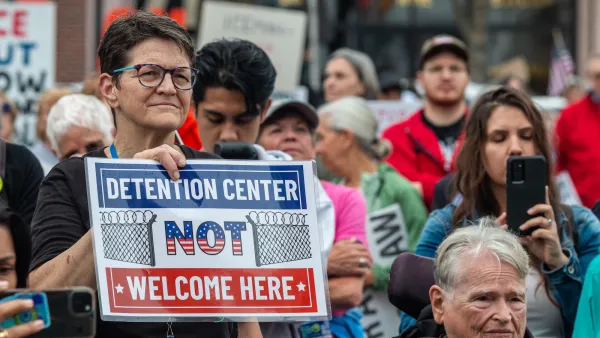
Land use as protest: How American cities are fighting federal immigration detention centers
Across the country, city officials are using zoning codes and land use law to limit where ICE detention facilities can be built.
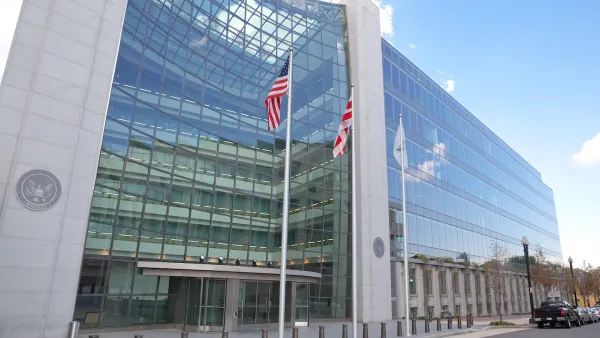
Office Vacancies at Federal Agencies as High as 75 Percent
Many federal agencies are sitting on underutilized buildings, causing a congressional committee to call into question the need for so much real estate.

The state-sanctioned urbicide of Austin
People don’t kill cities. Freeways do.

US to reduce Colorado River water deliveries to Mexico
A new Colorado Treaty amendment reduces Mexico’s Colorado River water allocation by 250,000 acre feet.

New Jersey’s second-largest city bans standalone data centers
Jersey City will continue to allow co-location facilities, such as those meant for research institutions that store their own data.

Amtrak not solely to blame for New Jersey commuter rail's unreliability, report finds
A new study from the Garden State Initiative found that NJ Transit’s budget grew 20% across a 4 year period, but reliability declined significantly over the same period.

EPA erases limits on planet-warming pollution from power plants
Under Monday’s plan, power plants would still have some limits on how much mercury, arsenic and other contaminants they can emit.

Phoenix announces new on-demand transit service, more frequent RAPID buses
Both new services will launch in October, and are part of Phoenix's Project Effective Access Solutions for Easing Congestion.

FREE Course: Walkable City 1: Why Walkability?
After describing his path towards focusing on walkability as the essence of good planning, Jeff Speck marches through his five principal reasons for making more walkable places.
Reinventing Malls: Planning Alchemy—Turning Gray Fields Into Gold
The course focuses on the opportunities and imperatives that shape reinvention of mall sites.

Eagle County Government
Harvard University Graduate School of Design
Nashville Planning Department
The Architects Foundation
University of Cincinnati Online
The Pocatello Development Authority
The Urban Renewal Agency of the City of Pocatello
Journal of the American Planning Association