This piece from Next American City looks at health in New York City, and why the city's new health commissioner is looking at elevators, escalators and other subtleties of the built environment.


The city is releasing a new document called the Active Design Guidelines, which seeks to improve public health through the built environment.
"Musings about elevators by the health department may sound weird, but so too is the problem: Today the majority of adults and nearly half of the elementary school children in New York City are overweight or obese. And the underlying causes of obesity – physical inactivity and unhealthy diet – are, after tobacco, the leading causes of New York's premature deaths, disproportionately affecting the city's black and Latino communities.
New York may be America's thinnest city, where cars are becoming as passe as smoking, thanks to healthy doses of density, public transit, open space and, increasingly, bike lanes. But only a quarter of city residents get regular exercise, Farley estimated. 'This is a great city for moving around,' says David Burney, the city's commissioner of design and construction. 'But we have a lot of opportunities for improvement. There's a conspiracy of small things we're doing that can make the city better.'"
Read the full story: The Architecture of Healthiness
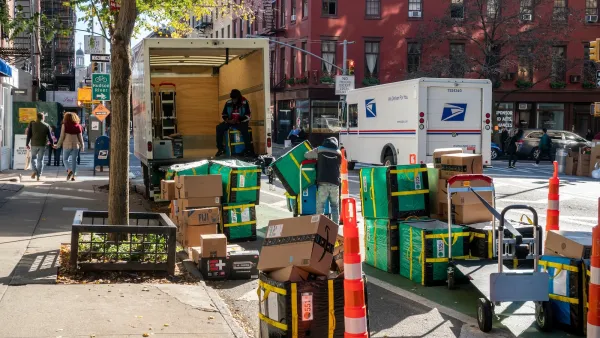
Report: 75% of NYC warehouses are in 'disadvantaged communities'
Low-income New Yorkers are 1.2 times more likely to live within half a mile of a warehouse.

NYC Congestion Pricing Revenue Will Fund up to 1,000 Hybrid Refrigerated Trucks
Traffic to the Hunts Point Produce Market causes increased rates of asthma in surrounding neighborhoods.
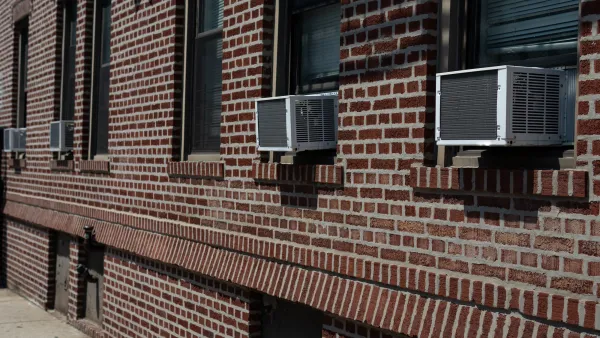
New NYC Law Requires Landlords to Provide AC Units — But not in Public Housing
Building owners are required to install AC units for tenants who request them in the next four years, but tenants are on the hook for electricity costs.

Planetizen Federal Action Tracker
A weekly monitor of how Trump’s orders and actions are impacting planners and planning in America.

California plans to bury El Niño’s downpour
If the state plays its cards right, it may be able to store a billion acre-feet of El Niño’s water in aquifers.

Desperate measures: Advocates weigh draining Lake Powell to fill Colorado River
Draining the reservoir could reduce evaporation losses by a couple hundred thousand acre-feet.

In Texas, data centers are swallowing promised parkland
Residents who moved to Taylor, Texas for a rural community now have to contend with three data centers in their backyard.

How a Chicago-sized wind farm beat the odds and powered on
The project spanned five presidential administrations and a standoff with a U.S. military base.

MTA gives itself 30 days to transform pit into basketball court
The site has been under construction since 2022; the city originally estimated it would finish the court in 2024.

FREE Course: Walkable City 1: Why Walkability?
After describing his path towards focusing on walkability as the essence of good planning, Jeff Speck marches through his five principal reasons for making more walkable places.
Reinventing Malls: Planning Alchemy—Turning Gray Fields Into Gold
The course focuses on the opportunities and imperatives that shape reinvention of mall sites.

City of Rosemead
Rutgers University, Edward J. Bloustein School of Planning and Public Policy
One Hundred Miles
Hunter College, City University of New York (CUNY)
The Architects Foundation
University of Cincinnati Online
City of Cambridge
Montrose County
The Pocatello Development Authority