A patent filed by Google in 2008 illustrates a process where ads could be placed on buildings, marquees and billboards in Google Street View.


As Frederic Lardinois notes, this could stir up a lot of issues over virtual property rights, particularly if Google leases virtual ad space over existing physical ad space.
Lardinois writes, "It makes perfect sense for the owner of a local coffee shop to advertise through this system, but in this patent, Google also describes an advertising auction. Does that mean that a rival coffee shop could also bid for ad space on the virtual image of a competitor's store in Street View?"
Brennan Slattery at PC World adds, "Google has had its hands on our virtual space for quite some time, but never to this degree. It will be interesting to watch money exchange hands and glitzy signs appear out of nowhere..."
Read the full story: Google Plans to Upgrade Old Billboards in Street View


Google will fund removal of 2000 acres of trees in Oklahoma to save water while building new data center
The company has invested $30 million into projects intended to address Oklahoma’s water shortage.

Google Razed 80 Acres in Downtown San Jose. Then… Nothing Happened.
The project was expected to generate about $79 million annually in property taxes.

Why a Failed ‘Smart City’ Is Still Relevant
A Google-backed proposal to turn an underused section of Toronto waterfront into a tech hub holds relevant lessons about privacy and data.

Planetizen Federal Action Tracker
A weekly monitor of how Trump’s orders and actions are impacting planners and planning in America.

Northwest rail fans eager for Sept. 30 debut of Amtrak’s Airo fleet
Get ready for that new train smell and more seats. But they won’t go faster or run more frequently on the Cascades route in Washington and Oregon.
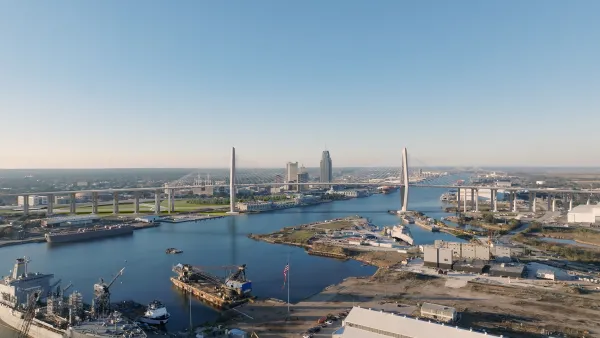
Alabama scores up to $2.5 billion federal loan for largest infrastructure project in state’s history
The Mobile River Bridge and Bayway Project aims to ease congestion at Alabama’s worst bottleneck.

Novel study finds extreme state-by-state disparity in housing construction timelines
The first comprehensive working paper on U.S. construction timelines also found that the permitting process for multi-family projects has slowed nationwide.

California may destroy its beaches trying to save homes from El Niño
Boulders and seawalls can protect homes from waves, but ultimately destroy sandy beaches.

California high-speed rail accomplishes only one legislative goal in 2026
The majority of the agency's failed pitches were never developed into written proposals.

FREE Course: Walkable City 1: Why Walkability?
After describing his path towards focusing on walkability as the essence of good planning, Jeff Speck marches through his five principal reasons for making more walkable places.
Reinventing Malls: Planning Alchemy—Turning Gray Fields Into Gold
The course focuses on the opportunities and imperatives that shape reinvention of mall sites.

City of Thousand Oaks
City of Wisconsin Rapids
Harvard University Graduate School of Design
The Architects Foundation
University of Cincinnati Online
Northern Illinois Transit Authority (NITA)
The Pocatello Development Authority
The Urban Renewal Agency of the City of Pocatello