Parks officials in San Francisco look to mimic New York City's approach to funding parks through public-private partnerships.


Phil Ginsburg, general manager of the San Francisco Recreation and Park Department, has proposed a plan that would allow people to pay for naming rights on park properties and structures, and increase the amount of vending opportunities within the city's parks.
"Under his money-generating vision, more coffee kiosks and hot dog stands would be allowed to operate in San Francisco parks, and fields would be rented out more often for concerts and other special events. Longtime park concessionaires may be ousted by new leaseholders who offer more money.
Donors would be recognized by having a grove of trees, playground, golf course or recreation center named in their honor.
'We need to become much more entrepreneurial, much more self-sufficient,' said Ginsburg, Mayor Gavin Newsom's onetime chief of staff who became the city's recreation and parks chief in July."
Read the full story: Public-private pairing envisioned for S.F. parks

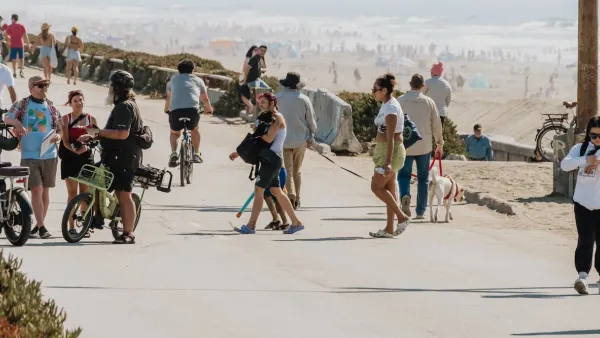
San Francisco Opens Park on Former Great Highway
The Sunset Dunes park’s grand opening attracted both fans and detractors.
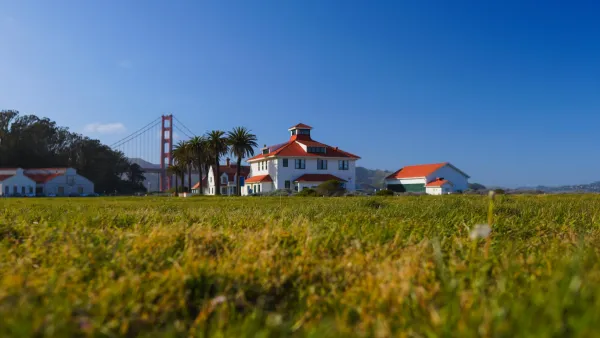
San Francisco's Presidio Earns Fifth 'Green Flag' Award
The Presidio has been honored with the Green Flag Award for the fifth year in a row. The award is the most universally recognized international standard of quality for parks and green spaces.
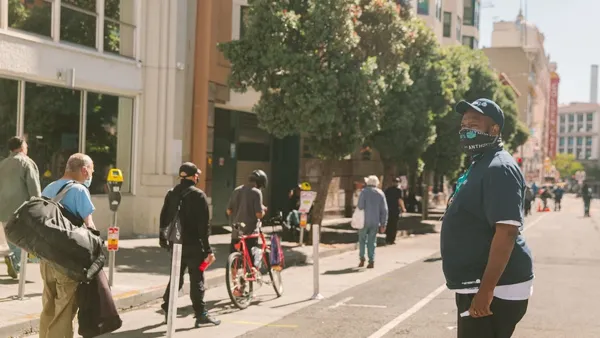
Tenderloin Greenway Closer to Reality
The Golden Gate Greenway will provide much-needed permanent park and community space in the dense neighborhood.

Planetizen Federal Action Tracker
A weekly monitor of how Trump’s orders and actions are impacting planners and planning in America.

California plans to bury El Niño’s downpour
If the state plays its cards right, it may be able to store a billion acre-feet of El Niño’s water in aquifers.

Desperate measures: Advocates weigh draining Lake Powell to fill Colorado River
Draining the reservoir could reduce evaporation losses by a couple hundred thousand acre-feet.

After public outcry, Massachusetts city releases housing development tracker
Cambridge’s tracker currently shows 250 housing projects in various stages of development.

40 years after approval, Chicago breaks ground on new park
The park honors Jean Baptiste Point du Sable, the city’s first permanent non-native settler.

‘Hoodwinked:’ New Mexico bill aimed at microgrids paves way for data center development
In an interview with High Country News, Padilla said the legislation “ignited” New Mexico's economy.

FREE Course: Walkable City 1: Why Walkability?
After describing his path towards focusing on walkability as the essence of good planning, Jeff Speck marches through his five principal reasons for making more walkable places.
Reinventing Malls: Planning Alchemy—Turning Gray Fields Into Gold
The course focuses on the opportunities and imperatives that shape reinvention of mall sites.

City of Rosemead
Rutgers University, Edward J. Bloustein School of Planning and Public Policy
One Hundred Miles
Hunter College, City University of New York (CUNY)
The Architects Foundation
University of Cincinnati Online
City of Cambridge
Montrose County
The Pocatello Development Authority