This essay from Places offers five simple ways to make the world a better place -- and they're all related to the built environment.


"So you want to change the world? Start by changing the built environment. Buildings shape our experience and open up or close down possibilities for life. Hardly anyone gets to realize his or her visions for transforming society, but activism through architecture is a place to start. Here I offer a guide, idiosyncratic and partial, drawing on personal experience and American history, to how architecture can contribute to social reform."
Author Jonathan Massey offers five suggestions: vote, shop, build a house, raise a barn, and throw a party.
Read the full story: Five Ways to Change the World
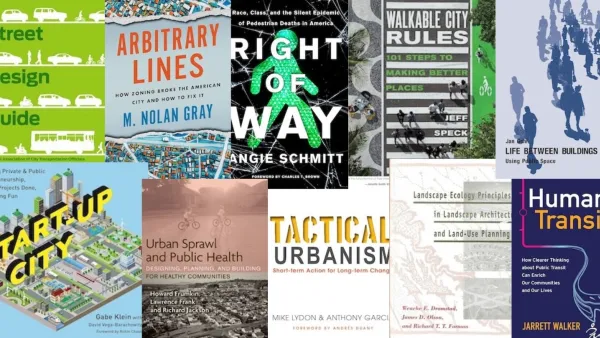
Top 10 Island Press Built Environment Books
From “Life Between Buildings” to “Human Transit,” Island Press has played a critical role in building the catalogue of literature that is foundational to urban planning.
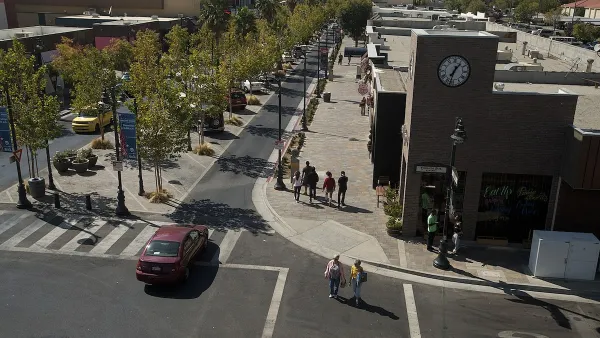
The Vast Potential of the Right-of-Way
One writer argues that the space between two building faces is the most important element of the built environment.

How the Built Environment Affects Your Mood
Humans have survived for millennia by staying together, not apart.

Planetizen Federal Action Tracker
A weekly monitor of how Trump’s orders and actions are impacting planners and planning in America.

California plans to bury El Niño’s downpour
If the state plays its cards right, it may be able to store a billion acre-feet of El Niño’s water in aquifers.

Desperate measures: Advocates weigh draining Lake Powell to fill Colorado River
Draining the reservoir could reduce evaporation losses by a couple hundred thousand acre-feet.

Los Angeles just elected an urban planner as its mayor
Transportation analysts are optimistic that Raman will be more aggressive in addressing transit issues than Bass.

Mamdani’s pied-à-terre tax survives legal challenge
A panel of judges found that the plaintiffs failed to demonstrate injury as a result of New York City's implementation of the tax.

Eastern Nebraska is running out of electricity
Data centers and electrification are straining eastern Nebraska’s grid, throttling economic development.

FREE Course: Walkable City 1: Why Walkability?
After describing his path towards focusing on walkability as the essence of good planning, Jeff Speck marches through his five principal reasons for making more walkable places.
Reinventing Malls: Planning Alchemy—Turning Gray Fields Into Gold
The course focuses on the opportunities and imperatives that shape reinvention of mall sites.

City of Rosemead
Rutgers University, Edward J. Bloustein School of Planning and Public Policy
One Hundred Miles
University of Michigan School for Environment and Sustainability (SEAS)
Hunter College, City University of New York (CUNY)
The Architects Foundation
City of Cambridge
Montrose County
The Pocatello Development Authority