Chicago's decision to privatize its parking meters seems to be a loss for the city, as new data shows the city could have made much more money in the long term had they maintained operational management.


"The parking meter company projects total revenues of more than $75 million and net income of about $58 million in 2010, after a second round of rate increases go into effect across the city on Jan. 1. In the first 10 ½ months of operation ending Dec. 31 of this year, the company expects $32.7 million in net operating profit, for a 70 percent profit margin.
Financial experts who reviewed the data say Chicago could have made out much better in the long run had it just kept the meters."
The city was paid $1.15 billion in February for a 75-year contract over most of the city's meters. The private company, Chicago Parking Meters LLC, is expected to continue to earn high amounts of net income over the course of the contract.
Read the full story: Company Piles Up Profits From City's Parking Meter Deal

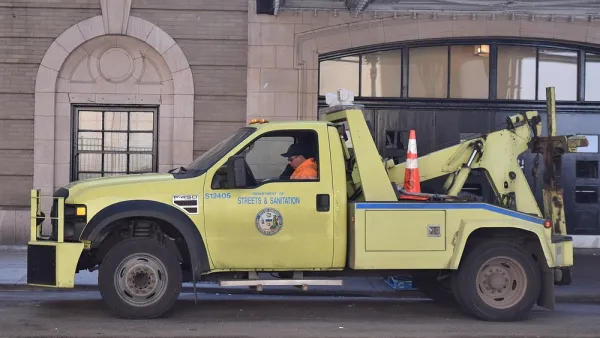
Chicago to Install New Parking Meters to Lessen Impact of Bad Contract
The city of Chicago will install 752 new parking meters in 2017—but still fall far from the Shoupian ideal.
The Lingering Consequences of Chicago's Parking Meter Privatization
An article examines "Exhibit A for bad public contracting"—a 75-year lease between Chicago a Morgan Stanley-led private consortium for 36,000 parking meters—as a cautionary tale about the lingering impacts of bad deals.
Chicago Privatizes Parking
For $1.16 billion, Chicago Parking Meters LLC, has won the rights to manage Chicago's parking meters. This is one step the city has taken to ease budget shortfalls.

Amtrak, CN end decades-long dispute with eight-year agreement
The new operating agreement establishes an updated framework for the companies to work together, including processes to resolve disputes.

Judges permit Denver to divert 77,000 acre feet from the Colorado River for reservoir expansion
Overuse and climate change have caused the Colorado River’s water levels to plummet.

Nation's most wind-powered state turns to coal as data centers increase energy demand
For the first time in decades, Iowa has increased its generation of coal power.

Boston has spent millions making the Green Line more accessible — and there’s no end in sight
While the city has invested millions into expanding and adding platforms to the Green Line to make it more accessible, new train cars set to arrive next year will be too tall for disabled passengers to board without raising the current platforms.

Idaho may see an 18% drop in federal surface transit funding — the largest estimated cut in the US
Transit systems in rural communities are much more reliant on federal funding to provide their services.

How ‘post-disaster gentrification’ alters neighborhoods after natural calamities
After hurricanes, fires or other calamities, the original residents of a community are often replaced by younger, wealthier residents.

FREE Course: Walkable City 1: Why Walkability?
After describing his path towards focusing on walkability as the essence of good planning, Jeff Speck marches through his five principal reasons for making more walkable places.
Reinventing Malls: Planning Alchemy—Turning Gray Fields Into Gold
The course focuses on the opportunities and imperatives that shape reinvention of mall sites.

City of Wisconsin Rapids
Harvard University Graduate School of Design
KFH Group Inc.
The Architects Foundation
University of Cincinnati Online
The Pocatello Development Authority
The Urban Renewal Agency of the City of Pocatello