Cape Town, South Africa is developing into the cultural center of the continent, according to this piece from Travel + Leisure.


"Unlike the world's established design capitals-Amsterdam, Copenhagen, or London-Cape Town, and by extension South Africa, lacks almost entirely the traditions of teaching and sponsoring modern furniture and product design for its own sake (not surprising for a country that, until 15 years ago, had rather more pressing goals, like achieving democracy); and despite a millennia-old heritage of craftsmanship, it still lags far behind Europe and the United States in mass-manufacturing knowledge. As a result, until recently it has had no coherent design identity to show the world, beyond what could be inferred from a steadily exported stream of vaguely ethnic Africana-variations on the motifs of basketry, beadwork, and woven textiles."
The article focuses on a weekly gathering of artists and craftspeople to sell their work, creating a heart for the city's artistic community.
Read the full story: Cape Town’s Rising Art Scene

Planetizen Federal Action Tracker
A weekly monitor of how Trump’s orders and actions are impacting planners and planning in America.

Eastern Nebraska is running out of electricity
Data centers and electrification are straining eastern Nebraska’s grid, throttling economic development.
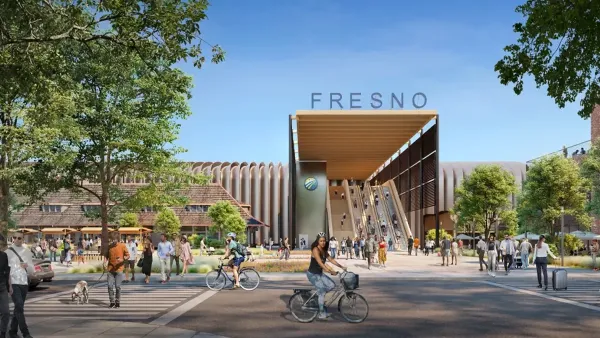
California High-Speed Rail Authority picks trainset manufacturer
The California High-Speed Rail Authority aims to start servicing passengers by 2033.

Massachusetts bogs generate both power, and cranberries
Putting solar panels above farmland is one way Massachusetts is advancing toward its goal of net-zero carbon emissions by 2050.

What could the future of LA transit look like under Raman?
The mayor-elect views broken sidewalks and potholes as crises that can be fixed with better governance.

States are counting on battery farms. Some towns don’t want them.
While fire safety has improved, some communities are still wary.

FREE Course: Walkable City 1: Why Walkability?
After describing his path towards focusing on walkability as the essence of good planning, Jeff Speck marches through his five principal reasons for making more walkable places.
Reinventing Malls: Planning Alchemy—Turning Gray Fields Into Gold
The course focuses on the opportunities and imperatives that shape reinvention of mall sites.

City of Rosemead
Rutgers University, Edward J. Bloustein School of Planning and Public Policy
One Hundred Miles
University of Michigan School for Environment and Sustainability (SEAS)
Hunter College, City University of New York (CUNY)
The Architects Foundation
City of Cambridge
The Pocatello Development Authority
The Urban Renewal Agency of the City of Pocatello