Two inventors explain devices that would allow energy to be harvested along highways and from the highways themselves.


"Last year Oregon launched a "solar highway" demonstration project with a 104 kilowatt ground-mounted solar array situated at the interchange of Interstates 5 and 205. The array powers about a third of the lights on the interchange. Massachusetts recently announced a plan to install a utility-scale wind turbine – big enough to power 400 households – on land adjacent to the Massachusetts Turnpike's Blandford Rest Area."
"[The inventors] say the solar and wind power generated, given the available incentives, would be cost-competitive with natural gas-fueled power generation.
Whether or not that's overstated remains to be seen, but the Federal Highway Administration does see promise - in general terms - in roadside renewable energy innovations, and it plans to provide funding for various projects."
Read the full story: Harvesting Clean Energy Along the Road
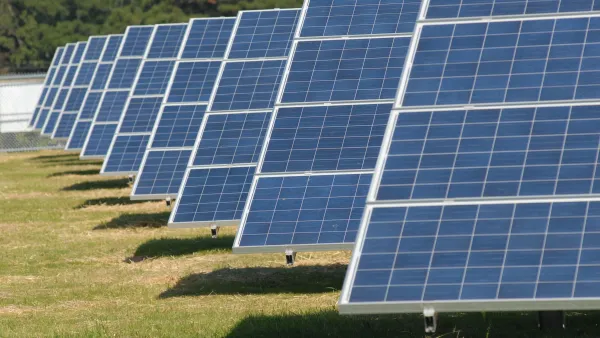
New Jersey Has a Plan to Shift to Clean Energy, but Questions Remain
The state’s energy plan focuses on the move to renewable energy, but specifics about how that will happen and what the costs will be need to be pinned down.
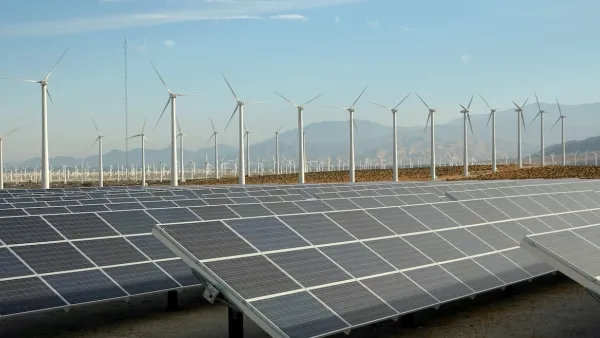
California’s Shift to Renewables: Successes and Challenges
The state aims to run on 100 percent renewable energy by 2045.

Zoning Stands in the Way of Renewable Energy
Renewable energy is cheap as ever, but zoning isn’t keeping up with the market.

Planetizen Federal Action Tracker
A weekly monitor of how Trump’s orders and actions are impacting planners and planning in America.

Eastern Nebraska is running out of electricity
Data centers and electrification are straining eastern Nebraska’s grid, throttling economic development.

Washington state to charge fee to drivers with fuel-efficient cars
Revenue from the fee will go towards supporting the state’s highways.

Instead of building new housing, LA developers are turning mansions into mega-mansions
In the richest areas, the number of houses valued at $30 million with demolition permits has skyrocketed since 2018.

Illinois considers spending $1 billion in taxpayer money on data center
A quantum computing campus and data center are currently under construction in Chicago.

As development costs rise, Boston moves to lessen affordable housing requirements
The Boston Zoning Commission and the City Council still need to approve Boston Mayor Michelle Wu’s proposed changes

FREE Course: Walkable City 1: Why Walkability?
After describing his path towards focusing on walkability as the essence of good planning, Jeff Speck marches through his five principal reasons for making more walkable places.
Reinventing Malls: Planning Alchemy—Turning Gray Fields Into Gold
The course focuses on the opportunities and imperatives that shape reinvention of mall sites.

City of Charlotte
City of Rosemead
Rutgers University, Edward J. Bloustein School of Planning and Public Policy
University of Michigan School for Environment and Sustainability (SEAS)
Hunter College, City University of New York (CUNY)
The Architects Foundation
University District Partnership
City of Cambridge
The Pocatello Development Authority