A subdivision in Florida's Dade County is left half-finished, leaving early buyers to live in a ghost town.


"Antillean Isles, a new Homestead subdivision, promised homeowners a community of elegant estate homes with the 'alluring architecture of the tropics.''
But when Martha Samohano glances out the window of her four-bedroom house she doesn't see the tropics -- just dirt, gravel and weeds. After the housing bubble burst, developers packed up their bulldozers and fled, leaving a bleak, lifeless landscape, frozen the moment things went sour.
''Everything is empty around me,'' Samohano said. 'It's very depressing to live in an area where you only have weeds growing up.'
While the darkened downtown Miami condominium tower has become a symbol of the real estate bust, at least most builders stayed around to see their projects through to completion. Things are worse in the South Florida's most far-flung subdivisions."
Read the full story: Real estate bust turns South Dade suburbs into modern ghost towns
Subdivisions Becoming Ghost Towns
As foreclosures spread throughout the suburbs, subdivisions are rapidly becoming modern-day ghost towns, according to this column from The Seattle Times.
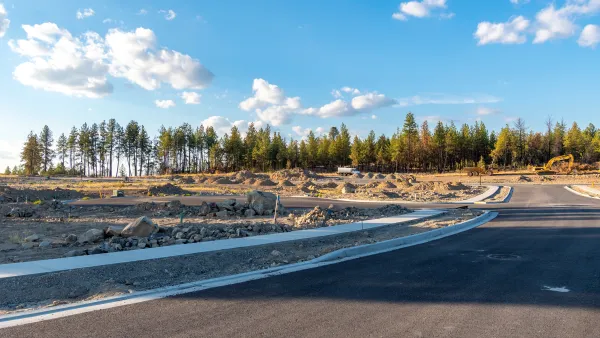
Spokane Imposes Temporary Ban on New Subdivision Housing Due to Wildfire Risk
Citing inadequate fire protection and public safety resources, the Spokane City Council has temporarily halted subdivision development in the wildland-urban interface of Latah Valley.
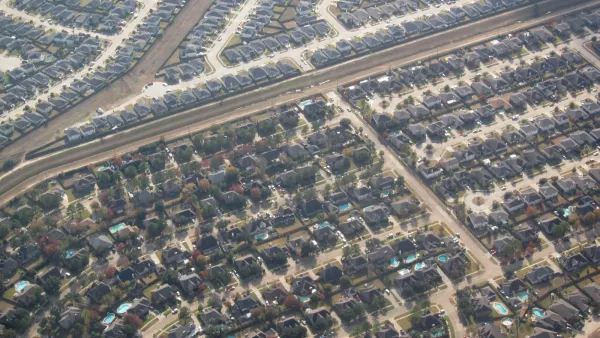
Rethinking the Indelible Lines of Subdivision
The subdivision process imposes rules that result in a lack flexibility, convoluted urban design, and diced up landscapes.

Planetizen Federal Action Tracker
A weekly monitor of how Trump’s orders and actions are impacting planners and planning in America.

Eastern Nebraska is running out of electricity
Data centers and electrification are straining eastern Nebraska’s grid, throttling economic development.

Study reveals best places in the U.S. for cycling, walking
New research from Streetlight Data examines bicycle and pedestrian miles per capita in the 100 largest U.S. cities by population.

DSA members accuse Mamdani of 'abandoning values' over housing redevelopment
New York City's mayor plans to replace about 2,000 units of public housing with private, mixed-income housing.

All sides of BRT debate unhappy with CDOT’s most recent move
The Colorado Department of Transportation is no longer considering center-running bus lanes for Colorado Boulevard.

Massachusetts bogs generate both power, and cranberries
Putting solar panels above farmland is one way Massachusetts is advancing toward its goal of net-zero carbon emissions by 2050.

FREE Course: Walkable City 1: Why Walkability?
After describing his path towards focusing on walkability as the essence of good planning, Jeff Speck marches through his five principal reasons for making more walkable places.
Reinventing Malls: Planning Alchemy—Turning Gray Fields Into Gold
The course focuses on the opportunities and imperatives that shape reinvention of mall sites.

City of Rosemead
Rutgers University, Edward J. Bloustein School of Planning and Public Policy
One Hundred Miles
University of Michigan School for Environment and Sustainability (SEAS)
Hunter College, City University of New York (CUNY)
The Architects Foundation
City of Cambridge
The Pocatello Development Authority
The Urban Renewal Agency of the City of Pocatello