Rick Harrison argues that smart growth looks good on paper, but in application the density creates a whole host of problems.


"One goal of Smart Growth is to move our society away from dependence on cars, and many Smart Growth plans intentionally make it difficult to drive through the neighborhood, making walking more inviting. Smart Growth planners advocate short blocks in a grid pattern to distribute traffic (vehicular and pedestrian) evenly within a development. These short blocks produce a multitude of 4-way intersections, and add a multitude of those trendy "turnabouts," to make a bland site plan look more interesting.
But all of this together destroys 'flow'. On the other hand, in a grid planned neighborhood you might drive a straight line with an occasional turn, giving the impression of a much shorter drive than a curved subdivision. But with short blocks, a driver must stop completely, pause, then when safe accelerate through the intersection onto the next intersection, then repeat multiple times. This scenario uses a tremendous amount of energy; the car eats gas."
Read the full story: Smart Growth? Or Not So Bright Idea?

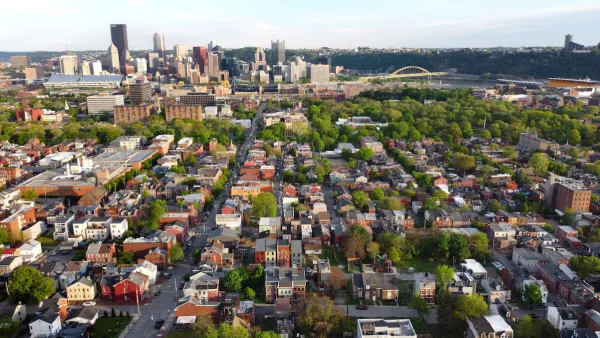
A Better Understanding of Smart Growth Benefits
Smart Growth creates compact, multimodal communities where residents consume less land, drive less, and rely more on non-auto modes. Planners have important stories to tell about the benefits of Smart Growth.
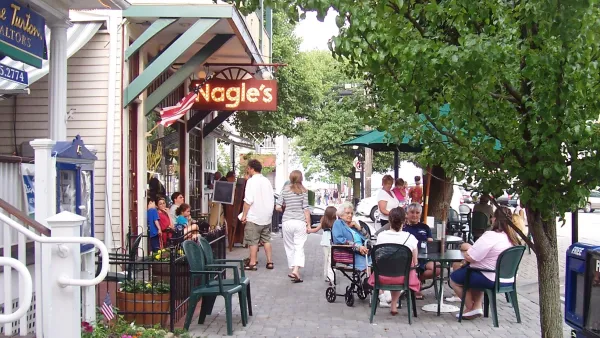
Defining the Buzzword: What's a 15-Minute City?
What does it mean to be a 15-minute city?
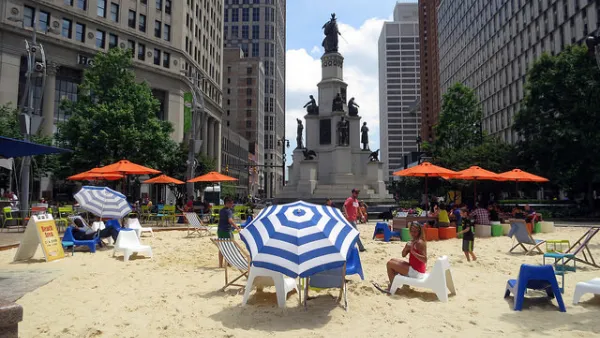
Different Types of Pro-Development Urbanism, Explained
Can't tell New Urbanism from YIMBY? This post tries to help.

Planetizen Federal Action Tracker
A weekly monitor of how Trump’s orders and actions are impacting planners and planning in America.

The state-sanctioned urbicide of Austin
People don’t kill cities. Freeways do.

US to reduce Colorado River water deliveries to Mexico
A new Colorado Treaty amendment reduces Mexico’s Colorado River water allocation by 250,000 acre feet.

Nation's most wind-powered state turns to coal as data centers increase energy demand
For the first time in decades, Iowa has increased its generation of coal power.

NYC cools commuters with city's first rain garden above a bus stop
New York City officials say the plants in the rain garden can absorb 16 gallons of rainwater during heavy storms.

Brightline West’s future may rely on $6 billion federal loan
The company has until Nov. 2 to make a $400 million equity investment into its proposed high-speed rail line.

FREE Course: Walkable City 1: Why Walkability?
After describing his path towards focusing on walkability as the essence of good planning, Jeff Speck marches through his five principal reasons for making more walkable places.
Reinventing Malls: Planning Alchemy—Turning Gray Fields Into Gold
The course focuses on the opportunities and imperatives that shape reinvention of mall sites.

Eagle County Government
Harvard University Graduate School of Design
Nashville Planning Department
The Architects Foundation
University of Cincinnati Online
The Pocatello Development Authority
The Urban Renewal Agency of the City of Pocatello
Journal of the American Planning Association