There is a near-consensus on the deficiencies of big box retail, but municipalities don't have the will to turn them down. Provinces must step in with development guidelines, writes Christopher Hume.


"Though the province [or Ontario] has made it clear it wants to control development (sprawl) in southern Ontario, it has yet to address the issue of retail. Despite the Places to Grow plan and Greenbelt legislation, the local landscape is cluttered with power centres, big-box malls and other shopping arrangements that go by various names.
[Big box retail developments] fly in the face of common sense, let alone provincial intentions. But that hasn't stopped them from being built. As anyone familiar with the retail industry knows, it isn't just conservative, it's antediluvian. Not just slightly behind the times, but decades out of date.
Though there are few arguments left to those who would defend the power centre, municipalities won't stop them. Councillors are too weak to stand up to the development industry, which puts the mall squarely in the province's court."
Read the full story: It's time to think outside the big box


Opinion: When New Growth Is Really a 'Giant Ponzi Scheme'
Development that depends on subsidies is not fostering true growth and instead is a financial house of cards.
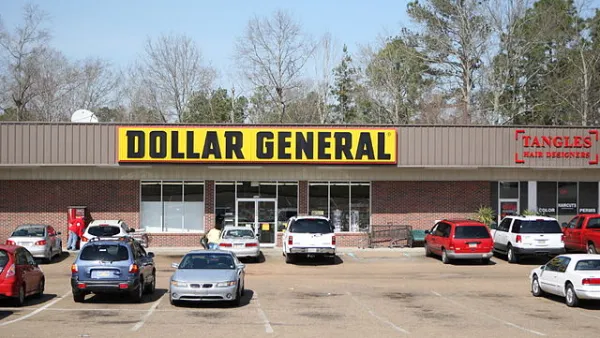
Dollar General Unveils Urban Format Store For Millennials
Now proposing to add another 900 stores in 2018, Dollar General continues to rapidly expand throughout the U.S. However, their push for a smaller more urban format is something seriously worth watching.

Ross May Be Immune from the Amazon Effect
Ross Stores continues its expansion in the face of a much-foretold retail apocalypse. The shopping experience it provides may be one reason it can stand up to Amazon.

Planetizen Federal Action Tracker
A weekly monitor of how Trump’s orders and actions are impacting planners and planning in America.

‘Going backwards:’ Baltimore mayor, students rally against state's transit funding plan
Maryland's proposed six-year plan provides no funding for Baltimore’s BMORE bus program and reduces its road maintenance funding.

Detroit to transform waterfront with $2.2 billion investment
Developers will convert about 18 acres of unused parking lot space into civic spaces.

HUD modernizes 50-year-old manufactured housing framework
The Next Generation Manufactured Housing Action Plan establishes new energy-efficiency standards for manufactured homes, and new guidelines for anchoring them.

New CA housing laws tear down development red tape
Recently-signed legislation makes building starter homes and ADUs cheaper and faster in California.

Metrolink finishes first expansion in 20 years
The transit agency is now one of very few in the United States to connect two major airports.

FREE Course: Walkable City 1: Why Walkability?
After describing his path towards focusing on walkability as the essence of good planning, Jeff Speck marches through his five principal reasons for making more walkable places.
Reinventing Malls: Planning Alchemy—Turning Gray Fields Into Gold
The course focuses on the opportunities and imperatives that shape reinvention of mall sites.

One Hundred Miles
County of Mendocino
planning NEXT
The Architects Foundation
University of Cincinnati Online
Montrose County
Northern Illinois Transit Authority (NITA)
The Pocatello Development Authority