Old buildings could be to blame for much of a city's energy waste. That's the case in New York, where officials are putting together a plan to retrofit older buildings to be less wasteful.


"About a third of New York's building supply was built before 1939-long before sustainability and greenhouse gases were on anyone's radar screen-and very little of it can be classified as green. That's true of the newer housing stock too, for that matter; a recent study showed that New York trails many other major cities in its number of LEED buildings and green housing options.
Which means that nearly 80 percent of New York City's carbon footprint comes from its energy-guzzling buildings. Thus the mayor announced last month that buildings bigger than 50,000 square feet would undergo a major overhaul, joining cities like Los Angeles and Seattle in a massive green building retrofit. Following the lead of the federal government (and inspired in part by stimulus funds), New York will now attempt to make existing buildings energy-efficient, lower their greenhouse gas emissions and remove their toxic innards."
Read the full story: In some cities, the greenest buildings are already built


Climate Change Law: A Primer for Cities
A report from the Sabin Center provides a legal framework for municipal-level action on climate change policy.
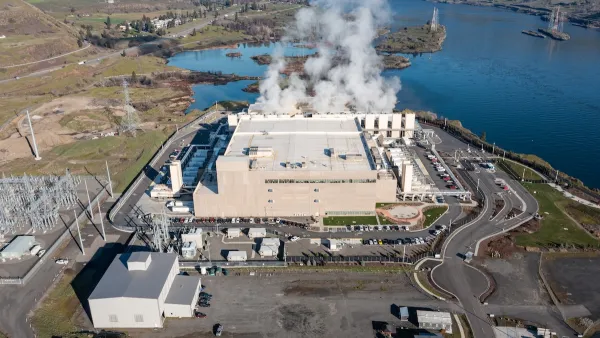
Data centers are consuming nearly 25% of Oregon’s power
The state has 111 data centers, with 32 more either planned or under construction.
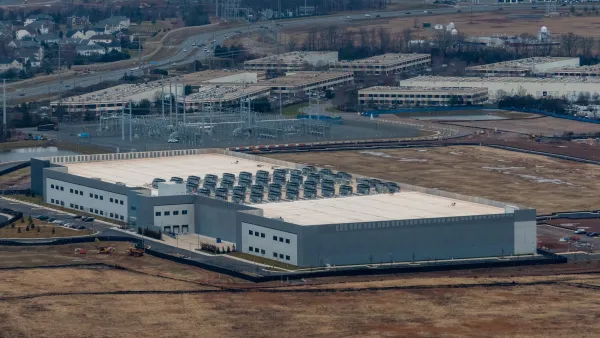
Data center developer offers over $4M per acre to buy out homeowners
Data center builders are outbidding home builders for land, prompting concerns about competition with housing.

Planetizen Federal Action Tracker
A weekly monitor of how Trump’s orders and actions are impacting planners and planning in America.

Amtrak, CN end decades-long dispute with eight-year agreement
The new operating agreement establishes an updated framework for the companies to work together, including processes to resolve disputes.

Northwest rail fans eager for Sept. 30 debut of Amtrak’s Airo fleet
Get ready for that new train smell and more seats. But they won’t go faster or run more frequently on the Cascades route in Washington and Oregon.

LAX SkyLink opening delayed again, contractor won’t commit to new deadline
The project was supposed to open its doors to the public in 2023.

Caltrain may slash over one-third of its stations
If Bay Area voters reject two transit tax measures, Caltrain, BART and AC Transit will see steep service cuts.

A 'dangerous' precedent: North Carolina successfully pressures communities into voting for toll roads
Two mayors resigned from the Charlotte Regional Transportation Planning Organization after it voted in favor of the toll roads.

FREE Course: Walkable City 1: Why Walkability?
After describing his path towards focusing on walkability as the essence of good planning, Jeff Speck marches through his five principal reasons for making more walkable places.
Reinventing Malls: Planning Alchemy—Turning Gray Fields Into Gold
The course focuses on the opportunities and imperatives that shape reinvention of mall sites.

City of Thousand Oaks
City of Wisconsin Rapids
Harvard University Graduate School of Design
The Architects Foundation
University of Cincinnati Online
The Pocatello Development Authority
The Urban Renewal Agency of the City of Pocatello