With goals of LEED-certification and plans for reuse after the games, Vancouver's Olympic Village is being called a model for event-based sustainability.


"All 16 residential buildings in the city's 2010 Winter Olympics Athlete's Village will meet the USGBC's Gold-level sustainability standards, according to Ian Smith, manager of the development office for Southeast False Creek, the district where the complex is located. Additionally, a 30,000-square-foot community center will be certified LEED Platinum."
"The 1.4-million-square-foot complex will accommodate 3,000 athletes competing in the Winter Games, which start February 12, 2010. Master-planned by the Canadian architect Norm Hotson, the village is being constructed on Vancouver's last strip of undeveloped waterfront, on an abandoned industrial site."
"...Perhaps the most sustainable attribute is the long-term plan for the site: Once the Games are over, the Athlete's Village will be converted into a mixed-use development."
Read the full story: Vancouver’s Olympic Village Aims High on Sustainability Scale
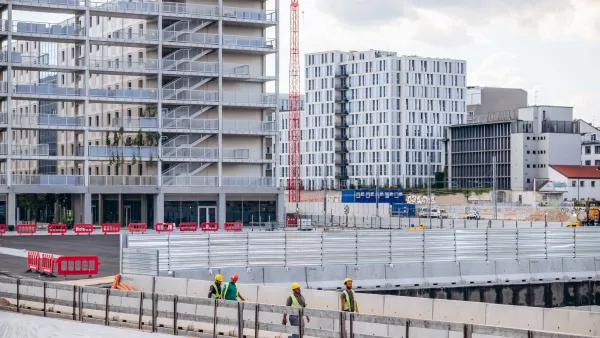
Milan’s Olympic Athletes’ Village is Designed for Reuse
This year’s athlete housing is designed specifically to be repurposed as student housing after the games.
The Good and Bad of Vancouver's Olympic Legacy
This column from The Seattle Times looks at two of the physical legacies of the 2010 Winter Olympics in Vancouver, and finds both success and room for improvement.
Olympic Village Named LEED Platinum Neighborhood
The Olympic Village in Vancouver's Southeast False Creek has earned a platinum rating in the U.S. Green Building Council's LEED for Neighborhood Development rating system.

Planetizen Federal Action Tracker
A weekly monitor of how Trump’s orders and actions are impacting planners and planning in America.

California plans to bury El Niño’s downpour
If the state plays its cards right, it may be able to store a billion acre-feet of El Niño’s water in aquifers.

Desperate measures: Advocates weigh draining Lake Powell to fill Colorado River
Draining the reservoir could reduce evaporation losses by a couple hundred thousand acre-feet.

Chicago voters approve permanent festival grounds, penalty for vacant property owners
Currently, major summer and fall festivals take over public parks for weeks at a time, drawing criticism from nearby residents

NYC votes to cut outdoor dining red tape, speed up permitting
New York City also voted to allow the Department of Transportation to begin work on urgent projects before notifying elected officials.

California appears to reject Prop. 45
The proposition would have expanded the projects that qualify for a streamlined environmental review, effectively paring down the California Environmental Quality Act.

FREE Course: Walkable City 1: Why Walkability?
After describing his path towards focusing on walkability as the essence of good planning, Jeff Speck marches through his five principal reasons for making more walkable places.
Reinventing Malls: Planning Alchemy—Turning Gray Fields Into Gold
The course focuses on the opportunities and imperatives that shape reinvention of mall sites.

City of Rosemead
Rutgers University, Edward J. Bloustein School of Planning and Public Policy
One Hundred Miles
Hunter College, City University of New York (CUNY)
The Architects Foundation
University of Cincinnati Online
City of Cambridge
Montrose County
The Pocatello Development Authority