An exit interview with Tom Graff, who joined Environmental Defense Fund in 1971, when the environmental movement was just getting started.


The article features an interview with Tom Graff, outgoing regional director of Environmental Defense Fund (EDF), talking about the evolution of the environmental movement and the past and future of California water policy:
"I would say that my principal niche was to recognize that economics could, and probably should, play a big role in environmental policy-making. Paying attention to how economic incentives influence business and personal behavior is one key to bringing about environmental improvements."
"There has been considerable progress on California water. For one example, look at the governor's recent emergency drought declaration. Water transfers, pioneered by EDF over a quarter century ago, are now assumed to be a key policy tool to help get us through this year's drought."
"I have a bit of a confession on my part, and I think on EDF's as well. Despite my role in defeating the 1982 referendum, we are open to conversations about a Peripheral Canal. What is most critical this time around is that the environment and, especially, the fish get the preference that they have long been promised but have never actually received."
Read the full story: EDF’s Tom Graff Gave 37 Years of Service; Helped Redefine Environmentalism in the U.S.

Climate change could double household water costs in some cities, study finds
New research suggests that climate change-related stressors are straining municipal water systems.
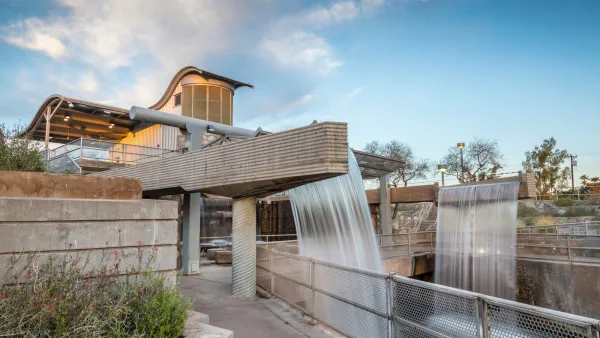
Arizona prepares to tap into emergency water supply as it braces for Colorado River cuts
The Salt River Project has been collecting nearly 4 million acre-feet of water since the mid-1990s.
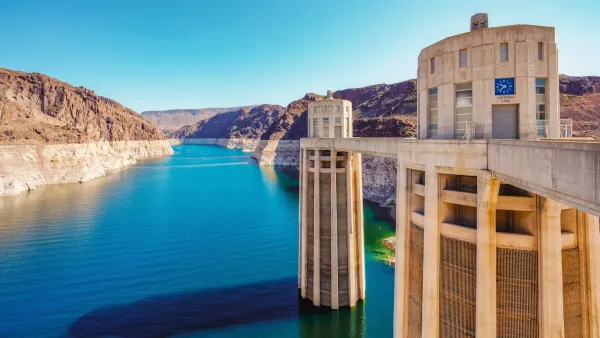
Federal proposal calls for mandatory water cuts to Arizona, California and Nevada
The Bureau of Reclamation stepped in after states failed to come to an agreement over Colorado River water use reductions.

Desperate measures: Advocates weigh draining Lake Powell to fill Colorado River
Draining the reservoir could reduce evaporation losses by a couple hundred thousand acre-feet.

Eastern Nebraska is running out of electricity
Data centers and electrification are straining eastern Nebraska’s grid, throttling economic development.

Malls are becoming the midtowns of the future
Mall and office park redevelopments are a generational opportunity to create new nodes of urbanity.

NYC breaks ground on anti-flooding infrastructure project
New York City's new system will reduce stormwater flows to local sewers by 90%.

One Kentucky town’s secret to affordable housing
The Smoketown Community Land Trust has already built seven affordable homes for community members.

Houston gains petal-shaped cooling infrastructure to make streets more ‘delightful’
The city has installed the pavilions along 15 blocks in Houston.

FREE Course: Walkable City 1: Why Walkability?
After describing his path towards focusing on walkability as the essence of good planning, Jeff Speck marches through his five principal reasons for making more walkable places.
Reinventing Malls: Planning Alchemy—Turning Gray Fields Into Gold
The course focuses on the opportunities and imperatives that shape reinvention of mall sites.

City of Rosemead
Rutgers University, Edward J. Bloustein School of Planning and Public Policy
One Hundred Miles
University of Michigan School for Environment and Sustainability (SEAS)
Hunter College, City University of New York (CUNY)
The Architects Foundation
City of Cambridge
Montrose County
The Pocatello Development Authority