Despite some states using stimulus money to fund sprawl-inducing projects, Colorado seems to be avoiding projects that encourage exurban growth, according to this review.


"In Houston, a large chunk of the federal money will go toward cutting a four-lane highway into the prairie surrounding the city, setting the stage for even more subdivision housing and even longer commutes - should the housing markets ever rebound, that is, and should Houstonians of the future decide they want to buy those kind of homes and live the even greater sprawl life, which may be doubtful."
"Colorado seems to have a done a pretty good job at posting most of the projects online so residents can make their own assessments."
"A first look suggests those responsible for allocating funds in Denver have done of good job of not using the money to increase sprawl, using it instead to fund maintenance projects like repaving highways, firming up bridges and creating interchanges. I don't see any new bazillion-dollar outer-band beltway roads to middle-of-nowhere owned by "friends of lawmakers" that's just "prime" for development . But maybe I missed something."
Read the full story: Denver bypasses stimulus sprawl

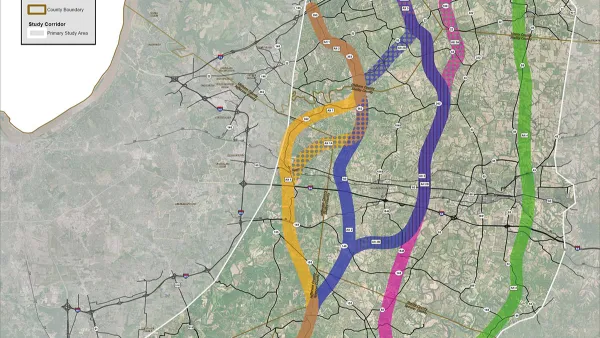
Kentucky Planning a New Freeway Around Louisville, Raising Alarms
Local news sources are shedding light on planning for a new highway route that could pass through sensitive habitat of endangered that has yet to undertake a formal environmental or public input process.
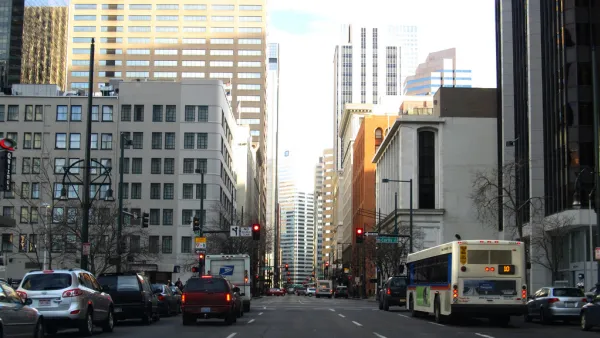
Op-Ed: Downtown Denver's Homogenous Renaissance
There's a lot to like about the resurgence of downtown cores. But as is the case elsewhere, Denver's core has only attracted a small subset of the wider city's population. Most people still call the suburbs home.

Report: Benefits in the Billions for a New Highway Through the Denver Suburbs
The proposed 10-mile Jefferson Parkway expansion would cross land once home to the Rocky Flats nuclear weapons plant—site of one of the country's largest environmental crimes.

Planetizen Federal Action Tracker
A weekly monitor of how Trump’s orders and actions are impacting planners and planning in America.

California plans to bury El Niño’s downpour
If the state plays its cards right, it may be able to store a billion acre-feet of El Niño’s water in aquifers.

Chicago breaks ground on $3 billion megadevelopment
The new neighborhood, titled Foundry Park, will one day host 3,700 residences.

Want to study the Missouri River? Soon, you may need unanimous approval from 10 states
Legislation would require 10 governors’ permission to study or build projects moving water outside the basin.

Desperate measures: Advocates weigh draining Lake Powell to fill Colorado River
Draining the reservoir could reduce evaporation losses by a couple hundred thousand acre-feet.

This road in NYC is infamously dangerous — and Mamdani can't fix it
New York City's Ocean Parkway is known for reckless driving, but the power to implement safety measures lies with the state rather than the city.

FREE Course: Walkable City 1: Why Walkability?
After describing his path towards focusing on walkability as the essence of good planning, Jeff Speck marches through his five principal reasons for making more walkable places.
Reinventing Malls: Planning Alchemy—Turning Gray Fields Into Gold
The course focuses on the opportunities and imperatives that shape reinvention of mall sites.

City of Rosemead
Rutgers University, Edward J. Bloustein School of Planning and Public Policy
One Hundred Miles
Hunter College, City University of New York (CUNY)
The Architects Foundation
University of Cincinnati Online
City of Cambridge
Montrose County
The Pocatello Development Authority