A public-private partnership that would have built a new 10-lane bridge in British Columbia has fallen apart, leaving the $3.1 billion tab on the BC government. Researchers say that much money could build a 200-km light rail system instead.


"What other transportation infrastructure, they asked, could we instead have for $3.1 billion?"
"By the time Prof. Patrick Condon and researcher Kari Dow at the UBC Design Centre for Sustainability finished punching in the numbers and mapped their results, they produced a startling alternative vision. For the same money, concluded the team, the government could finance a 200-kilometre light rail network that would place a modern, European-style tram within a 10-minute walk for 80 per cent of all residents in Surrey, White Rock, Langley and the Scott Road district of Delta, while providing a rail connection from Surrey to the new Evergreen line and connecting Pitt Meadows and Maple Ridge into the regional rail system."
Thanks to Brent Toderian
Read the full story: Want One Port Mann Bridge, or a Light Rail Metropolis?

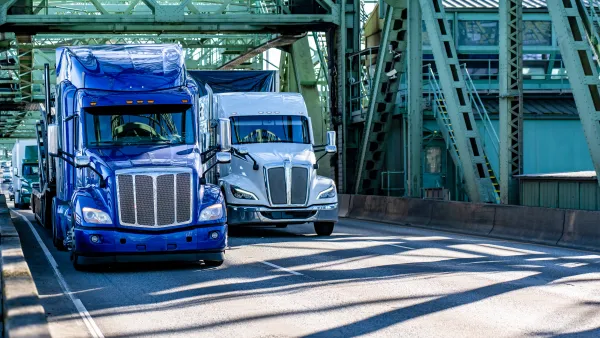
Budget constraints threaten light rail for Oregon, Washington’s new bridge
The current proposal includes only the infrastructure for the light rail, without funding for the train and tracks.
Anatomy of a Failed Infrastructure Project: Columbia River Crossing
Bloomberg Businessweek examines the failed Columbia River Crossing project as a poster child for how political dysfunction is derailing critically needed infrastructure.
Bridge Plan Rejected in Favor of Cheaper Alternatives
Long-held plans for a new bridge over the Columbia River between Portland and Vancouver, Washington, have been thrown out by a panel of experts who have suggested cheaper alternatives.

Amtrak, CN end decades-long dispute with eight-year agreement
The new operating agreement establishes an updated framework for the companies to work together, including processes to resolve disputes.

Judges permit Denver to divert 77,000 acre feet from the Colorado River for reservoir expansion
Overuse and climate change have caused the Colorado River’s water levels to plummet.
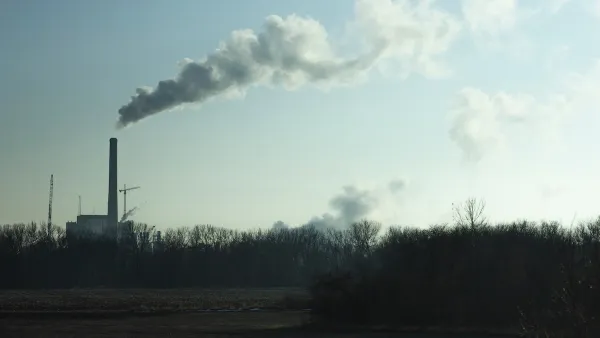
Nation's most wind-powered state turns to coal as data centers increase energy demand
For the first time in decades, Iowa has increased its generation of coal power.

Boston has spent millions making the Green Line more accessible — and there’s no end in sight
While the city has invested millions into expanding and adding platforms to the Green Line to make it more accessible, new train cars set to arrive next year will be too tall for disabled passengers to board without raising the current platforms.

Idaho may see an 18% drop in federal surface transit funding — the largest estimated cut in the US
Transit systems in rural communities are much more reliant on federal funding to provide their services.

How ‘post-disaster gentrification’ alters neighborhoods after natural calamities
After hurricanes, fires or other calamities, the original residents of a community are often replaced by younger, wealthier residents.

FREE Course: Walkable City 1: Why Walkability?
After describing his path towards focusing on walkability as the essence of good planning, Jeff Speck marches through his five principal reasons for making more walkable places.
Reinventing Malls: Planning Alchemy—Turning Gray Fields Into Gold
The course focuses on the opportunities and imperatives that shape reinvention of mall sites.

City of Wisconsin Rapids
Harvard University Graduate School of Design
KFH Group Inc.
The Architects Foundation
University of Cincinnati Online
The Pocatello Development Authority
The Urban Renewal Agency of the City of Pocatello