Through streets in new neighborhoods will reduce traffic on and the cost of maintaining overburdened arterials, but builders and residents say it'll make their communities less safe and attractive.


"Virginia is taking aim at one of the most enduring symbols of suburbia: the cul-de-sac.
The state has decided that all new subdivisions must have through streets linking them with neighboring subdivisions, schools and shopping areas. State officials say the new regulations will improve safety and accessibility and save money: No more single entrances and exits onto clogged secondary roads. Quicker responses by emergency vehicles. Lower road maintenance costs for governments.
Although cul-de-sacs will remain part of the suburban landscape for years to come, the Virginia regulations attack what the cul-de-sac has come to represent: quasi-private standalone developments around the country that are missing only a fence and a sign that says 'Keep Out.'"
Thanks to Dan Reed
Read the full story: In Va., Vision of Suburbia at a Crossroads

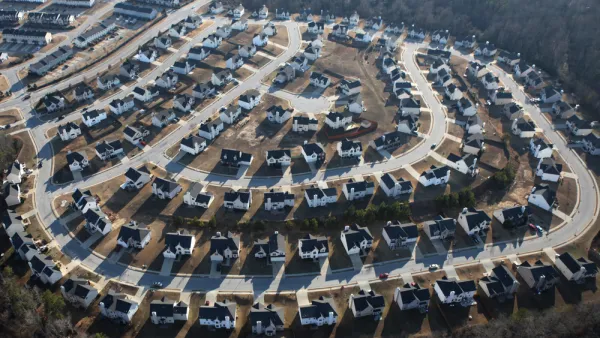
Revisiting Subdivision Regulations
For many decades now, most communities in the United States have grown as a series of subdivisions, built on a tried and true formula. It might be time to change the math.
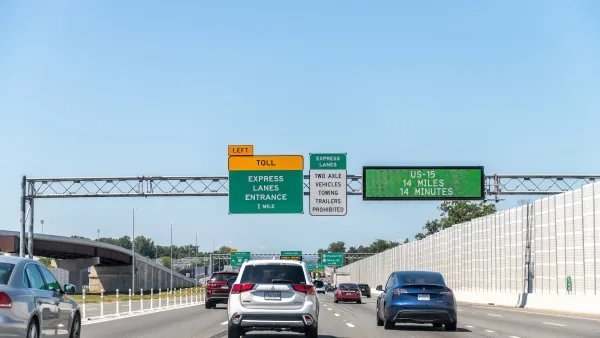
Congestion Costing Reality Check, Part 2: A congestion costing critique
There are good reasons to be skeptical of highway industry claims that traffic congestion is a growing problem. Their analysis is often incomplete and biased. Let’s pull back the curtain on some major congestion cost studies.
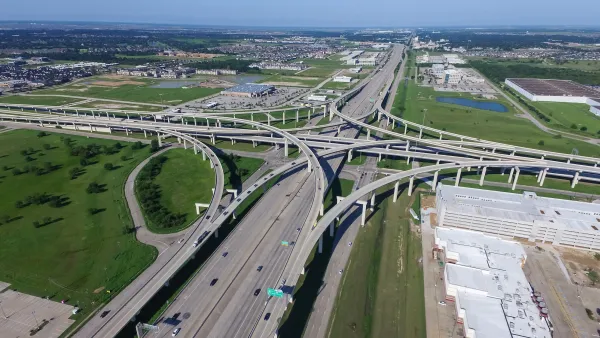
Induced demand is real: Commutes on Houston's 26-lane freeway take 51% longer after expansion
A massive freeway expansion only led to longer drive times, showing that building more lanes won't solve congestion.

Planetizen Federal Action Tracker
A weekly monitor of how Trump’s orders and actions are impacting planners and planning in America.

Amtrak, CN end decades-long dispute with eight-year agreement
The new operating agreement establishes an updated framework for the companies to work together, including processes to resolve disputes.

Northwest rail fans eager for Sept. 30 debut of Amtrak’s Airo fleet
Get ready for that new train smell and more seats. But they won’t go faster or run more frequently on the Cascades route in Washington and Oregon.

Trump administration unlawfully slashed $7 billion in clean energy grants, judge rules
The Environmental Protection Agency ended the Solar For All program, which provided the grants, after President Donald Trump’s inauguration.

Record-breaking wildlife overpass in Colorado brings 91% reduction in animal collisions
Prior to the overpass, vehicles were hitting one deer per day on Colorado’s Interstate 25.

California lawmakers approve just 5% of much-needed LA28 transportation funding
State legislators appear just as unwilling as Trump to pay for Olympics-related transportation projects.

FREE Course: Walkable City 1: Why Walkability?
After describing his path towards focusing on walkability as the essence of good planning, Jeff Speck marches through his five principal reasons for making more walkable places.
Reinventing Malls: Planning Alchemy—Turning Gray Fields Into Gold
The course focuses on the opportunities and imperatives that shape reinvention of mall sites.

City of Thousand Oaks
City of Wisconsin Rapids
Harvard University Graduate School of Design
The Architects Foundation
University of Cincinnati Online
The Pocatello Development Authority
The Urban Renewal Agency of the City of Pocatello