Legislators in Utah have approved a bill that would allow the Utah Department of Natural Resources to swap a 3,000 year old Native American village to a group of developers intent on building a new transit station.


"The Utah Rivers Council has been against the land swap because development of the 13500 South land would encroach on the Jordan River.
The Utah Professional Archeological Council opposes the land swap because it wants to preserve the artifacts, which include housing, from a group of prehistoric Indians from 3,000 years ago.
Utah Open Lands also opposes the land swap because the 13500 South site has been designated as open space.
The bill, which the Utah Senate approved Wednesday morning, doesn't say how the village will be preserved. But the bill's sponsor in the Senate, Sen. Curtis Bramble, R-Provo, said that UTA and the developers will be required to follow strict state and federal preservation laws. "It's natural for all citizens to be concerned about our heritage," Bramble said, adding that the bill passed by the Legislature is "permissive," meaning that while the bill now gives the DNR permission to swap land, it doesn't have to."
Read the full story: Draper land-swap bill is approved
New Transit Lines Open Early, Under Budget
New TRAX light rail lines in Salt Lake City opened a year early and 20% under budget.
Salt Lake City's Transit Era
Salt Lake City, Utah has rapidly expanded its public transit system. In this Q&A, Mayor Ralph Becker talks about making those investments and how well they have worked.
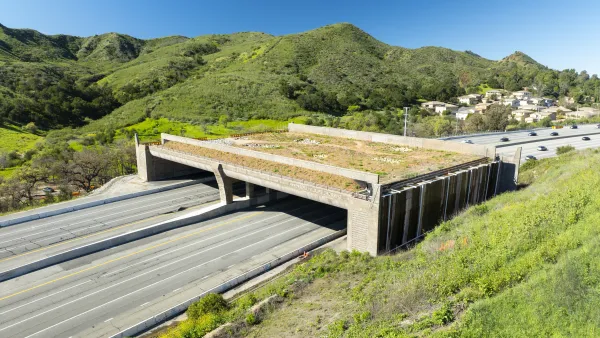
California invests $2.7 billion in over 150 transportation projects
The fund allocates money to transit upgrades and safety improvements to streets surrounding schools, among other ventures.

Planetizen Federal Action Tracker
A weekly monitor of how Trump’s orders and actions are impacting planners and planning in America.

California plans to bury El Niño’s downpour
If the state plays its cards right, it may be able to store a billion acre-feet of El Niño’s water in aquifers.

Desperate measures: Advocates weigh draining Lake Powell to fill Colorado River
Draining the reservoir could reduce evaporation losses by a couple hundred thousand acre-feet.

In Texas, data centers are swallowing promised parkland
Residents who moved to Taylor, Texas for a rural community now have to contend with three data centers in their backyard.

How a Chicago-sized wind farm beat the odds and powered on
The project spanned five presidential administrations and a standoff with a U.S. military base.

MTA gives itself 30 days to transform pit into basketball court
The site has been under construction since 2022; the city originally estimated it would finish the court in 2024.

FREE Course: Walkable City 1: Why Walkability?
After describing his path towards focusing on walkability as the essence of good planning, Jeff Speck marches through his five principal reasons for making more walkable places.
Reinventing Malls: Planning Alchemy—Turning Gray Fields Into Gold
The course focuses on the opportunities and imperatives that shape reinvention of mall sites.

City of Rosemead
Rutgers University, Edward J. Bloustein School of Planning and Public Policy
One Hundred Miles
Hunter College, City University of New York (CUNY)
The Architects Foundation
University of Cincinnati Online
City of Cambridge
Montrose County
The Pocatello Development Authority