Mayor Michael Bloomberg has announced plans to close off parts of Broadway in Manhattan to car traffic. The city will experiment with the closing as early as May, creating a large pedestrian zone near Times Square.


"Although it seems counterintuitive, officials believe the move will actually improve the overall flow of traffic, because the diagonal path of Broadway tends to disrupt traffic where it intersects with other streets."
"The city plans to introduce the changes as early as May and keep them in effect through the end of the year. If the experiment works, they could become permanent. The plan was described by several people who were briefed on it this week."
"The plan calls for Broadway to be closed to vehicles from 47th Street to 42nd Street. Traffic would continue to flow through on crossing streets, but the areas between the streets would become pedestrian malls, with chairs, benches and cafe tables with umbrellas."
"Seventh Avenue would be widened slightly within Times Square to accommodate the extra traffic diverted from Broadway."
"The plan is the latest move by Mr. Bloomberg to change the way the city thinks of its streets, making them more friendly to pedestrians and cyclists and chipping away at the dominance of the automobile."
Read the full story: Mayor Plans to Close Parts of Broadway to Traffic
Broadway Opening is a Leap Towards Better American Cities
This month's Broadway "opening" proposal is as much a clarion to the new thinking of public street space in America as it is a gift to the people of New York City.
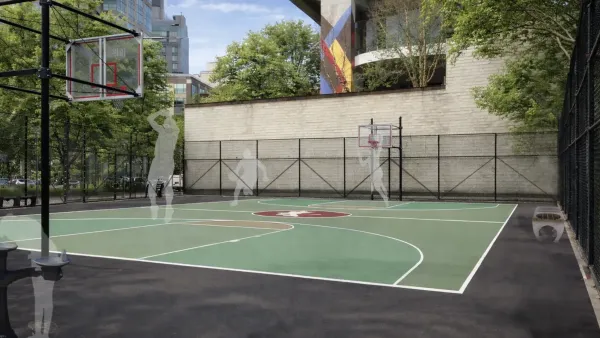
MTA gives itself 30 days to transform pit into basketball court
The site has been under construction since 2022; the city originally estimated it would finish the court in 2024.
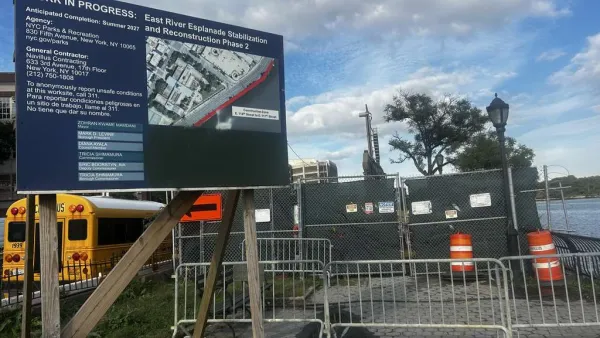
Ballooning costs delay NYC green space restoration after six years of planning
“There’s a stark inequity in how the city prioritizes infrastructure projects across different Manhattan neighborhoods," said Maria Kessler, executive director for Friends of the East River Esplanade. “Why is this neighborhood the last and unserved?”

Planetizen Federal Action Tracker
A weekly monitor of how Trump’s orders and actions are impacting planners and planning in America.

California plans to bury El Niño’s downpour
If the state plays its cards right, it may be able to store a billion acre-feet of El Niño’s water in aquifers.

Desperate measures: Advocates weigh draining Lake Powell to fill Colorado River
Draining the reservoir could reduce evaporation losses by a couple hundred thousand acre-feet.

Los Angeles just elected an urban planner as its mayor
Transportation analysts are optimistic that Raman will be more aggressive in addressing transit issues than Bass.

Mamdani’s pied-à-terre tax survives legal challenge
A panel of judges found that the plaintiffs failed to demonstrate injury as a result of New York City's implementation of the tax.

Eastern Nebraska is running out of electricity
Data centers and electrification are straining eastern Nebraska’s grid, throttling economic development.

FREE Course: Walkable City 1: Why Walkability?
After describing his path towards focusing on walkability as the essence of good planning, Jeff Speck marches through his five principal reasons for making more walkable places.
Reinventing Malls: Planning Alchemy—Turning Gray Fields Into Gold
The course focuses on the opportunities and imperatives that shape reinvention of mall sites.

City of Rosemead
Rutgers University, Edward J. Bloustein School of Planning and Public Policy
One Hundred Miles
University of Michigan School for Environment and Sustainability (SEAS)
Hunter College, City University of New York (CUNY)
The Architects Foundation
City of Cambridge
Montrose County
The Pocatello Development Authority