The border between the U.S. and Mexico is being built into 700 miles of wall in Texas. Architect Lance Hosey looks at the environmental, ecological and sociological problems it creates.


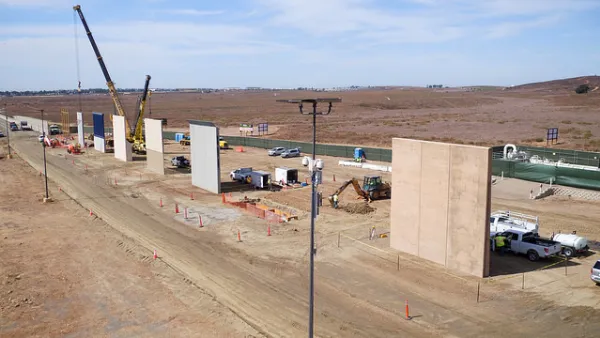
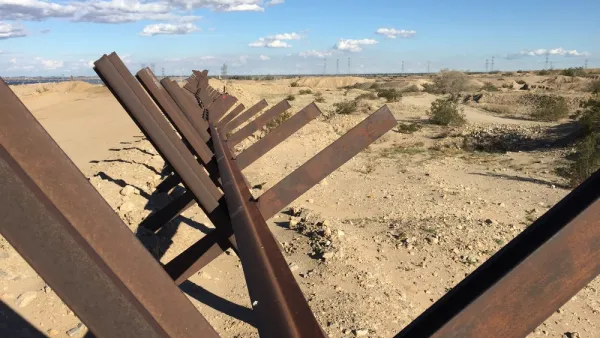
"The income gap along the U.S.-Mexico border is among the worst anywhere. Yet how are we addressing it? By building a wall: 700 disjointed miles of a 12-to-15-foot-tall barrier spanning parts of Texas, New Mexico, Arizona, and California. At $1.2 billion, it costs nearly $2 million per mile. A ragtag jumble of concrete, steel, and scraps, the completed segments look more like a detention camp than the entrance to a great nation. A far cry from the Statue of Liberty welcoming 'huddled masses yearning to breathe free.'"
"Worse, the barrier disrupts human communities. Nogales straddles the border between Arizona and Mexico, and for 125 years the only thing marking the line was a four-cable cattle fence. But now the wall cuts the city in half and isolates families and friends on opposite sides."
Read the full story: Eco: Tear Down This Wall

Homeland Security Waives More Than 30 Laws to Expedite Border Wall
In the drive to begin construction in New Mexico, the Trump Administration has bypassed dozens of federal environmental regulations.
Trump's Border Wall Would Bring 'Ecological Disaster'
Vox offers a feature length article, with lots of visual references, that tells the story of the ecological risks inherent with any plan to build a wall along the border between the United States and Mexico.
Sharing Burritos Across the Border
Architecture prof. Ron Rael redesigns the U.S./Mexico border to encourage interesting interactions rather than just exclusion.

Planetizen Federal Action Tracker
A weekly monitor of how Trump’s orders and actions are impacting planners and planning in America.

‘Going backwards:’ Baltimore mayor, students rally against state's transit funding plan
Maryland's proposed six-year plan provides no funding for Baltimore’s BMORE bus program and reduces its road maintenance funding.

Detroit to transform waterfront with $2.2 billion investment
Developers will convert about 18 acres of unused parking lot space into civic spaces.

HUD modernizes 50-year-old manufactured housing framework
The Next Generation Manufactured Housing Action Plan establishes new energy-efficiency standards for manufactured homes, and new guidelines for anchoring them.

New CA housing laws tear down development red tape
Recently-signed legislation makes building starter homes and ADUs cheaper and faster in California.

Metrolink finishes first expansion in 20 years
The transit agency is now one of very few in the United States to connect two major airports.

FREE Course: Walkable City 1: Why Walkability?
After describing his path towards focusing on walkability as the essence of good planning, Jeff Speck marches through his five principal reasons for making more walkable places.
Reinventing Malls: Planning Alchemy—Turning Gray Fields Into Gold
The course focuses on the opportunities and imperatives that shape reinvention of mall sites.

One Hundred Miles
County of Mendocino
planning NEXT
The Architects Foundation
University of Cincinnati Online
Montrose County
Northern Illinois Transit Authority (NITA)
The Pocatello Development Authority