The first draft of the house stimulus package has been released. This piece from Stateline looks at its major components.


"House Democrats Jan. 15 released details of their version of a plan containing $550 billion in spending and $275 billion in tax cuts that they say will help pull the country out of a financial freefall compared by some experts to the Great Depression."
"Crucial to states, the two-year package includes $87 billion to help pay for Medicaid, the joint federal-state program that costs $330 billion annually and serves 59 million needy Americans, and at least $100 billion for infrastructure spending - two top priorities of many governors and state legislators."
"Here's a breakdown of the key components of the House proposal important to states:
* $43 billion for increased unemployment benefits
* $20 billion to increase the food stamp benefit
* $30 billion for highway construction
* $19 billion for clean water, flood control and environmental cleanup programs
* $4 billion for state and local anti-crime initiatives, including $3 billion for the Byrne Justice Assistance, which pays for programs to battle drug trafficking"
Read the full story: House stimulus plan wins state praise
U.S. Infrastructure Needs More Than Stimulus Bump
The recession has been a boon for stimulus-funded infrastructure projects. But despite the work, it's not the full revamp the nation's infrastructure system needs, according to Jonathan D. Miller in this piece from Citiwire.
Stimulus Funds Roads Over Transit Three-to-One
Officials are complaining about the first draft of the economic stimulus package, arguing that it does not dedicate enough money to transit projects and heavily favors road building.
Rural States Refusing Federal Housing Aid
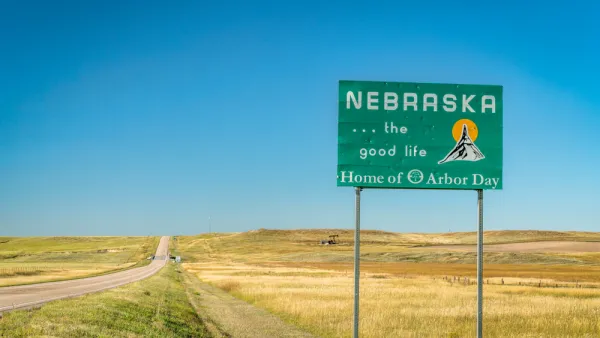
Rural states like Nebraska, Montana, and West Virginia have refused federal funding to aid vulnerable renters during the economic shocks of the pandemic, and that money is now headed to other parts of the country.

Planetizen Federal Action Tracker
A weekly monitor of how Trump’s orders and actions are impacting planners and planning in America.

California plans to bury El Niño’s downpour
If the state plays its cards right, it may be able to store a billion acre-feet of El Niño’s water in aquifers.

Desperate measures: Advocates weigh draining Lake Powell to fill Colorado River
Draining the reservoir could reduce evaporation losses by a couple hundred thousand acre-feet.

Chicago voters approve permanent festival grounds, penalty for vacant property owners
Currently, major summer and fall festivals take over public parks for weeks at a time, drawing criticism from nearby residents

NYC votes to cut outdoor dining red tape, speed up permitting
New York City also voted to allow the Department of Transportation to begin work on urgent projects before notifying elected officials.

California appears to reject Prop. 45
The proposition would have expanded the projects that qualify for a streamlined environmental review, effectively paring down the California Environmental Quality Act.

FREE Course: Walkable City 1: Why Walkability?
After describing his path towards focusing on walkability as the essence of good planning, Jeff Speck marches through his five principal reasons for making more walkable places.
Reinventing Malls: Planning Alchemy—Turning Gray Fields Into Gold
The course focuses on the opportunities and imperatives that shape reinvention of mall sites.

City of Rosemead
Rutgers University, Edward J. Bloustein School of Planning and Public Policy
One Hundred Miles
Hunter College, City University of New York (CUNY)
The Architects Foundation
University of Cincinnati Online
City of Cambridge
Montrose County
The Pocatello Development Authority