Plans for a broad statewide highway project known as the Trans-Texas Corridor have been abandoned by state officials.


"After six years of bold plans, big talk and fierce pushback, the Texas Department of Transportation announced Tuesday that the Trans-Texas Corridor is dead, burying with it Gov. Rick Perry's visionary but controversial idea to string the state together with some 4,000 miles of highways, toll roads and rail lines."
"'Make no mistake: The Trans-Texas Corridor as we have known it no longer exists,' TxDOT executive director Amadeo Saenz said in a speech at an annual transportation conference. In its place will be a smaller, more deliberate plan that assesses individually each of the scores of projects once lumped together as part of the TTC."
"The Trans-Texas Corridor had always seemed more of a concept than an actual road plan. But at its core, the plan called for $175 billion in spending over the next 50 years to run highways, rail lines and data lines from Oklahoma to Mexico, and from east to west in southern Texas. It was routinely billed as the biggest transportation project since President Dwight Eisenhower persuaded Congress to launch the interstate highway system in the 1950s."
"But beyond its huge scope, the most radical feature of the plan, and the part most cherished by Perry, was the proposal to let private companies foot huge portions of the bill. In return, they would earn the right to collect ever-increasing tolls from Texas drivers for decades to come."
Read the full story: Trans Texas Corridor is dead, TxDOT says

Washington state to charge fee to drivers with fuel-efficient cars
Revenue from the fee will go towards supporting the state’s highways.
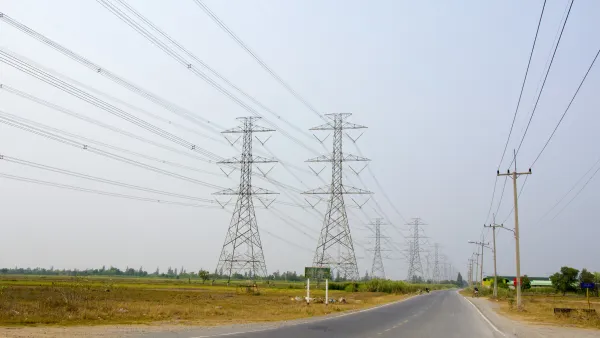
Trump to allow infrastructure along highways, railways in bid to bypass reviews
By building lines close to existing infrastructure, Trump aims to lower costs and bypass environmental oversight and opposition from local communities.
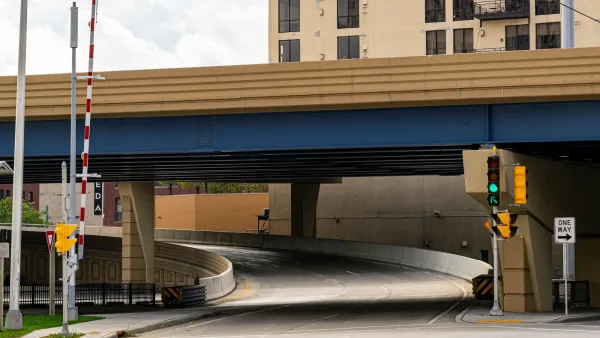
Milwaukee mayor abandons highway removal plan
Mayor Johnson spoke in opposition to a proposed plan to turn part of I-794 into an at-grade boulevard, expressing concerns about traffic.

Planetizen Federal Action Tracker
A weekly monitor of how Trump’s orders and actions are impacting planners and planning in America.

Eastern Nebraska is running out of electricity
Data centers and electrification are straining eastern Nebraska’s grid, throttling economic development.
Washington state to charge fee to drivers with fuel-efficient cars
Revenue from the fee will go towards supporting the state’s highways.

Instead of building new housing, LA developers are turning mansions into mega-mansions
In the richest areas, the number of houses valued at $30 million with demolition permits has skyrocketed since 2018.

Illinois considers spending $1 billion in taxpayer money on data center
A quantum computing campus and data center are currently under construction in Chicago.

As development costs rise, Boston moves to lessen affordable housing requirements
The Boston Zoning Commission and the City Council still need to approve Boston Mayor Michelle Wu’s proposed changes

FREE Course: Walkable City 1: Why Walkability?
After describing his path towards focusing on walkability as the essence of good planning, Jeff Speck marches through his five principal reasons for making more walkable places.
Reinventing Malls: Planning Alchemy—Turning Gray Fields Into Gold
The course focuses on the opportunities and imperatives that shape reinvention of mall sites.

City of Charlotte
City of Rosemead
Rutgers University, Edward J. Bloustein School of Planning and Public Policy
University of Michigan School for Environment and Sustainability (SEAS)
Hunter College, City University of New York (CUNY)
The Architects Foundation
University District Partnership
City of Cambridge
The Pocatello Development Authority