This summer, the provincial government announced a $2 billion public transit fund focused on regional co-operation. Thousands of commuters from bedroom communities around Calgary could benefit from the infrastructure.


"With thousands of residents from outlying centres using Calgary's roads or transit every day, some municipal officials suggest bedroom communities should contribute toward the city's growing infrastructure costs.
'Calgary already picks up a disproportionate share -- for example, 12 to 15 per cent of our transit users live outside the City of Calgary,' Mayor Dave Bronconnier has said. 'That is being picked up by Calgary taxpayers.'
This summer, the provincial government announced a$2-billion public transit fund focused on regional co-operation.
The plan will be aimed at building public transit infrastructure, including projects such as buying new buses and trains, building regional transit and buying land for rail corridors."
Read the full story: Stars 'lining up' for regional transit network

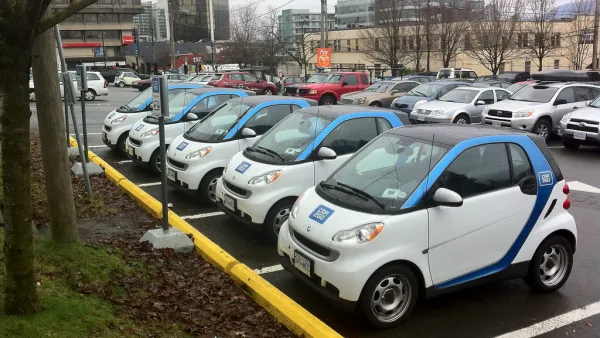
Car2Go Pulls Out of Five North American Cities
As the company plans to cease operations in a number of markets, carsharing’s future in the rapidly shifting world of mobility is unclear.
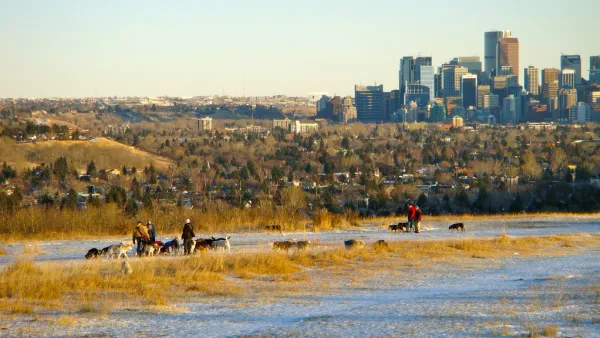
First Bus Rapid Transit Line Opens in Calgary
The MAX Purple Line has begun service on 17 Avenue SE.
Comparing Canadian Density to the Rest of the World
Canadian cities are expensive, but, according to a new report from the Fraser Institute in Toronto, they have room to spare for more housing .

Planetizen Federal Action Tracker
A weekly monitor of how Trump’s orders and actions are impacting planners and planning in America.

Chicago breaks ground on $3 billion megadevelopment
The new neighborhood, titled Foundry Park, will one day host 3,700 residences.

This MA town is drowning in its own sewage — and residents like it that way
Susan Murcott, a waste water expert, said if Carlisle didn't address their leaking sewage, the problem could turn “deadly.”

Iowa taxpayers are paying thousands to clean manure out of their water
While the Clean Water Act makes states responsible for regulating factory farms that discharge pollutants, Iowa has turned a blind eye to the polluting farms.

Amtrak cuts ribbon on Seattle Airo maintenance facility
The $250 million, nearly 100,000-square-foot building can house an entire Cascades Airo trainset.

To power data centers, Google seeks autonomous control of thousands of homes’ electricity
The tech company has signed a deal to indirectly pay Mid-Atlantic residents to reduce their power demand when the grid is strained.

FREE Course: Walkable City 1: Why Walkability?
After describing his path towards focusing on walkability as the essence of good planning, Jeff Speck marches through his five principal reasons for making more walkable places.
Reinventing Malls: Planning Alchemy—Turning Gray Fields Into Gold
The course focuses on the opportunities and imperatives that shape reinvention of mall sites.

City of Rosemead
Rutgers University, Edward J. Bloustein School of Planning and Public Policy
One Hundred Miles
The Architects Foundation
University of Cincinnati Online
Montrose County
The Pocatello Development Authority
The Urban Renewal Agency of the City of Pocatello