Subway violence and crime in Philadelphia have been unofficially traced to truant students, who are enabled by unlimited rides on the SEPTA throughout the week. Whether or not the student TransPass system should be eliminated is being debated.


"But SEPTA and Philadelphia School District officials said that the study was baseless, with no hard evidence to support its claims or recommendations.
Youth are responsible for half the violent crime on the city's subways, according to the study, and Butkovitz said that the TransPass contributes to the problem. The pass allows students to ride SEPTA an unlimited number of times weekdays between 6 a.m. and 7 p.m., creating more opportunity for violence, especially by the 15,000 students reported truant every day, Butkovitz said.
Until the TransPass and, thus, the students can be tracked, a return to tokens and paper transfers would limit the number of rides per day and reduce juvenile subway crime, he said."
"The catalyst for the study was the fatal beating of Sean Conroy on a Center City subway concourse in March, Butkovitz said. Five truant students have been charged in Conroy's death, which occurred when he had a fatal asthma attack triggered by the beating."
Read the full story: Controller links subway safety and student TranPasses
Philadelphia Tries to Crack Down on Youth Mobs
In the face of recent violence committed by roaming groups of teenagers, officials in Philadelphia are imposing stricter curfews for youth.
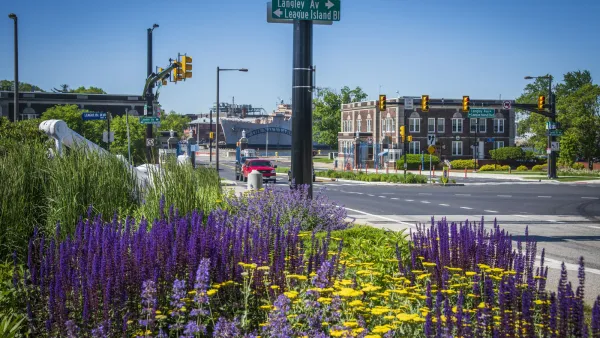
Philadelphia sees 29% drop in gun violence near new green spaces
A city-backed program that cleans up blighted and vacant lots is creating new public spaces and reducing crime in surrounding communities.
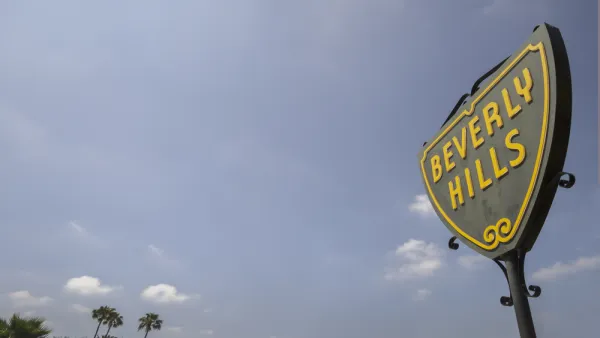
Beverly Hills Students Protest Subway Construction
Students from Beverly Hills staged a high-visibility "walkout" to protest L.A. Metro's extension of the Purple Line subway past Beverly Hills High School.

Planetizen Federal Action Tracker
A weekly monitor of how Trump’s orders and actions are impacting planners and planning in America.

California plans to bury El Niño’s downpour
If the state plays its cards right, it may be able to store a billion acre-feet of El Niño’s water in aquifers.

Desperate measures: Advocates weigh draining Lake Powell to fill Colorado River
Draining the reservoir could reduce evaporation losses by a couple hundred thousand acre-feet.

Mamdani’s pied-à-terre tax survives legal challenge
A panel of judges found that the plaintiffs failed to demonstrate injury as a result of New York City's implementation of the tax.

Eastern Nebraska is running out of electricity
Data centers and electrification are straining eastern Nebraska’s grid, throttling economic development.

Seattle passes record-breaking transit services expansion
Proposition 1 will double the city’s transit tax to add 95,000 more bus trips and preserve 180,000 bus trips annually.

FREE Course: Walkable City 1: Why Walkability?
After describing his path towards focusing on walkability as the essence of good planning, Jeff Speck marches through his five principal reasons for making more walkable places.
Reinventing Malls: Planning Alchemy—Turning Gray Fields Into Gold
The course focuses on the opportunities and imperatives that shape reinvention of mall sites.

City of Rosemead
Rutgers University, Edward J. Bloustein School of Planning and Public Policy
One Hundred Miles
University of Michigan School for Environment and Sustainability (SEAS)
Hunter College, City University of New York (CUNY)
The Architects Foundation
City of Cambridge
Montrose County
The Pocatello Development Authority