Cooltown Studios looks at what makes a shiny new corporate district different from an organically-grown one.


"On the one hand you have authentic cultural destinations grown naturally, referred to as natural cultural districts (NCD)..., which attract creatives. On the other hand, you have developments that attempt to become such cultural destinations in one fell swoop, referred to on this site as corporate cultural districts (CCD).... However, they tend to attract tourists and corporate employees with higher salaries than creatives. Here are the objective differences why, from a placemaking point of view:
Time: NCDs are built slowly over time, decades.CCDs are built completely within a couple of years.
Developers: NCDs involved multiple developers.CCDs involve just a few, and often only one.
Building age: NCDs have a mix of old and new buildings. CCDs are predominantly new buildings...."
Read the full story: The difference between a natural cultural district and a corporate cultural district


Historic Queens park is getting a $120M upgrade
The borough's largest park will undergo significant upgrades for accessibility, flood mitigation and historic preservation.
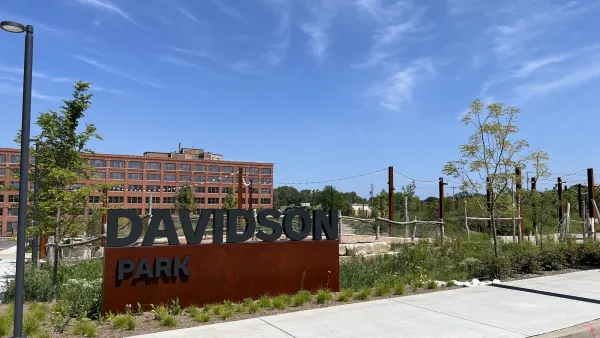
Harley-Davidson turned a Milwaukee parking lot into a green oasis
The park, adjacent to Harley-Davidson headquarters, doubles as stormwater retention infrastructure.
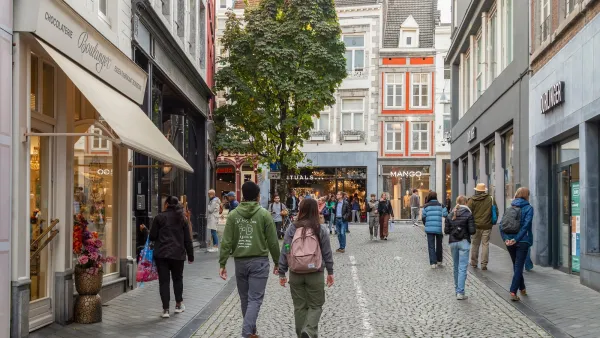
Planning for Love, Part 3: Enhancing human connection through walkability
In the third and final installment of this series, author Hannah Kosoff examines what her research findings say about modern dating and urban form.

Planetizen Federal Action Tracker
A weekly monitor of how Trump’s orders and actions are impacting planners and planning in America.

‘Going backwards:’ Baltimore mayor, students rally against state's transit funding plan
Maryland's proposed six-year plan provides no funding for Baltimore’s BMORE bus program and reduces its road maintenance funding.
Mamdani sent nearly 6,000 pied-à-terre tax warnings to homes that didn’t qualify
A judge has ordered the administration to cancel thousands of pied-à-terre tax notices after it sent 35% of them erroneously.

A Colorado neighborhood is the testing ground for the future of home energy
A start up may have found a way to quickly bring geothermal energy to new communities.

Mamdani sent nearly 6,000 pied-à-terre tax warnings to homes that didn’t qualify
A judge has ordered the administration to cancel thousands of pied-à-terre tax notices after it sent 35% of them erroneously.

Detroit to transform waterfront with $2.2 billion investment
Developers will convert about 18 acres of unused parking lot space into civic spaces.

FREE Course: Walkable City 1: Why Walkability?
After describing his path towards focusing on walkability as the essence of good planning, Jeff Speck marches through his five principal reasons for making more walkable places.
Reinventing Malls: Planning Alchemy—Turning Gray Fields Into Gold
The course focuses on the opportunities and imperatives that shape reinvention of mall sites.

City of Thousand Oaks
City of Wisconsin Rapids
Harvard University Graduate School of Design
The Architects Foundation
University of Cincinnati Online
Northern Illinois Transit Authority (NITA)
The Pocatello Development Authority
The Urban Renewal Agency of the City of Pocatello