With growth controls making suburban properties less attractive and wealth becoming concentrated in older centres, Canada's big box retailers are looking downtown for new locations.


"[S]ome of the biggest names in the big-box sector have decided they are missing out on a huge customer base in Canada's city centres and are repackaging themselves accordingly, with as-yet-unknown consequences for the urban neighbourhoods targeted for expansion.
With provincial governments in Ontario, British Columbia and Quebec getting tougher on suburban sprawl, land on the urban fringe is getting more expensive [...] At the same time, big-box developers and retailers have come to the conclusion that as downtowns become denser and more gentrified [...]ignoring a growing population of affluent urban customers begins to look rather silly.
All of this might signal a transformation in the basic economics of big-box retail. [...] But no one knows yet what will happen to independent businesses if and when big boxes become a dominant presence in urban areas, and not one-off curiosities."
Read the full story: Big-box stores venture into foreign terrain

How ‘post-disaster gentrification’ alters neighborhoods after natural calamities
After hurricanes, fires or other calamities, the original residents of a community are often replaced by younger, wealthier residents.
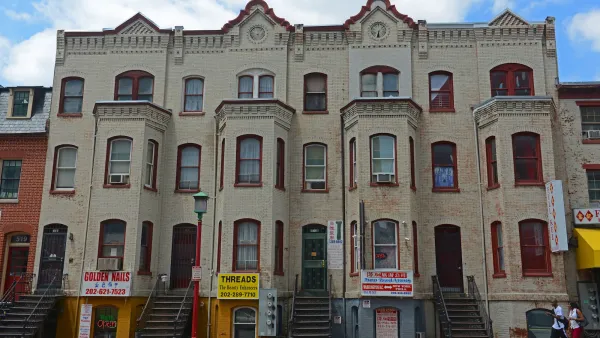
Is this the first wave of de-gentrification?
Valencia, Temescal, H Street and the fickle fortunes of the gentrified neighborhood.
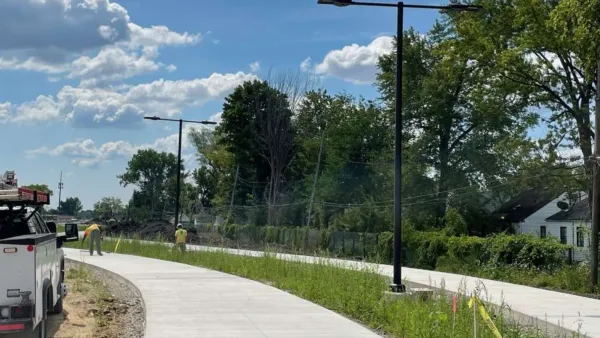
Detroit greenway brings revival — and fears of displacement
The planned Joe Louis Greenway is already bringing change to the neighborhoods near it.

Planetizen Federal Action Tracker
A weekly monitor of how Trump’s orders and actions are impacting planners and planning in America.

Washington state to charge fee to drivers with fuel-efficient cars
Revenue from the fee will go towards supporting the state’s highways.

Trump to blast ‘hydrocarbon highway’ through ‘world’s longest art gallery’
Environmental and historic preservation groups are suing to stop the project.

Data centers need power – lower income, rural residents pay the price
In 2025, data centers paid only 38% of the energy infrastructure costs linked to their growth, with households, especially rural and low-income residents, bearing the remaining burden.

MBTA Green Line project moved to next phrase of CIG program
The modernization effort will cost $4.08 billion.

22-mile pedestrian and bike path to encircle Atlanta by 2030
The project will also support affordable housing.

FREE Course: Walkable City 1: Why Walkability?
After describing his path towards focusing on walkability as the essence of good planning, Jeff Speck marches through his five principal reasons for making more walkable places.
Reinventing Malls: Planning Alchemy—Turning Gray Fields Into Gold
The course focuses on the opportunities and imperatives that shape reinvention of mall sites.

City of Charlotte
City of Rosemead
Rutgers University, Edward J. Bloustein School of Planning and Public Policy
University of Michigan School for Environment and Sustainability (SEAS)
Hunter College, City University of New York (CUNY)
The Architects Foundation
University District Partnership