Looking into a future gone increasingly urban, the professional services firm PricewaterhouseCoopers has made a list of the ten cities or urban areas that will be the richest in 2020.


"As global urbanisation continues apace - 2008 is the first year in history in which more than half of the world's population lives in towns and cities - figures compiled by PwC show which conurbations are expected to come out on top in terms of wealth and affluence over the next decade. The research looked at the world's top cities and ranked them by gross domestic product by using purchasing power parity exchange rates (the rate that gives you equal buying power in each country). It shows that the mega-cities of Tokyo and New York (with GDPs similar to that of Spain and Canada), lead the pack by a considerable margin."
Topping the list are Tokyo, New York, Los Angeles, London and Chicago.
Read the full story: Richest Cities And Urban Areas In 2020
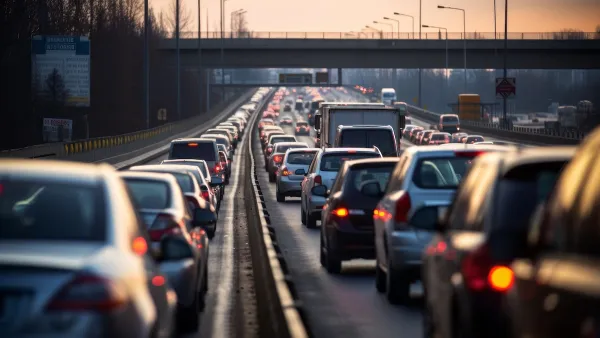
The Mobility-Productivity Paradox
New research shows that excessive vehicle travel reduces economic productivity, and that less mobility provides more productivity. Yes, you read that right.
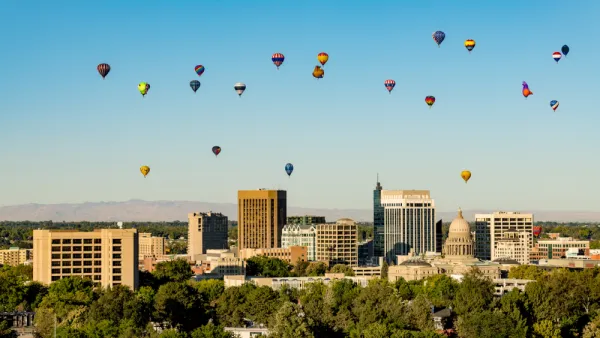
The Five Most-Changed American Cities
A ranking of population change, home values, and jobs highlights the nation’s most dynamic and most stagnant regions.

Opinion: Why Linking Driving to GDP Misses the Point
The argument that car-centric development is good because it boosts national GDP ignores the massive costs of driving to everyday Americans.

Planetizen Federal Action Tracker
A weekly monitor of how Trump’s orders and actions are impacting planners and planning in America.

California plans to bury El Niño’s downpour
If the state plays its cards right, it may be able to store a billion acre-feet of El Niño’s water in aquifers.

Desperate measures: Advocates weigh draining Lake Powell to fill Colorado River
Draining the reservoir could reduce evaporation losses by a couple hundred thousand acre-feet.

Mamdani’s pied-à-terre tax survives legal challenge
A panel of judges found that the plaintiffs failed to demonstrate injury as a result of New York City's implementation of the tax.

Eastern Nebraska is running out of electricity
Data centers and electrification are straining eastern Nebraska’s grid, throttling economic development.

Seattle passes record-breaking transit services expansion
Proposition 1 will double the city’s transit tax to add 95,000 more bus trips and preserve 180,000 bus trips annually.

FREE Course: Walkable City 1: Why Walkability?
After describing his path towards focusing on walkability as the essence of good planning, Jeff Speck marches through his five principal reasons for making more walkable places.
Reinventing Malls: Planning Alchemy—Turning Gray Fields Into Gold
The course focuses on the opportunities and imperatives that shape reinvention of mall sites.

City of Rosemead
Rutgers University, Edward J. Bloustein School of Planning and Public Policy
One Hundred Miles
University of Michigan School for Environment and Sustainability (SEAS)
Hunter College, City University of New York (CUNY)
The Architects Foundation
City of Cambridge
Montrose County
The Pocatello Development Authority