Bill Thompson of the ASLA reports on a public space in Silver Spring, Maryland that upends everything landscape architects and planners think they know about what makes a successful public space.


"My first stop was the strangest urban space I have ever seen. To cover up an empty lot in the middle of downtown, the city had plopped down 35,000 square feet of artificial turf three years ago. Local young people have since adopted "the Turf" as a favorite gathering place.
Forget everything you ever learned about the elements that are supposed to make places appeal to people-the Turf doesn't have any of them. Yet last evening, the people were out in force. A young family was enjoying a picnic while a couple tossed a Frisbee, a few boys practiced their soccer moves, and another kid wheeled around on his shiny new bicycle. One couple lay clasped in a warm embrace. Most, however, were just sitting around on the Turf in small groups, talking up a storm.
What's the attraction of a flat expanse of fuzzy green plastic? Part of it may be that it's totally unprogrammed: It's a "blank slate" that users can adapt to their own whims. Importantly, fast food is available just across the street. But if someone can just plop down some artificial turf and attract the public in droves, who needs the skills of a landscape architect?"
Read the full story: Land Matters: Time to Forget Everything You Know?
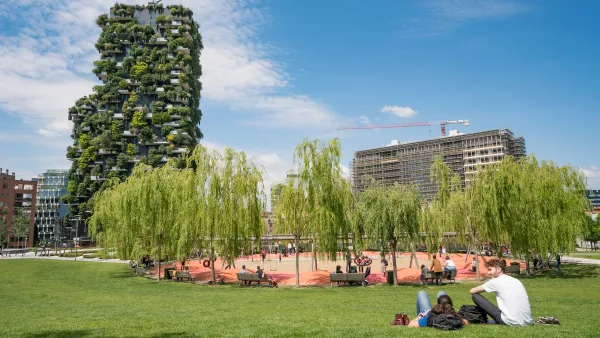
Planning for Love, Part 1: The link between urban form and dating
A brief exploration of dating through history highlights how the spaces in which we live and move shape our social lives and relationships.
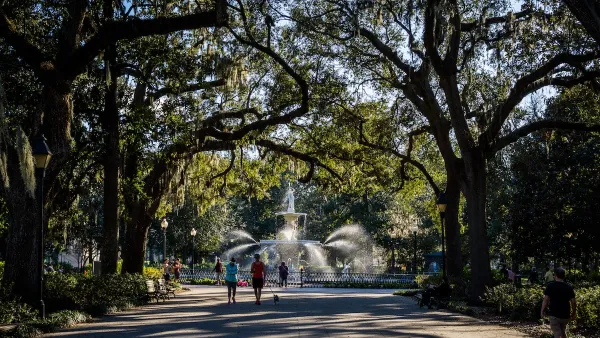
Survey: US Public Spaces Not Meeting Community Needs
A lack of funding prevents many U.S. parks and public spaces from playing a more significant role in helping residents meet daily needs.
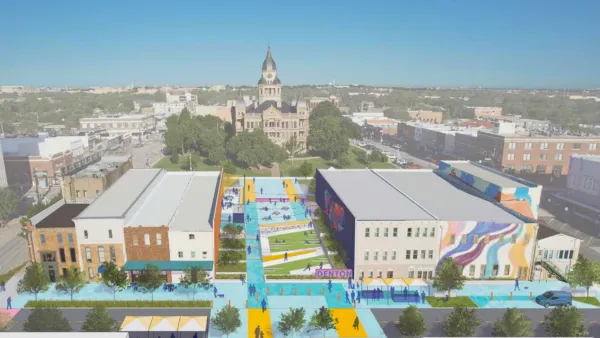
North Texas Town Launches Downtown Revitalization Plan
The Design Downtown Denton plan takes aim at improving walkability and highlighting the city’s historic assets.

Planetizen Federal Action Tracker
A weekly monitor of how Trump’s orders and actions are impacting planners and planning in America.

California plans to bury El Niño’s downpour
If the state plays its cards right, it may be able to store a billion acre-feet of El Niño’s water in aquifers.

Desperate measures: Advocates weigh draining Lake Powell to fill Colorado River
Draining the reservoir could reduce evaporation losses by a couple hundred thousand acre-feet.

Housing is the top priority of Seattle’s sole new councilmember
Jenks campaigned on building 1,000 new units of affordable housing.

New tax cuts may slash $1.5 billion in funding for Miami transit, public parks
Amendment 3 will save Miami-Dade homeowners $2,700 in 2028.

Arizona, Wisconsin, Pennsylvania hope to finally advance climate goals post-midterms
The three states have spent years under Republican or divided control.

FREE Course: Walkable City 1: Why Walkability?
After describing his path towards focusing on walkability as the essence of good planning, Jeff Speck marches through his five principal reasons for making more walkable places.
Reinventing Malls: Planning Alchemy—Turning Gray Fields Into Gold
The course focuses on the opportunities and imperatives that shape reinvention of mall sites.

City of Rosemead
Rutgers University, Edward J. Bloustein School of Planning and Public Policy
One Hundred Miles
University of Michigan School for Environment and Sustainability (SEAS)
Hunter College, City University of New York (CUNY)
The Architects Foundation
City of Cambridge
Montrose County
The Pocatello Development Authority