Yet another unforeseen consequence of high gasoline prices and less driving: the gas tax-funded federal highway trust fund is being depleted, putting states' highway project funding in danger.


"As motorists cut back on their driving and buy more fuel-efficient cars, the government is taking in less money from the federal gasoline tax.
The result: The principal source of funding for highway projects will soon hit a big financial pothole. The federal highway trust fund could be in the red by $3.2 billion or more next year.
The fund, set to finance about $40 billion in transportation projects next year, is increasingly strained. [L]awmakers must figure out whether the 18.4-cent-a-gallon federal gasoline tax, which helped bring in money when fuel-hungry SUVs were hot, is still a viable way to fund transportation projects amid heightened concern about gasoline prices, U.S. dependence on foreign oil and global warming."
Read the full story: U.S. highway trust fund veers toward crisis
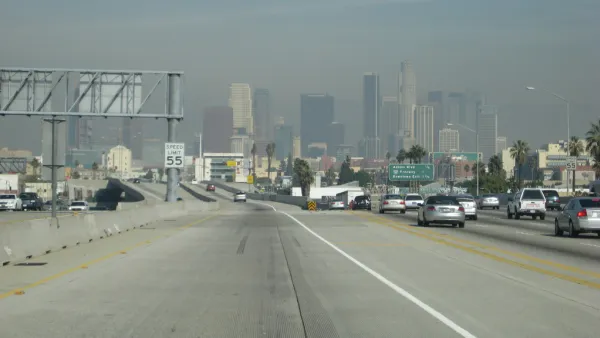
If Road Pricing Is Inherently Unfair and Regressive...
Road pricing has its faults as a revenue measure, but it needs to be compared to ten elements of the current system of paying for transportation, including hidden subsidies, says Joe Cortright, an urban economist with Portland-based City Observatory.
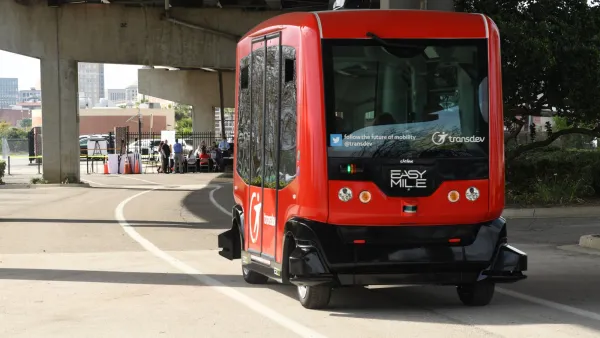
Self-Driving Cars Will Take More Transportation Funding Than They Give
There's a potential consequence from autonomous vehicles that has mostly gone unnoticed: municipal financial ruin.
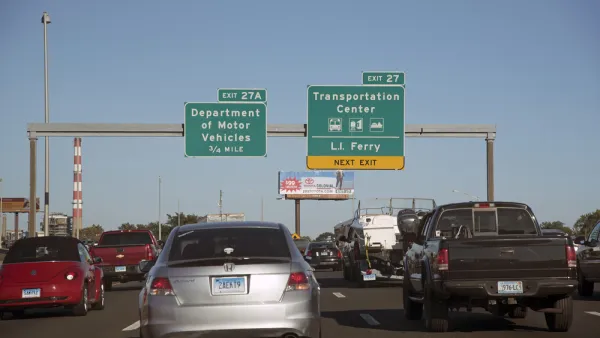
Connecticut Governor's Transportation Plan Raises New Revenue to Fund Road Projects
Tolls and gas taxes—that's how Connecticut Governor Daniel P. Malloy plans on raising revenue for the state's troubled Special Transportation Fund.

Planetizen Federal Action Tracker
A weekly monitor of how Trump’s orders and actions are impacting planners and planning in America.

California plans to bury El Niño’s downpour
If the state plays its cards right, it may be able to store a billion acre-feet of El Niño’s water in aquifers.

Desperate measures: Advocates weigh draining Lake Powell to fill Colorado River
Draining the reservoir could reduce evaporation losses by a couple hundred thousand acre-feet.

US buildings threatened, destroyed by fires set to triple by 2060
Researchers found a high fire risk for socioeconomically vulnerable neighborhoods in the American West.

LA residents may be allowed to paint their own crosswalks
Councilwoman Katy Yaroslavsky put out a motion instructing the Los Angeles Department of Public Transportation to study the feasibility of allowing volunteers to paint crosswalks.

Dallas moves to overhaul its zoning code
The city's zoning reform will allow more multi-family and mixed-use developments.

FREE Course: Walkable City 1: Why Walkability?
After describing his path towards focusing on walkability as the essence of good planning, Jeff Speck marches through his five principal reasons for making more walkable places.
Reinventing Malls: Planning Alchemy—Turning Gray Fields Into Gold
The course focuses on the opportunities and imperatives that shape reinvention of mall sites.

City of Rosemead
Rutgers University, Edward J. Bloustein School of Planning and Public Policy
One Hundred Miles
Hunter College, City University of New York (CUNY)
The Architects Foundation
University of Cincinnati Online
City of Cambridge
Montrose County
The Pocatello Development Authority