In early 2008, the Mayors' Institute on City Design received a generous gift from the Edward W. Rose III Family Fund, directed through the National Endowment for the Arts, to support technical assistance teams going into the communities of alumni mayors who have already attended one of our traditional Mayors' Institute sessions. The four cities that we selected for the pilot phase of this work were Santa Rosa, CA, Lincoln, NE, Cincinnati, OH, and Tulsa, OK.


In early 2008, the Mayors' Institute on City Design received a generous gift from the Edward W. Rose III Family Fund, directed through the National Endowment for the Arts, to support technical assistance teams going into the communities of alumni mayors who have already attended one of our traditional Mayors' Institute sessions. The four cities that we selected for the pilot phase of this work were Santa Rosa, CA, Lincoln, NE, Cincinnati, OH, and Tulsa, OK.
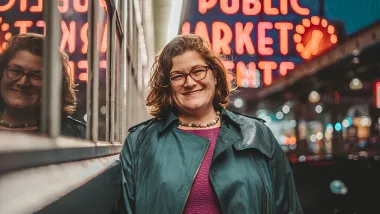
I am writing from the front of the City Council Chambers in Santa Rosa, where our team is presently presenting its recommendations to city officials and other stakeholders. Santa Rosa was selected as our first pilot phase city based on the enthusiastic participation of Mayor Bob Blanchard (MICD 39, 2007), who recently passed away. It's an honor for us to be here continuing the vision of such a great leader.
The meeting is also being broadcast live on local cable television, if you happen to be in the area.
These are the recommendations of the MICD Resource Team:
- Focus on the downtown core and concentrate investments there (the blocks immediately around Courthouse Square)
- Extend the connectivity of 4th street's pedestrian character through the Santa Rosa Plaza mall
- Increase walkability through street trees, curbside parking, and retail that animates dead edges
- Use the arts, nature, fountains, and other activity to make downtown into the city's living room
- Celebrate nature by increasing the richness of the Prince Greenway by adding cafes, activity, and access points to the river walk
- Embrace the arts as a catalyst for downtown development
- Create a world-class planning cultutre and capacity with public sector leadership
And here are some recommended strategies for implementation:
- Increase the hotel bed tax and use the increment to enhance downtown
- Create a restaurant tax
- Fight for Tax Increment Financing enabling legislation at the state level
- Dispel the notion that parking should be free (or even cheap); downtown parking should generate income for downtown
- Tax motor vehicles
- Build increased trust among stakeholders
- Integrate the various diverse visions for downtown
- Invite (or compel!) absentee landlords to come to the table
- Stop the buck somewhere; empower your leadership
Many thanks to the following folks:
- Maurice Cox and the National Endowment for the Arts
- Our Design Resource Team:
- Wayne Goldberg, AICP, Director of Advance Planning, City of Santa Rosa
- Mayor John Sawyer, City of Santa Rosa
- Jeff Kolin, City Manager, City of Santa Rosa
- Nicholas Foster, Program Manager, Mayors' Institute on City Design
- and the dozens of Santa Rosa community stakeholders who gave us their input
Your thoughts or questions would be valued, as this dimension of our program is very much still in its infancy.

Here are my photographs of this event.
And here's a tribute to Mayor Blanchard.
Update (7/20): The Santa Rosa Press Democrat covered the event today.

Lessons on Urban Redevelopment from Colombia's Divergent Design Stories
The cities of Bogotá and Medellín have made dramatic transformations over the last ten years, driven in large part by their influential mayors. But while one continues to soar, the other is in crisis, reports Justin McGuirk
How could Ventura transform?
A short documentary exploring the development challenges that the City of Ventura faces.
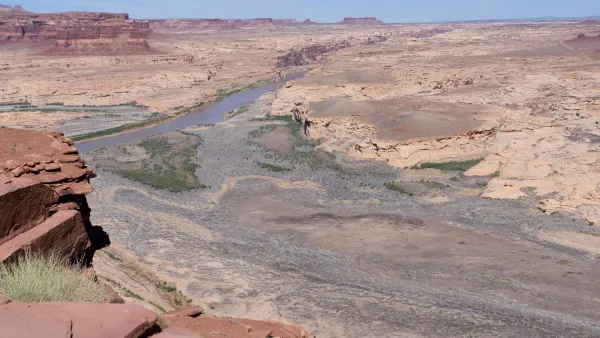
Feds say Arizona, California and Nevada must cut Colorado River water use by 1.25 million acre-feet
The new plan does not apply mandatory cuts to any of the river’s upper basin states.

Planetizen Federal Action Tracker
A weekly monitor of how Trump’s orders and actions are impacting planners and planning in America.

California plans to bury El Niño’s downpour
If the state plays its cards right, it may be able to store a billion acre-feet of El Niño’s water in aquifers.

Chicago breaks ground on $3 billion megadevelopment
The new neighborhood, titled Foundry Park, will one day host 3,700 residences.

California High-Speed Rail Authority CEO resigns after $600,000 scandal
Under Ian Choudri, the authority used taxpayer dollars to fund first class flights and trips to nightclubs.

Want to study the Missouri River? Soon, you may need unanimous approval from 10 states
Legislation would require 10 governors’ permission to study or build projects moving water outside the basin.

Desperate measures: Advocates weigh draining Lake Powell to fill Colorado River
Draining the reservoir could reduce evaporation losses by a couple hundred thousand acre-feet.

FREE Course: Walkable City 1: Why Walkability?
After describing his path towards focusing on walkability as the essence of good planning, Jeff Speck marches through his five principal reasons for making more walkable places.
Reinventing Malls: Planning Alchemy—Turning Gray Fields Into Gold
The course focuses on the opportunities and imperatives that shape reinvention of mall sites.

City of Rosemead
Rutgers University, Edward J. Bloustein School of Planning and Public Policy
One Hundred Miles
Hunter College, City University of New York (CUNY)
The Architects Foundation
University of Cincinnati Online
City of Cambridge
Montrose County
The Pocatello Development Authority

