Seattle is closing the lid on a disappointing experiment with public toilets after spending $5 million dollars to install them. Cities from Boston to San Francisco have had mixed results with automated toilets, The New York Times reports.


"In the end, the restrooms, installed in early 2004, had become so filthy, so overrun with drug abusers and prostitutes, that although use was free of charge, even some of the city's most destitute people refused to step inside them.
The units were put up for sale Wednesday afternoon on eBay, with a starting bid set by the city at $89,000 apiece.
The dismal outcome coincides with plans by New York, Los Angeles and Boston, among other cities, to spend hundreds of thousands of dollars for expansion this fall in their installation of automated toilets - stand-alone structures with metal doors that open at the press of a button and stay closed for up to 20 minutes. The units clean themselves after each use, disinfecting the seats and power-washing the floors."
Read the full story: Seattle’s Automated Toilets Go Way of the Box and Chain

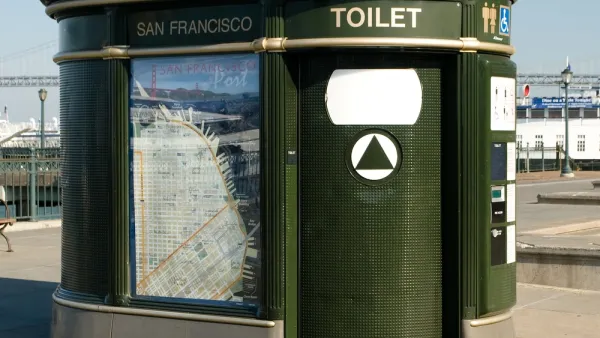
Futuristic Public Toilets Coming to San Francisco
San Francisco's street furniture predates Google, but the city hopes a new design will bring it into the Information Age.
Public Toilets Continue to Foil New York City’s Bureaucracy
In 2006, New York City signed contracts for private-public partnerships that would deliver a variety of street furniture throughout the city. To date, 3,355 bus shelters, 304 newsstands, and three (3) public toilets have been built.
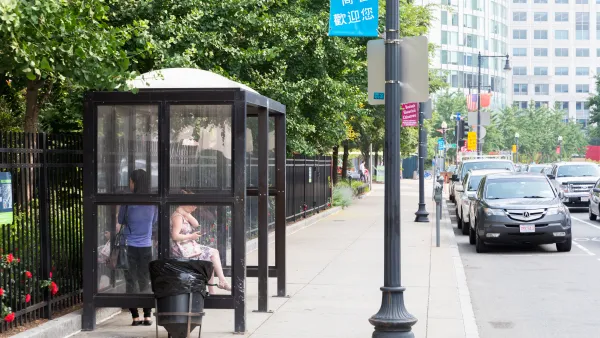
Boston requests proposals for new street furniture program
The city is looking to expand its network of bus shelters, wayfinding kiosks and other infrastructure.

Planetizen Federal Action Tracker
A weekly monitor of how Trump’s orders and actions are impacting planners and planning in America.

‘Going backwards:’ Baltimore mayor, students rally against state's transit funding plan
Maryland's proposed six-year plan provides no funding for Baltimore’s BMORE bus program and reduces its road maintenance funding.

Record-breaking wildlife overpass in Colorado brings 91% reduction in animal collisions
Prior to the overpass, vehicles were hitting one deer per day on Colorado’s Interstate 25.

Mamdani sent nearly 6,000 pied-à-terre tax warnings to homes that didn’t qualify
A judge has ordered the administration to cancel thousands of pied-à-terre tax notices after it sent 35% of them erroneously.

Detroit to transform waterfront with $2.2 billion investment
Developers will convert about 18 acres of unused parking lot space into civic spaces.

‘Going backwards:’ Baltimore mayor, students rally against state's transit funding plan
Maryland's proposed six-year plan provides no funding for Baltimore’s BMORE bus program and reduces its road maintenance funding.

FREE Course: Walkable City 1: Why Walkability?
After describing his path towards focusing on walkability as the essence of good planning, Jeff Speck marches through his five principal reasons for making more walkable places.
Reinventing Malls: Planning Alchemy—Turning Gray Fields Into Gold
The course focuses on the opportunities and imperatives that shape reinvention of mall sites.

City of Thousand Oaks
City of Wisconsin Rapids
Harvard University Graduate School of Design
The Architects Foundation
University of Cincinnati Online
Northern Illinois Transit Authority (NITA)
The Pocatello Development Authority
The Urban Renewal Agency of the City of Pocatello