With gas prices at more than $9 per gallon in Britain, driving habits are changing.


"Britons are driving less, opting instead for public transportation, car pools, and a reduced number of overall car trips. Recent surveys show that Britain is leading the way with the change in driving habits, probably because pump prices here are higher than the global average. British demand for gasoline fell by around 8 percent year-on-year in January and February."
"Across the globe, governments are dealing with a string of protests by truckers, fishermen, and others stung by price hikes. The movement will escalate in Britain on Wednesday when thousands of truckers descend on London to demand urgent financial relief, with the threat of blockades and civil disobedience. Their protest follows Operation Escargot in France, during which truck drivers drove at a snail's pace to protest the high price of fuel, causing major traffic jams through June."
"According to the International Energy Agency (IEA), a Paris-based think tank, the decline in driving is the same across Europe. "The rest of Europe is pretty much in line with that, although in the UK the effect is slightly higher because prices are higher [here] than elsewhere," says Eduardo Lopez, an oil market demand expert at the IEA."
"Gas stations in Britain are reporting unusual changes in buying patterns, says Alex Wells of the Petrol Retailers Association. 'Buying in the morning is down, but not so much in the afternoon,' he says. 'This is because second cars are being used less, the stay-at-home mums are driving less. They are doing the weekly shopping in one hit.'"
Read the full story: At $9 per gallon, British driving habits change
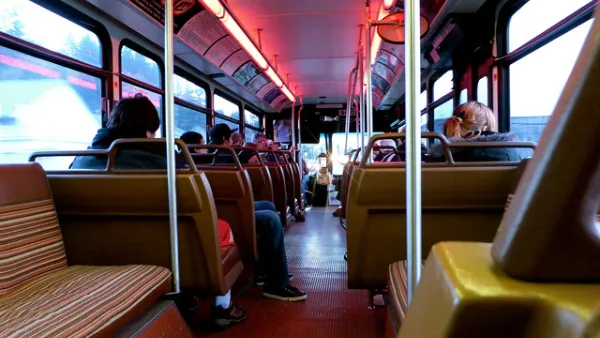
'OK Google, How Crowded is the Number 8 Bus?'
Google Maps will now share data about how crowded buses and trains are likely to be.
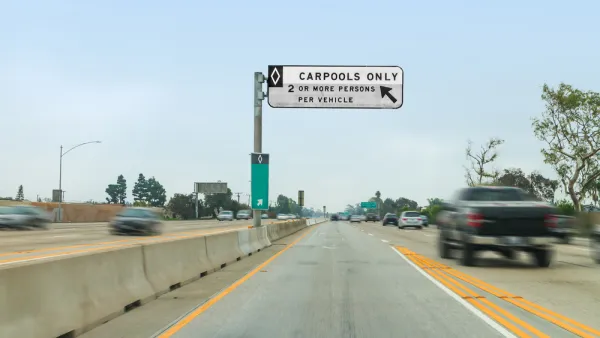
How Lyft and Uber Can Fix—Not Cause—Congestion
While evidence mounts that Uber and Lyft are stealing rides from public transit, there's still a chance for ride-hailing apps to do more to help than hurt congestion. The key: using ride-hailing apps to carpool.
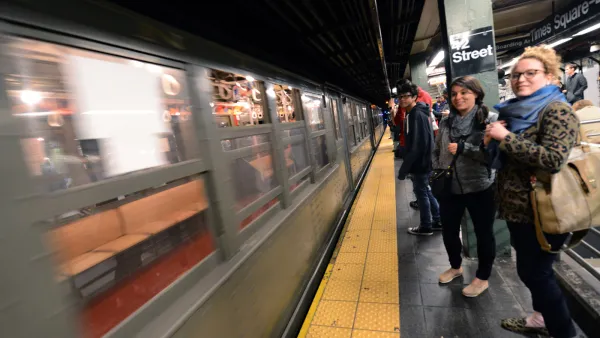
The Most Popular Forms of Alternative Transportation
When it comes to the Census, the term "alternative transportation" makes perfect sense. Eric Jaffe looks at the 15 metropolitan areas with the lowest auto commuting and describes the most popular alternatives.

Desperate measures: Advocates weigh draining Lake Powell to fill Colorado River
Draining the reservoir could reduce evaporation losses by a couple hundred thousand acre-feet.

Eastern Nebraska is running out of electricity
Data centers and electrification are straining eastern Nebraska’s grid, throttling economic development.

Move over, LA: St. Louis gears up for Olympics, invests millions in downtown redevelopment
The Missouri city will host the 2028 Olympic soccer group stage and knockout matches.

Mass. votes against statewide minimum lot size for single-family homes
Over 2 million residents voted on Question 7; it was decided by just over 30,000 votes.

Maryland’s $15 billion bridge project gains key approval
The Maryland Transit Authority said the project will create over 60,000 jobs and add $23 billion to the local economy.

‘No clear next steps’ for Chicago's permanent festival grounds
Eleventh Ward Ald. Nicole Lee has suggested Soldier Field as a possible location for the permanent event space.

FREE Course: Walkable City 1: Why Walkability?
After describing his path towards focusing on walkability as the essence of good planning, Jeff Speck marches through his five principal reasons for making more walkable places.
Reinventing Malls: Planning Alchemy—Turning Gray Fields Into Gold
The course focuses on the opportunities and imperatives that shape reinvention of mall sites.

City of Rosemead
Rutgers University, Edward J. Bloustein School of Planning and Public Policy
One Hundred Miles
University of Michigan School for Environment and Sustainability (SEAS)
Hunter College, City University of New York (CUNY)
The Architects Foundation
City of Cambridge
Montrose County
The Pocatello Development Authority