A recent study by the Maryland Department of Natural Resources says sprawl is to blame for declining natural resources in Chesapeake Bay.


"Alan Girard, project manager for the Chesapeake Bay Foundation Heart of the Chesapeake office, named sediment as the culprit for keeping grass levels low, especially in the Eastern Shore's bay tributaries."
"Girard said to see what's going on in the water, simply look on land.
'You have to look back up on the landscape and see what's happening there,' he said. 'Particularly on the Shore, we're seeing a lot of sprawling development take place that is adding new pavement and rooftops in rural areas that essentially change the natural filtering function of the landscape into a funnel.'
The Wicomico Environmental Trust has been making sprawl its main concern for years, most recently with its lawsuit against a subdivision in Powellville called Deer Creek Estates. But WET President Mike Pretl said Monday he wonders what else the organization can do.
'Sprawl leads to runoff, both of soil and silt, so there is certainly a tie-in,' he said."
Read the full story: Sprawl, declining bay grass raise concerns

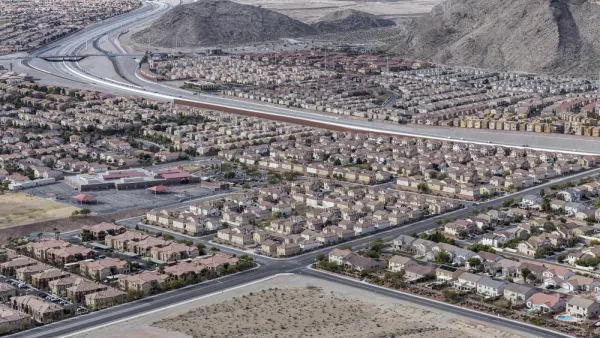
Is There an Environmentalist Case for Sprawl?
Yes, sprawl is still bad for the environment.
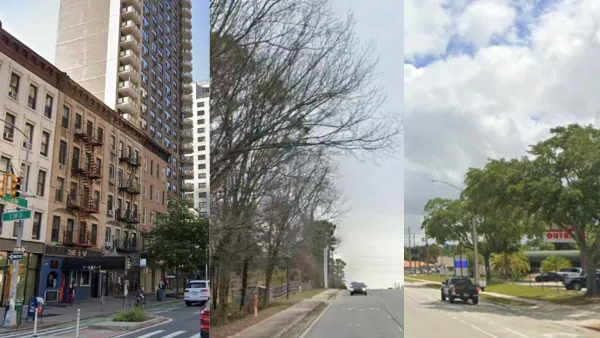
A Transect of sprawl
A development pattern this lifestyle-defining deserves its whole own classification system.

What the fall of earth's largest pre-industrial city can teach us about urban sprawl
Angkor was a low-density metropolis. It lasted six centuries, until it could no longer maintain its infrastructure in a changing climate. Today, it offers planners a sobering warning about the risks of dispersed urban living.

Planetizen Federal Action Tracker
A weekly monitor of how Trump’s orders and actions are impacting planners and planning in America.

‘Going backwards:’ Baltimore mayor, students rally against state's transit funding plan
Maryland's proposed six-year plan provides no funding for Baltimore’s BMORE bus program and reduces its road maintenance funding.

Detroit to transform waterfront with $2.2 billion investment
Developers will convert about 18 acres of unused parking lot space into civic spaces.

Newsom vetoes high-speed rail supervision bill after agency receives condemnatory audit
The audit found the CHSRA approved almost $600,000 in unallowable travel expenses.

Nation sees first electric plane-boat hybrid take off in public demo
The Viceroy Seaglider can fly at speeds of 180mph for up to 180 miles.

One of nation’s poorest counties to receive $6 billion data center
The developers estimate the project will create 200 permanent jobs and 1,000 temporary construction jobs.

FREE Course: Walkable City 1: Why Walkability?
After describing his path towards focusing on walkability as the essence of good planning, Jeff Speck marches through his five principal reasons for making more walkable places.
Reinventing Malls: Planning Alchemy—Turning Gray Fields Into Gold
The course focuses on the opportunities and imperatives that shape reinvention of mall sites.

City of Thousand Oaks
City of Wisconsin Rapids
Harvard University Graduate School of Design
The Architects Foundation
University of Cincinnati Online
Northern Illinois Transit Authority (NITA)
The Pocatello Development Authority
The Urban Renewal Agency of the City of Pocatello