With crippling traffic congestion, the Tanzanian city of Dar es Salaam has pooled $158 million to improve its public transportation system -- adding new service, stations, and walkways.


"Tanzania has set aside $158.2 million to implement the first phase of the much awaited commuter transport system in Dar es Salaam."
"'Of this amount, the government will give $10 million, the World Bank $110 million and the private sector $38.2 million, specifically targeted for acquiring buses and installing a modern ticket dispensing system,' Prime Minister Mizengo Pinda said."
"The project will also make life easier for users of footpaths, bicycle lanes, sidewalks and pedestrian walkways."
"Mr Pinda said the first phase of the project will cover 21 kilometres with 29 small stations, five main stations and two sheds for parking."
"The Surface and Marine Transport Authority (Sumatra) recently announced that come August, buses with a carrying capacity of less than 25 passengers will not be allowed to enter Dar es Salaam's central business district."
Read the full story: $158m for Dar’s new urban bus system

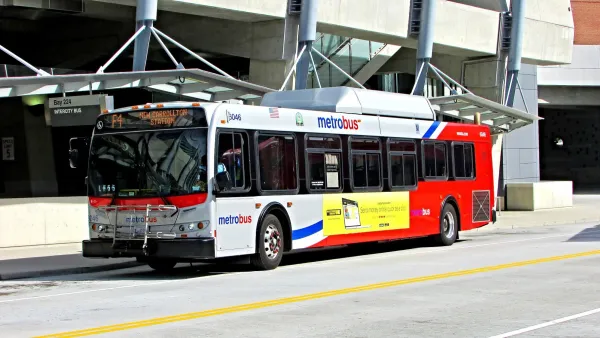
D.C.-Area Residents Want Bus Lanes and Free Transfers, Survey Shows
New survey findings identify transit priorities among residents in D.C. and surrounding areas, and indicate broad support for public investments.
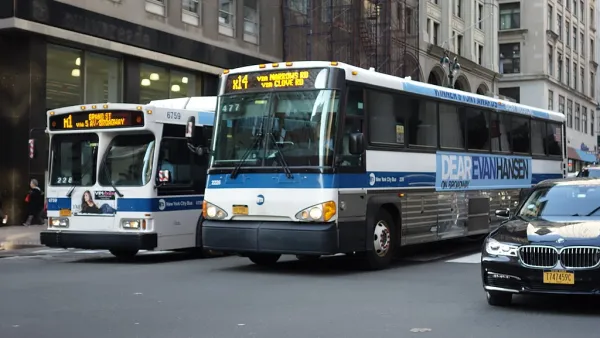
Staten Island Express Bus Relaunches
Express buses in Staten Island started their new routes August 19 with fewer routes and fewer stops and faster travel the MTA hopes.
It's Dump the Pump Day
Today is "Dump the Pump" Day, an annual event created by the American Public Transportation Association to bring awareness to the benefits of public transit. Transit agencies across the country are offering free rides, including many in Florida.

Planetizen Federal Action Tracker
A weekly monitor of how Trump’s orders and actions are impacting planners and planning in America.

Amtrak, CN end decades-long dispute with eight-year agreement
The new operating agreement establishes an updated framework for the companies to work together, including processes to resolve disputes.

Judges permit Denver to divert 77,000 acre feet from the Colorado River for reservoir expansion
Overuse and climate change have caused the Colorado River’s water levels to plummet.

NYC DOT wants faster, more permanent street upgrades
The city is examining ways to build more concrete infrastructure without getting entangled in 'decades-long' projects.

'Something we’ve never seen before:' rising utility rates could strain city finances nationwide
Data centers, climate change and other factors have caused utility rates in the United States to increase by 38% since 2020.

Trump to overrule local leaders, lease millions of acres of America’s Pacific Island territories’ seafloors to mining companies
International law says that the Indigenous people of America’s territories have a right to prior and informed consent regarding projects that impact their countries.

FREE Course: Walkable City 1: Why Walkability?
After describing his path towards focusing on walkability as the essence of good planning, Jeff Speck marches through his five principal reasons for making more walkable places.
Reinventing Malls: Planning Alchemy—Turning Gray Fields Into Gold
The course focuses on the opportunities and imperatives that shape reinvention of mall sites.

Harvard University Graduate School of Design
KFH Group Inc.
Greater Baltimore Committee
The Architects Foundation
University of Cincinnati Online
The Pocatello Development Authority
The Urban Renewal Agency of the City of Pocatello