Developers in Detroit are planning a condominium project completely made out of used shipping containers. But city approval is needed before the project can move forward.


"A Detroit-based group hopes to use empty shipping containers to build one of the most unusual -- and certainly one of the most innovative -- residential projects in southeast Michigan."
"The project would stack empty containers four high, cut in windows and doors, install plumbing, stairways and heating, and add amenities such as balconies and landscaped patios."
"If it wins city approvals, the 17-unit condominium project could break ground this fall and open near Wayne State University in 2009. Steven Flum, a Detroit-based architect who designed the project, said it solves several problems at once, including the need to build environmentally sensitive buildings cheaply. The project is going to cost about $1.8 million, about 25% less than a normal condo project of similar quality would run."
Read the full story: Detroit condo project puts discarded containers to use

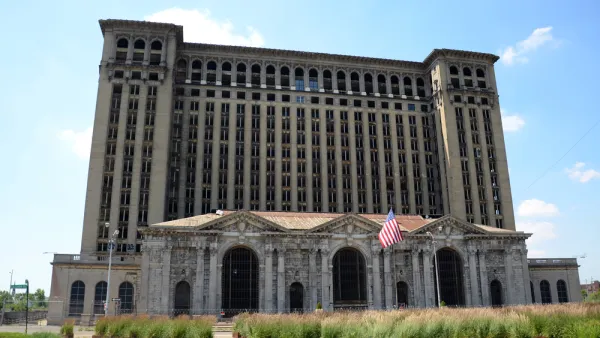
Ford Planning Residential Units in its Detroit Train Station Adaptive Reuse
Ford will treat the Michigan Central Depot to a mixed-use adaptation.
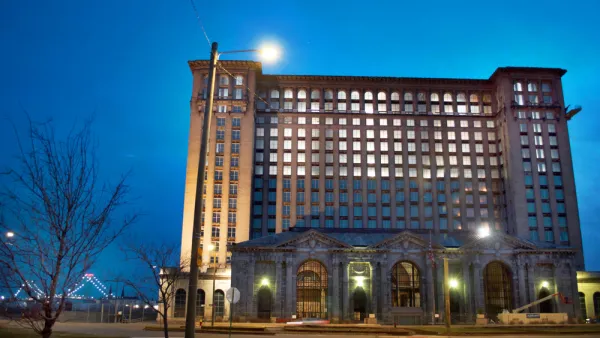
The Massive Significance of Ford's Move into Detroit's Abandoned Michigan Central Depot
Ford has confirmed its plan to move into the Michigan Central Depot in Detroit.
Ford Motor Company Considering Big Move to Historic Detroit
If Ford Motor Co. goes through with a plan to move into the old Michigan Central Depot, it would mark a new phase of the rebirth of Detroit's urban core.

Planetizen Federal Action Tracker
A weekly monitor of how Trump’s orders and actions are impacting planners and planning in America.

Amtrak, CN end decades-long dispute with eight-year agreement
The new operating agreement establishes an updated framework for the companies to work together, including processes to resolve disputes.

Judges permit Denver to divert 77,000 acre feet from the Colorado River for reservoir expansion
Overuse and climate change have caused the Colorado River’s water levels to plummet.

NYC DOT wants faster, more permanent street upgrades
The city is examining ways to build more concrete infrastructure without getting entangled in 'decades-long' projects.

'Something we’ve never seen before:' rising utility rates could strain city finances nationwide
Data centers, climate change and other factors have caused utility rates in the United States to increase by 38% since 2020.

Trump to overrule local leaders, lease millions of acres of America’s Pacific Island territories’ seafloors to mining companies
International law says that the Indigenous people of America’s territories have a right to prior and informed consent regarding projects that impact their countries.

FREE Course: Walkable City 1: Why Walkability?
After describing his path towards focusing on walkability as the essence of good planning, Jeff Speck marches through his five principal reasons for making more walkable places.
Reinventing Malls: Planning Alchemy—Turning Gray Fields Into Gold
The course focuses on the opportunities and imperatives that shape reinvention of mall sites.

Harvard University Graduate School of Design
KFH Group Inc.
Greater Baltimore Committee
The Architects Foundation
University of Cincinnati Online
The Pocatello Development Authority
The Urban Renewal Agency of the City of Pocatello