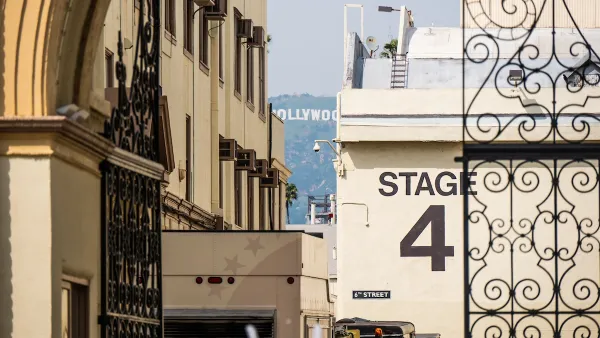
By nearly any measure, the Los Angeles neighborhood of Hollywood has been radically transformed in the last 10 years, becoming a bar-hopper’s dream, a gourmet’s destination, and a rising shopping and housing district.


"New and converted condo are plentiful, and there is a bona fide office shortage -- vacancies are less than 5 percent. The momentum may be enough to carry Glamtown through to the next cycle of good times.
For decades after the 1960s, Hollywood took its cue from Grade B exploitation flicks, and sank into a creepy oblivion. Once a middle-class bastion, by the early 1980s Hollywood was known for crime, drugs, runaway teens, and trolling hookers. But like so many infill districts in LA, Hollywood roared back in the late 1990s, as commuters sought to cut drivetimes and homebuyers sought to cut down the monthly nut. Even the upper middle class headed eastward from the shore, into such formerly bohemian or dclass districts as Fairfax, Silver Lake, Echo Park, Elysian\ Valley, Los Feliz -- and, of course, Hollywood... Yet another mammoth project is known as Blvd. 6200, a $400 million mixed-use development by New York's Clarett Group. The 7.2-acre site will feature 175,000 square feet of ground floor retail" and over 1,000 residential units.
Thanks to Peter Slatin
FULL STORY: Hollywood, The Sequel

Demise of Entertainment Industry Mirrors Demise of Housing in LA
Making movies has a lot in common with developing real estate: producers = developers; screenwriters = architects; directors = general contractors. The similarities are more than trivial. Both industries are now hurting in L.A.

A Lone Voice for Climate: How The Wild Robot Stands Apart in Hollywood
Among this year’s Oscar-nominated films, only The Wild Robot passed the Climate Reality Check, a test measuring climate change representation in storytelling, highlighting the ongoing lack of climate awareness in mainstream Hollywood films.
Los Angeles Finalizing Three Long-Awaited Community Plan Updates
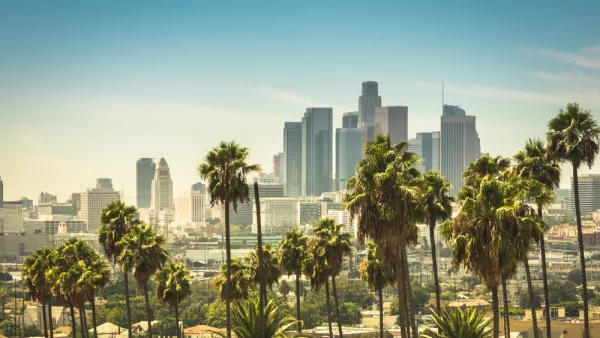
Los Angeles is poised to approve a trio of long-planned zoning code updates—for the neighborhoods of Boyle Heights, Downtown, and Hollywood—as the first test cases for a new citywide zoning code update known as re:code LA.

Planetizen Federal Action Tracker
A weekly monitor of how Trump’s orders and actions are impacting planners and planning in America.

The state-sanctioned urbicide of Austin
People don’t kill cities. Freeways do.

US to reduce Colorado River water deliveries to Mexico
A new Colorado Treaty amendment reduces Mexico’s Colorado River water allocation by 250,000 acre feet.

5 New England states march closer to 800 megawatt wind energy project
Securing federal approval for the project may be complicated under the Trump administration, which has historically been hostile towards domestic wind power.

Baltimore to break ground on $50 million Transit Priority Project
The project will bring faster bus trips, safer streets and better bike connections to Baltimore.

Airbnb launches $250 million 'last-dollar financing' housing accelerator, makes first investment in Austin
The company will put $6.4 million towards affordable housing development in Texas’ capital.

FREE Course: Walkable City 1: Why Walkability?
After describing his path towards focusing on walkability as the essence of good planning, Jeff Speck marches through his five principal reasons for making more walkable places.
Reinventing Malls: Planning Alchemy—Turning Gray Fields Into Gold
The course focuses on the opportunities and imperatives that shape reinvention of mall sites.

Eagle County Government
Harvard University Graduate School of Design
Nashville Planning Department
The Architects Foundation
University of Cincinnati Online
The Pocatello Development Authority
The Urban Renewal Agency of the City of Pocatello
Journal of the American Planning Association