The city wants to remove unused warehouses and port-facilities and open up several miles of its riverfront for public enjoyment.


"It's called "Reinventing the Crescent," a nearly $300 million plan for giving the public access to several miles of New Orleans riverfront that have long been inaccessible because of warehouses and cargo-handling activities.
It envisions the riverfront, shorn of most of its once-ubiquitous metal sheds, as a place for walking, jogging, dining, celebrating, worshipping, relaxing and even living.
City Council President Arnie Fielkow has called the ambitious plan "the most exciting project the city has seen in decades, maybe in its history."
On the other hand, it has aroused deep suspicion among some neighborhood activists, and both port officials and some private developers have problems with parts of it.
Yet many New Orleanians, accustomed to grandiose visions that eventually dissipate, probably suspect that the whole plan is just another pie-in-the-sky project that will never move beyond the pretty-pictures stage.
A city agency on Monday will receive proposals to begin the process of turning the pictures into reality, but most of the money needed to implement the $294 million blueprint remains more hope than reality."
Read the full story: Ambitious plan could help N.O. reclaim its riverfront


Philly Waterfront Park Breaks Ground
Penn’s Landing is an ambitious redesign of 11.5 waterfront acres.
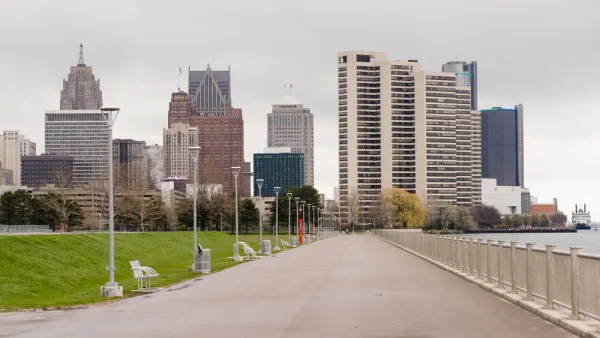
Shaping a 15-Minute City Vision for Detroit and Cleveland Using Data-Assisted Modeling
How master plans in the two cities hope to transform their historic, and historically underutilized, waterfronts.
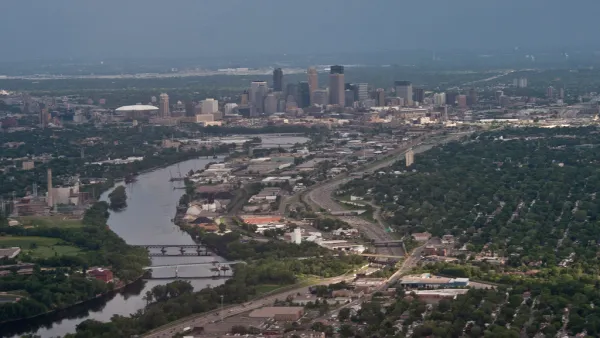
Mayoral Op-Ed Touts New Equitable Development Model in Minneapolis
A plan for 48 acres of riverfront land could make Minneapolis a leader in doing redevelopment right, argue city leaders.

Planetizen Federal Action Tracker
A weekly monitor of how Trump’s orders and actions are impacting planners and planning in America.

Chicago breaks ground on $3 billion megadevelopment
The new neighborhood, titled Foundry Park, will one day host 3,700 residences.

This MA town is drowning in its own sewage — and residents like it that way
Susan Murcott, a waste water expert, said if Carlisle didn't address their leaking sewage, the problem could turn “deadly.”

Iowa taxpayers are paying thousands to clean manure out of their water
While the Clean Water Act makes states responsible for regulating factory farms that discharge pollutants, Iowa has turned a blind eye to the polluting farms.

Amtrak cuts ribbon on Seattle Airo maintenance facility
The $250 million, nearly 100,000-square-foot building can house an entire Cascades Airo trainset.

To power data centers, Google seeks autonomous control of thousands of homes’ electricity
The tech company has signed a deal to indirectly pay Mid-Atlantic residents to reduce their power demand when the grid is strained.

FREE Course: Walkable City 1: Why Walkability?
After describing his path towards focusing on walkability as the essence of good planning, Jeff Speck marches through his five principal reasons for making more walkable places.
Reinventing Malls: Planning Alchemy—Turning Gray Fields Into Gold
The course focuses on the opportunities and imperatives that shape reinvention of mall sites.

City of Rosemead
Rutgers University, Edward J. Bloustein School of Planning and Public Policy
One Hundred Miles
The Architects Foundation
University of Cincinnati Online
Montrose County
The Pocatello Development Authority
The Urban Renewal Agency of the City of Pocatello