Luxury residential towers are popping up all over New York City, bringing about what one critic calls the "greatest transformation in the city’s physical identity since the 1960s".


"In the last five years more than a dozen have been completed; maybe a dozen more are scheduled to break ground this year. They range from soaring, elaborately decorated towers by international celebrities like Jean Nouvel and Frank Gehry to smaller but equally ambitious architectural statements by lesser-known talents like Mr. Denari."
"With the financial markets in an ominous roil, the realization of this boomlet is far from guaranteed. But even if only a few more are completed, the final effect of these buildings could be the greatest transformation in the city's physical identity since the 1960s. Bold and formally elaborate - some would say showy - they reflect a mix of attitudes and styles that the city has never seen."
"They also reveal an unmistakable shift in the appetites and aspirations of an elite group of New Yorkers for whom an apartment's architectural pedigree has become a new form of status symbol. Rather than disappear behind the shielding bulwark of Park Avenue apartment houses or into anonymous loft buildings as previous generations of wealthy New Yorkers did, these residents want to live in structures that telegraph their wealth and uniqueness."
FULL STORY: Nice Tower! Who’s Your Architect?

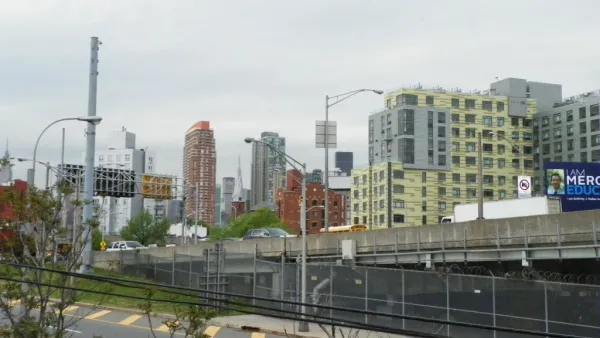
In Long Island City, a Glimpse of the Future?
According to critic James Russell, Long Island City has come to resemble the new metropolises of Asia. A frenetic jumble of old and new, the area's "dystopian" qualities aren't all bad.
Developer Detente Will Grow NYC's Billionaires' Row
After seven years of stalemate, two developers have reached an agreement that will allow them to build ultraluxury towers on the northern edge of Midtown. The area is becoming the modern equivalent to what the robber barons built a century ago.
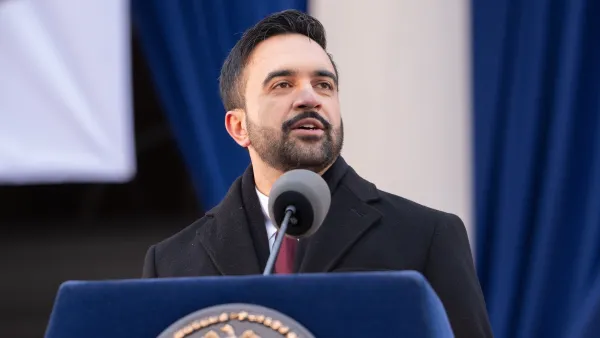
Mamdani overhauls NYC's Vision Zero plan with 100 new policy goals
The overhaul aims to reduce traffic deaths and make streets safer for pedestrians, cyclists and drivers through lower speed limits, new safety infrastructure and more.

Planetizen Federal Action Tracker
A weekly monitor of how Trump’s orders and actions are impacting planners and planning in America.

The state-sanctioned urbicide of Austin
People don’t kill cities. Freeways do.

US to reduce Colorado River water deliveries to Mexico
A new Colorado Treaty amendment reduces Mexico’s Colorado River water allocation by 250,000 acre feet.

5 New England states march closer to 800 megawatt wind energy project
Securing federal approval for the project may be complicated under the Trump administration, which has historically been hostile towards domestic wind power.

Baltimore to break ground on $50 million Transit Priority Project
The project will bring faster bus trips, safer streets and better bike connections to Baltimore.

Airbnb launches $250 million 'last-dollar financing' housing accelerator, makes first investment in Austin
The company will put $6.4 million towards affordable housing development in Texas’ capital.

FREE Course: Walkable City 1: Why Walkability?
After describing his path towards focusing on walkability as the essence of good planning, Jeff Speck marches through his five principal reasons for making more walkable places.
Reinventing Malls: Planning Alchemy—Turning Gray Fields Into Gold
The course focuses on the opportunities and imperatives that shape reinvention of mall sites.

Eagle County Government
Harvard University Graduate School of Design
Nashville Planning Department
The Architects Foundation
University of Cincinnati Online
The Pocatello Development Authority
The Urban Renewal Agency of the City of Pocatello
Journal of the American Planning Association